
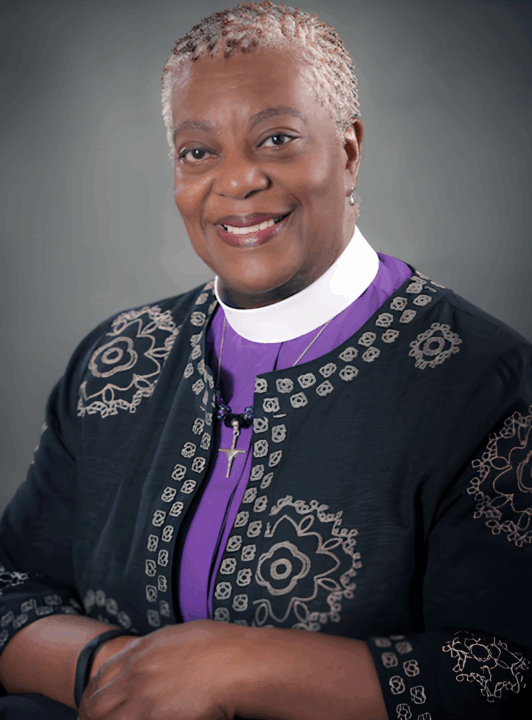
When Bishop Patricia A. Davenport announced her retirement from the Southeastern Pennsylvania Synod (SEPA) of the Evangelical Lutheran Church in America (ELCA), many were surprised. Most bishops in the denomination serve multiple terms. She chose one.
For the pioneering Bishop Davenport, this was not about age or burnout. “I was a leader called for such a time as this,” she said. “But I had to ask: ‘Am I also the leader for the future?’”
Her six-year tenure coincided with seismic shifts in the church and society over the last few years: a global pandemic, racial reckonings, political division, and economic uncertainty. In that crucible, she helped reorient the Church not towards survival, but to a place of relevance.
Leading Through Disruption
Bishop Davenport’s leadership faced its toughest test in 2020, during the global pandemic that hit communities hard. Churches shut their doors. Congregants grieved in isolation. The very rituals that bind faith communities and families, Sunday service, communion, and funerals, had to be reimagined.
“God is doing a new thing, and God is doing a new thing in and through us,” she told clergy and laity alike.
She led SEPA through online transitions, wrestled publicly with virtual communion, and stood with families that were denied the comfort of physically being present as loved ones passed. For her, ministry was about adapting and also walking with people through uncharted terrain with honesty, care, and courage.
A Faith That Extends Beyond Sunday
“Being ‘Church’ is not only what we do on Sunday morning,” she said. “It’s what happens Monday through Saturday, because of what we believe.”
Bishop Davenport challenged the 70,000 Lutherans across SEPA’s five counties to become active agents of good in their neighborhoods. She pointed to examples like Holy Trinity in Wallingford, which partners with the Chester School District to feed students. She pointed to Feast of Justice in Northeast Philadelphia, which feeds a multiracial, multilingual line of people every week and connects them with resources beyond food.
In her view, charity without systems change is incomplete. “Food insecurity is just a symptom, she said. “We must ask: ‘What wages are people earning? Are they getting access to public programs? How are we standing in the gap?’”
Global Lessons, Local Impact
Bishop Davenport’s ministry has always extended beyond the U.S. She traveled to Liberia multiple times visiting schools, hospitals, and churches. She witnessed both struggle and hope.
On one visit to Phoebe Hospital, the generator shut off at mid-tour. “We realized people’s lives were at risk with every power blink,” she recalled. The ELCA Women’s group that she traveled with returned with the memories and launched a fundraising effort. Today, Phoebe Hospital runs on solar panels.
Her takeaway? “If every person had an experience, saw a need, and acted, we would live in a different world,” she observes.
Advocating for Immigrant Communities
Bishop Davenport is vocal in her support of immigrants. She has met with families, sat in legal clinics, and written to lawmakers. She sees the fears many live with: job loss, deportation threats, and the stigma of otherness, even for U.S.-born children.
“We are all immigrants,” she said. “But empathy only happens when we listen to each other’s stories.”
She remains deeply concerned about how national policies have endangered immigrant communities. “Faith without works is dead,” she reminded. “Prayer must be followed by action.”
Naming What’s Unsaid
As the first woman of color to serve as bishop in the ELCA, Bishop Davenport navigated an institution where over 90% of her electors were white. She was often expected to represent while staying silent on issues that made some uncomfortable.
“If I had to do it again, I would have taken a bolder stance,” she reflected. “There were moments I held back because I didn’t want to upset white congregations. But justice requires truth.”
She also wished she had launched a more aggressive initiative to raise leaders of color. “Many pastors of color are retiring, and we haven’t built a pipeline,” she said. She envisions creating a youth-based leadership program tentatively called Jesus’ Emissaries Mission, which would encourage teens to lead with conviction.
Freedom to Act, Still Committed to Serve
Now retired, Bishop Davenport feels a renewed call, not to slow down entirely, but to speak without institutional filters. “I’m accountable to God, not to council meetings or committee structures,” she said. “That gives me freedom to name injustice.”
She recently contacted the offices of elected officials, including U.S. Senator John Fetterman and U.S. Congressman Brendan Boyle, to raise concerns about Gaza and Palestinian Christian communities. “The silence is not neutral,” she said. “We are either standing with justice or excusing its absence.”
At the same time, she finds joy in simpler things: Spending time with her grandchildren, taking them to multicultural cooking classes, attending iftars during Ramadan, and learning about people through food, customs, and shared space.
“Food is a love language,” she said. “And intergenerational learning is one way we shape a more understanding world.”
Relationship as the Foundation
At the heart of Bishop Davenport’s worldview is one word: Relationships.
“Our relationship with God shapes how we treat people,” she said. “When I make the sign of the cross, I’m reminded that it flows vertically and horizontally. That is how I try to live.”
She credits longstanding relationships with community leaders, clergy, interfaith allies, and the FunTimes team for shaping her journey. “We are here today because someone trusted someone else,” she philosophizes. “That’s the seed of everything.”
A Legacy in Motion
Bishop Davenport leaves her formal office, but not her calling. She continues to mentor, speak out, and show up. Her vision of a faith that is lived continues to ripple across communities. Her mission continues. “Whether I’m in office or not,” she reasons, “I’m going to stay in the Jesus movement,”




Dr. Eric John Nzeribe is the Publisher of FunTimes Magazine and has a demonstrated history of working in the publishing industry since 1992. His interests include using data to understand and solve social issues, narrative stories, digital marketing, community engagement, and online/print journalism features. Dr. Nzeribe is a social media and communication professional with certificates in Digital Media for Social Impact from the University of Pennsylvania, Digital Strategies for Business: Leading the Next-Generation Enterprise from Columbia University, and a Master of Science (MS) in Publication Management from Drexel University and a Doctorate in Business Administration from Temple University.