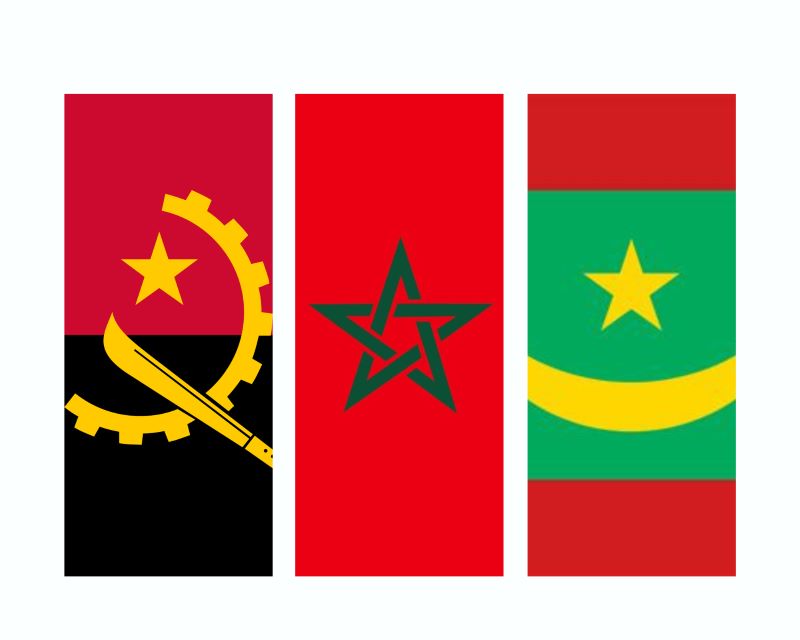
Source: flags of Angola, Morocco, and Mauritania from flagpedia.net
Africa’s independence was never won through a single formula. Across the continent, the struggle to end colonial domination reflected different political realities, colonial ambitions, and the determination of African people to reclaim control of their destinies.
While some nations endured prolonged armed struggles against colonial powers unwilling to surrender their territories, others relied on nationalist movements, constitutional negotiations, diplomatic pressure, and political alliances to secure their freedom. These different experiences reveal an important truth about Africa’s liberation history: although the destination was the same, the roads to independence were remarkably different.
This month, we celebrate the journeys of Angola, Mauritania, and Morocco. Angola endured a 14-year armed liberation struggle against Portuguese colonial rule; Mauritania followed a gradual political transition from French administration to sovereign statehood, while Morocco combined nationalist resistance, royal leadership, popular mobilization, and diplomacy to end French and Spanish colonial control.
Angola: Independence Through Armed Liberation
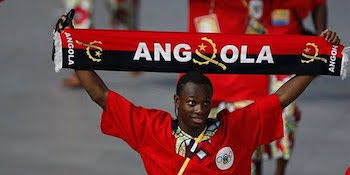
Angola’s journey was perhaps the most militarized of the three. Under Portuguese colonial rule, the country endured decades of political repression, forced labor, and economic exploitation. Portugal regarded its African territories as integral parts of its overseas empire and showed little willingness to grant them independence, even as Britain and France began withdrawing from other African territories.
Source: African American Registry
Growing resentment against colonial exploitation eventually developed into organized resistance. On February 4, 1961, an uprising in Luanda involving attacks on prisons and other colonial installations marked a major turning point in Angola’s liberation struggle. Further uprisings in northern Angola in March 1961 intensified the conflict, prompting severe Portuguese repression and strengthening the resolve of nationalist movements.
Three major organizations emerged as leading forces in the struggle. They were the Popular Movement for the Liberation of Angola (MPLA), founded in 1956 and led by Agostinho Neto; the National Front for the Liberation of Angola (FNLA), which developed from earlier nationalist resistance organizations and was associated with Holden Roberto; and the National Union for the Total Independence of Angola (UNITA), founded by Jonas Savimbi in 1966.
Although these movements shared the objective of ending Portuguese colonial rule, they differed in their political ideologies, leadership structures, and international alliances. Their competing interests complicated the liberation campaign, even as their sustained resistance made Portuguese colonial administration increasingly difficult to maintain.
The decisive opportunity came on April 25, 1974, when Portugal experienced the Carnation Revolution, a military-led uprising that overthrew its authoritarian Estado Novo government. The new Portuguese administration moved toward ending the country’s expensive colonial wars, creating an opportunity for Angola to achieve independence.
Following negotiations, Portugal and the three liberation movements signed the Alvor Agreement on January 15, 1975. The agreement established a transitional government involving the three movements and set November 11, 1975, as Angola’s independence date.
However, disagreements among the movements undermined the transitional arrangement, and armed conflict escalated during 1975. The breakdown of the agreement also reflected the growing influence of Cold War rivalries, as international powers supported competing Angolan factions. The Soviet Union and Cuba supported the MPLA, while the United States provided assistance to the FNLA and UNITA at different stages. South African military intervention added another dimension to the conflict.
On November 11, 1975, Angola formally became independent, with Agostinho Neto proclaiming the new republic in Luanda and becoming its first president. The FNLA and UNITA also announced a rival government in Huambo, reflecting the collapse of the agreed political transition.
Angola’s experience illustrates the enormous sacrifices associated with armed liberation. Yet it also exposes the difficulties that can emerge when a united struggle against colonialism gives way to competing political ambitions and external interference. For Angola, the departure of the Portuguese did not immediately bring peace; it marked the beginning of a devastating civil war that continued until 2002.
Morocco: Independence Through Nationalist Resistance and Diplomacy
Morocco’s experience offers another distinctive chapter in Africa’s liberation history. Unlike Angola, Morocco had a longstanding monarchy and established political institutions before European colonial expansion progressively undermined its sovereignty.
Source: Newsday
In 1912, the Treaty of Fez established a French protectorate over most of Morocco, while Spain administered territories in the north and south. Tangier, on the other hand, subsequently operated under an international administration. Although the Moroccan Sultan retained his traditional position, much of the country’s political and administrative authority was exercised by the colonial powers.
Opposition to foreign domination gradually developed through nationalist organizations, intellectual movements, and popular resistance. One of the most significant political developments occurred on January 11, 1944, when Moroccan nationalists presented the Manifesto of Independence, demanding national sovereignty, territorial integrity, and an end to the protectorate system.
The Istiqlal Party became a major force in the independence campaign, working alongside Sultan Mohammed V, whose growing identification with nationalist aspirations strengthened the movement. His position as a traditional monarch gave the independence struggle an important symbol of national unity.
The conflict intensified on August 20, 1953, when French authorities deposed Mohammed V and forced him and members of his family into exile. He was initially sent to Corsica before being transferred to Madagascar in January 1954. The French authorities hoped that removing the Sultan would weaken the nationalist movement and undermine the growing alliance between the monarchy and independence advocates. However, the decision produced the opposite effect. His removal generated widespread opposition across Morocco, intensified nationalist resistance, and strengthened his position as a symbol of national identity. Popular demonstrations, political agitation, and armed resistance increased pressure on the French administration.
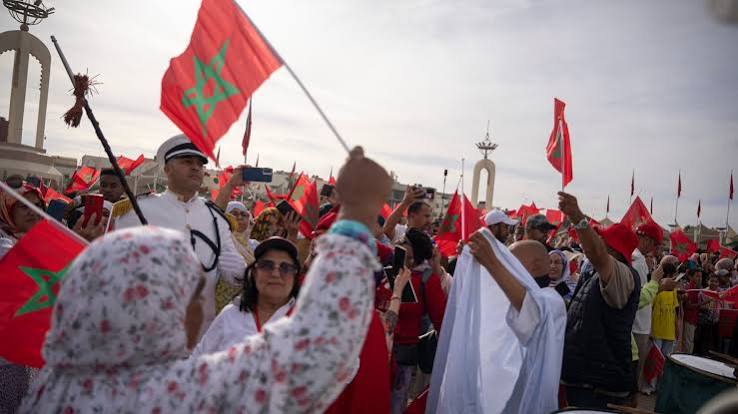
Unlike Angola, where competing liberation movements led the struggle, Morocco’s independence campaign increasingly rallied around the Sultan and the nationalist movement. Facing growing resistance and political instability, France eventually moved toward negotiations. Mohammed V returned to Morocco on November 16, 1955, to a popular welcome that reinforced his position as a central figure in the independence movement.
France formally recognized Morocco’s independence on March 2, 1956, followed by Spain on April 7 of the same year. Tangier was subsequently reintegrated into Morocco following an agreement reached in October 1956. Morocco’s independence is celebrated every November 18th, commemorating the historic 1955 speech by Sultan Mohammed V announcing the end of the French and Spanish protectorates and his return from exile.
Morocco’s experience demonstrated how nationalist organization, popular resistance, royal leadership, and diplomatic negotiations could combine to bring colonial rule to an end.
Read also: The UN Vote that Just Made Africa 14 Times Larger
Mauritania: The Gradual Transition to Independence
Mauritania’s journey to independence followed a different path, shaped by gradual political transformation, nationalist aspirations, and negotiations with France. French colonial expansion into the territory took place during the late 19th and early 20th centuries.
Source: DepositPhotos
In 1904, France established Mauritania as a separate protectorate, before formally incorporating it into French West Africa in 1920. Although French authorities gradually extended their administration across the territory, resistance to colonial rule intensified during the 1920s, while organized nationalist politics gained momentum after World War II.
The postwar period introduced new political opportunities. French constitutional reforms expanded representation in its overseas territories, while the 1956 Loi-cadre established greater internal self-government. On May 21, 1957, Moktar Ould Daddah was appointed head of Mauritania’s first autonomous government, marking an important step toward political self-determination.
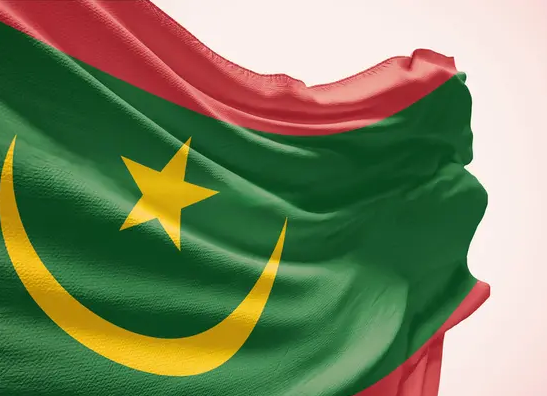
Following the September 1958 referendum on the French Constitution, Mauritania’s territorial assembly proclaimed the Islamic Republic of Mauritania on November 28, 1958. This established a new phase of political autonomy within the French Community. However, the demand for complete sovereignty continued, leading to negotiations with France over the transfer of governmental powers.
On October 19, 1960, Prime Minister Moktar Ould Daddah and French Prime Minister Michel Debré signed an agreement transferring powers to Mauritania. The agreement paved the way for full independence, which was formally achieved on November 28, 1960. Ould Daddah became the country’s first head of state, guiding the new republic through its early years.
Mauritania’s independence, however, encountered diplomatic resistance. Morocco disputed its sovereignty, claiming the territory as part of its own historical domain, and withheld recognition until 1969. Despite these challenges, Mauritania established itself as an independent state, demonstrating how constitutional reforms, political organization, and negotiations could provide another route out of colonial rule.
Three Different Journeys, One Direction
When these three experiences are considered together, their differences become particularly striking. Angola endured a 14-year armed liberation struggle against a colonial power determined to preserve its empire. Mauritania gradually developed autonomous political institutions before negotiating the transfer of power from France. Morocco, meanwhile, mobilized around its monarchy and nationalist movement, combining popular resistance with diplomacy to end foreign control.
Today, the three countries represent distinct experiences of African statehood, but their histories remain connected by a common aspiration for self-determination.

Okechukwu Nzeribe works with the Onitsha Chamber of Commerce, in Anambra State, Nigeria, and loves unveiling the richness of African cultures. okechukwu.onicima@gmail.com