Source: The Conversation Africa
Pancreatic cancer is among the deadliest types of cancer. It is one of those diseases that tends to stay quiet until it is already advanced. There are no effective screening tests, and it rarely causes noticeable symptoms in its earliest stages. By the time one starts to experience any signs, such as jaundice or abdominal pain, the cancer has often already spread to other organs, and treatment has historically offered patients fewer options than treatments for some other cancers. Even now, only about 13% of people diagnosed are still alive five years later. The American Cancer Society (ACS) estimated about 66,440 new diagnoses and 51,750 deaths in 2024.
For Black communities in particular, the reality has been harsher: higher rates of the disease, later diagnosis, more likely to face barriers to specialist care, and lower survival outcomes than almost any other group in the United States. So when a vaccine shows promise in its first human trial, it is more than scientific progress; it is hope. This is the kind of news that could eventually change the outcomes for families.
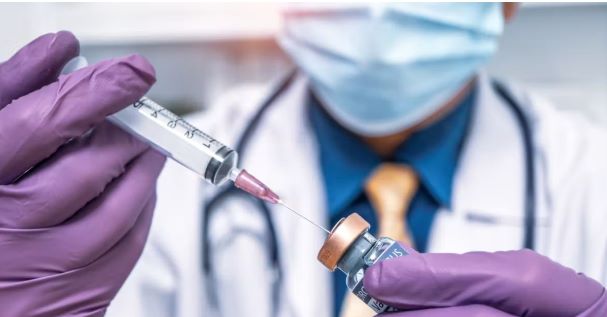
There isn’t just one pancreatic cancer vaccine in development right now. There are two major ones moving through clinical trials. The first is a personalized mRNA vaccine being developed at Memorial Sloan Kettering Cancer Center in New York, led by physician-scientist Dr. Vinod Balachandran. This one is a treatment vaccine, not a prevention shot.
Unlike preventive vaccines, therapeutic cancer vaccines are designed for people already diagnosed with cancer. In this approach, a patient’s tumor is analyzed after surgery. Researchers identify unique mutations, called neoantigens, that exist only on that person’s cancer cells. Using mRNA technology, a personalized vaccine that teaches the immune system, particularly T cells, to recognize those cancer cells as foreign and attack them is created.
In a small phase 1 trial that began in 2019, roughly half of the 16 patients responded to the vaccine with a strong immune reaction, and follow-up results presented in 2026 showed that nearly 90% of those responders were still alive up to six years later. Dr. Balachandran described the durability of that immune response as one of the most encouraging parts of the data, noting the immune system’s defenses appeared able to keep working against the cancer for years, not just months. A larger phase 2 trial is expected to open to test this in a bigger group of patients.
The second approach is a prevention vaccine, not a treatment for existing cancer. Researchers at Johns Hopkins’ Kimmel Cancer Center have been testing a vaccine that targets KRAS, a mutation present in up to 90% of pancreatic cancers, in people who are already known to be at high genetic risk of developing the disease. In an early trial, the vaccine safely triggered a KRAS-specific immune response in the vast majority of participants, 18 out of 20 in one trial. Researchers at the Johns Hopkins Kimmel Cancer Center and its Skip Viragh Center for Pancreatic Cancer reported that the experimental vaccine was safe and generated durable immune responses aimed at preventing the cancer in people at high risk.
This study represents what is believed to be the first to show that a KRAS‑targeted vaccine can safely produce long‑lasting immune responses in humans, with the potential to help prevent cancer in people at risk. Findings from the Phase 1 clinical trial will be published in Cancer Discovery, a journal of the American Association for Cancer Research.
Neither of these vaccines is approved or available outside of clinical trials yet. Both are still in early phases and are being tested on small groups of patients. But the science represents something pancreatic cancer research hasn’t had much of in the past: real momentum, and a genuine sense among researchers that the field has reached what several have called an inflection point.
These breakthroughs leave us with these pressing questions: What does this mean for Black people, and how could it rewrite the story of cancer survival in Black communities?
Though pancreatic cancer hits Black communities harder, Black patients often face delayed diagnosis due to limited access to specialist imaging, a lower likelihood of receiving surgery, which is the only potential cure, and systemic barriers in oncology care and clinical trial access.
Statistics and research already tell us that Black people have the highest incidence rate and also face significantly higher mortality than white patients. However, there is the fear that the benefit will not reach Black patients proportionally, because of a pattern that has shown up again and again in oncology trials: Black patients made up only 2.9% of participants in pharmaceutical-sponsored cancer trials, versus 12.1% of the US cancer population.
Studies have also found that Black patients report lower awareness of clinical trials generally and more uncertainty about how to access them, even though their willingness to participate, once informed, does not differ from other groups. This is why the promise of a pancreatic cancer vaccine is not just another scientific headline. For Black communities, it could be a potential turning point, but that turning point only becomes real if the rollout, the trials, and eventually the treatment reach Black communities with intentionality, not as an afterthought. A vaccine cannot be called a breakthrough if the people who need it most are the last to benefit. Also, being aware that such research exists and knowing how to ask a doctor about clinical trial eligibility could make a real difference for families with a history of the disease.

Source:Pancreatic Cancer Action Network
Dr. Marcus Noel, an oncologist and associate professor at Georgetown Lombardi Comprehensive Cancer Center who researches these disparities, does not mince words about the risks our community carries. He points to conditions like diabetes and obesity, which are more common in Black families, as contributing risk factors and encourages people to reach out to their healthcare providers the moment something feels off rather than waiting.
His research has shown that race and socioeconomic status may drive some of the disparities in diagnosis and treatment of pancreatic cancer, as Black Americans tend to be diagnosed at a later stage of disease and have lower rates of surgical resection.
The late Dr Edith P. Mitchell, a medical oncologist at Thomas Jefferson University’s Sidney Kimmel Cancer Center in Philadelphia, similarly pointed out that understanding these disparities takes research on multiple fronts at once: genetics and biology on one side, and environmental and social factors, like access to care, on the other.
Findings published in the Journal of Clinical Oncology showed that eligibility criteria for a patient to enroll in a clinical trial disproportionately prevent Black patients from participating in pancreatic cancer clinical trials. The researchers found that 42% of Black patients were ineligible for clinical trials compared to 33% of white patients.
For Black families already facing higher pancreatic cancer risks, this gap means fewer chances to access cutting‑edge treatments, fewer opportunities to shape future research, and yet another barrier in a system that should be working for everyone.
The news of a pancreatic cancer vaccine breakthrough matters for Black communities not just because the science is exciting, but because pancreatic cancer is already more common and deadlier there. If these vaccines work, they could help close a serious survival gap, but only if trial enrollment, access, and follow-through are equitable from the start.
These vaccines may help lower the death rate of pancreatic cancer in the Black community, and by focusing on individual tumor biology, personalized medicine can help overcome disparities related to social and economic factors and access to care.