Collage courtesy of FunTimes Magazine
There is a painting in Peterson Kamwathi’s current exhibition at the Nairobi Contemporary Art Institute that does something unusual for African art shown to Western audiences this year. It refuses to explain itself. Tabula Rasa, on view through August, takes its title from the old colonial fiction that the people European empires encountered were blank pages waiting to be written on. Kamwathi, one of Kenya’s most influential living artists, spent years making work about crowds and institutions before turning this show toward the solitary figure, someone who carries history that cannot be erased by a border, a school curriculum, or a flag.
“I find the term ‘Tabula Rasa’ contradictory,” he said of the show. The theory, he argues, never left room for what happens when people actually meet each other. His drawings do not perform trauma for the viewer. They ask the viewer to sit with a person’s interiority instead, which is a much harder thing to look away from.
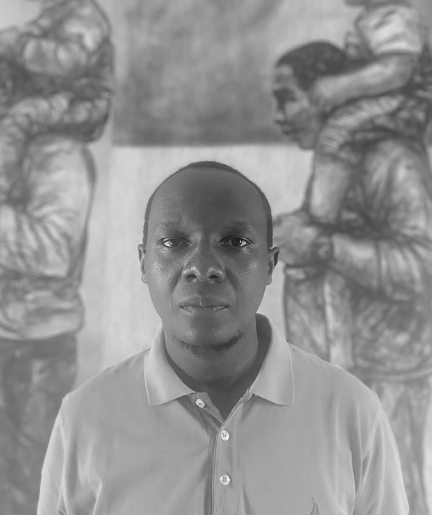
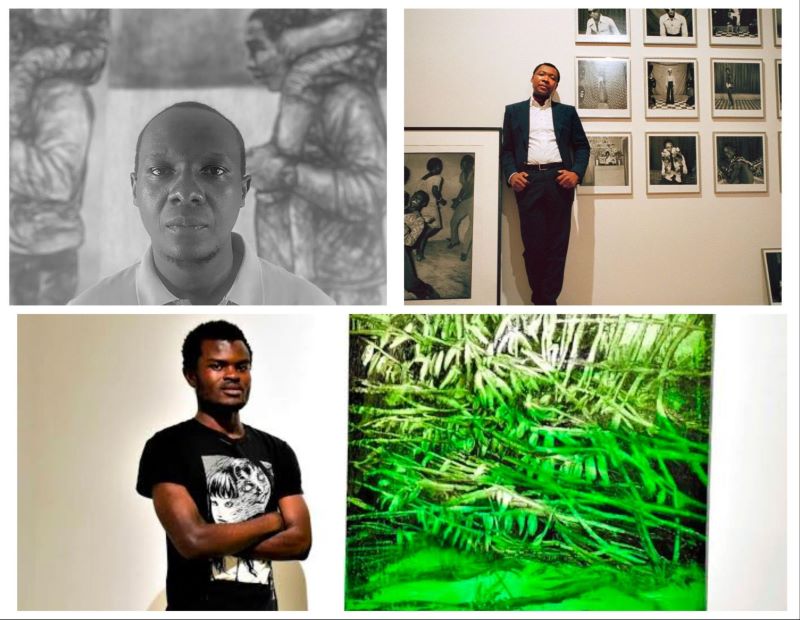
Peterson Kwamwathi, photo courtesy of Foundation Dapper
That distinction matters more this summer than it might have five years ago. For much of the past decade, the most visible African and Black diasporic art to reach American institutions arrived through a fairly narrow door: grief, mourning, the wound made legible for outside consumption. Okwui Enwezor’s landmark 2021 New Museum exhibition on Black grief and Kara Walker’s confrontations with slavery’s afterlife did necessary work, and neither artist deserves to be flattened into a trend. But the pattern that followed them, in galleries and acquisitions committees far less careful than they were, became its own kind of shorthand. Pain sold. Rest did not get the same wall space. The late curator Koyo Kouoh, who was set to become the first African woman to direct the Venice Biennale before her death last year, spent much of her career naming this bind directly, describing African curation as trapped in what she called a “triangular deadlock” of slavery, colonization, and apartheid. Her posthumous Biennale framework, realized this year by her curatorial team under the title In Minor Keys, is in part an attempt to compose outside that triangle altogether.
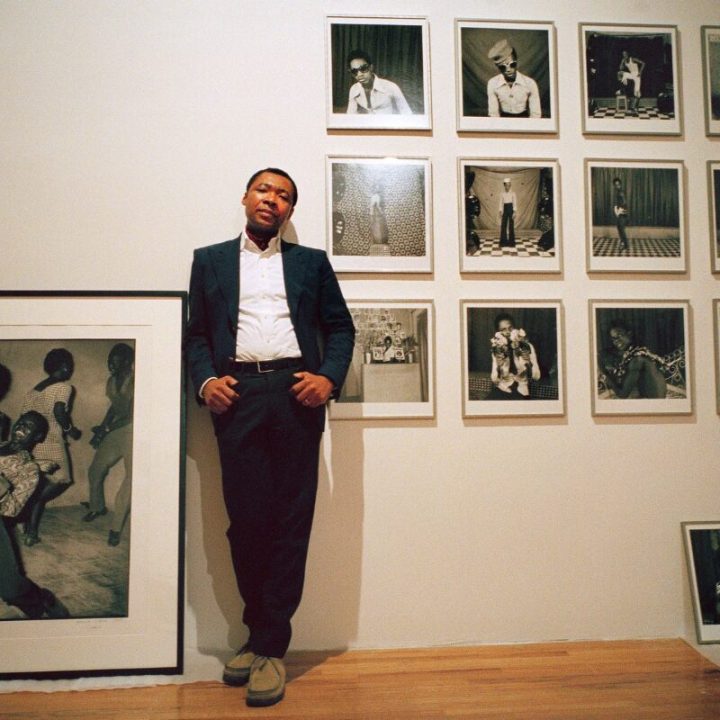
Okwui Enwezor, photo courtesy of The Guardian
East Africa has its own quieter version of this fight, one that has less to do with which stories get told and more to do with whether the region gets to tell stories at all. In June, Circle Art Gallery brought three East African artists to Africa Basel: the Sudanese painter Issam Hafiez, who now lives in Nairobi after fleeing the war in Sudan, the Kenyan sculptor Dickens Otieno, who weaves discarded aluminum cans into surfaces that mirror the improvisational textures of Nairobi’s streets, and the Ethiopian painter Birhane Worede, at 28 already representing a generation gaining international footing while staying rooted at home. Worede’s paintings are interiors, almost to the point of privacy, solitary figures caught mid-gesture in quiet rooms. “Human life and emotions are main inspirations,” he said of the work. He wants the paintings to produce self-examination, not spectacle.
That word, interiority, is doing a lot of quiet labor across East African painting right now, and it is worth pausing on why. A figure alone in a room, unbothered by an audience, is not a politically neutral image when the region producing it has spent decades being asked to perform its wounds for outsiders. Rest, solitude, and the ordinary texture of daily life become their own argument. They say: we get to exist without translating ourselves into trauma for someone else’s understanding. West African curators have been building a parallel case.
Aindrea Emelife, now curating modern and contemporary art at the Museum of West African Art in Benin City, has become known for what is been described as a kind of post-colonial optimism, using art history to build hopeful new narratives for the continent rather than dwelling only in the wound. East Africa’s version of that shift looks less like a manifesto and more like Rasto Cyprian’s mixed media meditations on everyday Nairobi life, or Nahom Teklehaimanot’s layered airbrush compositions on migration and belonging. None of these artists is avoiding hard subjects. Cyprian grew up in Kibera; Teklehaimanot is an Eritrean artist who relocated to Kenya. But the hardness gets metabolized into form, texture, and atmosphere rather than staged for consumption.
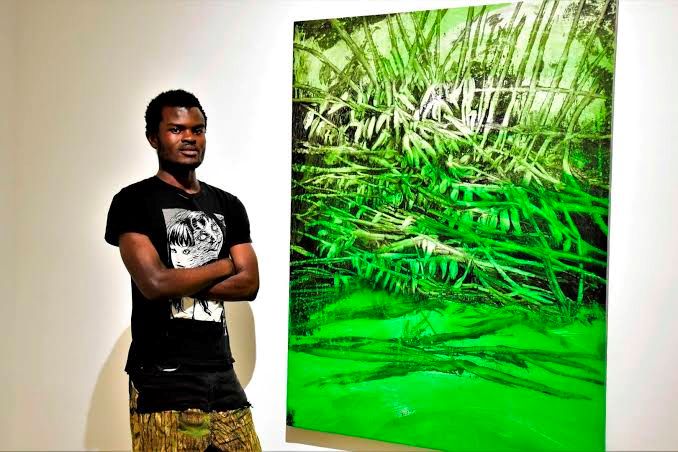
Rasto Cyprian, photo courtesy of Business Daily
For Black audiences in the United States, this matters beyond the art world’s internal politics. American Black visual culture has spent the last several years locked in its own debate about whether joy or grief represents us, whether a museum show about Black leisure is progress or a dodge, and whether abstraction is liberation or evasion. East African painters are working through a version of that same question from a different angle, one shaped by different colonial histories, different relationships to land and language, and a much younger gallery infrastructure fighting for the same visibility that Harlem, Chicago and Atlanta institutions have spent a century building.
Watching Kamwathi resist the tabula rasa myth, or Worede insist that a painting can hold curiosity instead of explanation, offers something the American conversation badly needs: proof that self determination in art does not require choosing between memory and rest. It requires the authority to decide, on your own terms, which of your stories get told and how.
That authority is the real subject of this summer’s East African exhibitions, more than any single theme of joy or trauma. Kamwathi’s solitary figures, Worede’s quiet rooms, Otieno’s woven cans, Cyprian’s Kibera-shaped attentiveness: none of it is asking permission from an outside gaze. It is simply working, the way art works when it is made for the people who understand it first. For a Black American audience raised on the idea that our art must justify its pain to be taken seriously or must perform healing to be marketable, that is worth sitting with. The future being imagined in Nairobi’s galleries this summer is not a rejection of history. It is an insistence that history does not get the only vote.

Anand Subramanian is a freelance photographer and content writer based out of Tamil Nadu, India. Having a background in Engineering always made him curious about life on the other side of the spectrum. He leapt forward towards the Photography life and never looked back. Specializing in Documentary and Portrait photography gave him an up-close and personal view into the complexities of human beings and those experiences helped him branch out from visual to words. Today he is mentoring passionate photographers and writing about the different dimensions of the art world.