Source: Egypt Tours Plus
All through history, mankind has witnessed the birth and extinction of many civilizations. Yet few among these ancient civilizations have continued to capture the world’s imagination like the ancient Egyptian civilization. With its towering pyramids, majestic temples, mysterious hieroglyphics, and legendary pharaohs, ancient Egypt offers mankind a glimpse of the remarkable wonders of human ingenuity, ambition, and resilience.
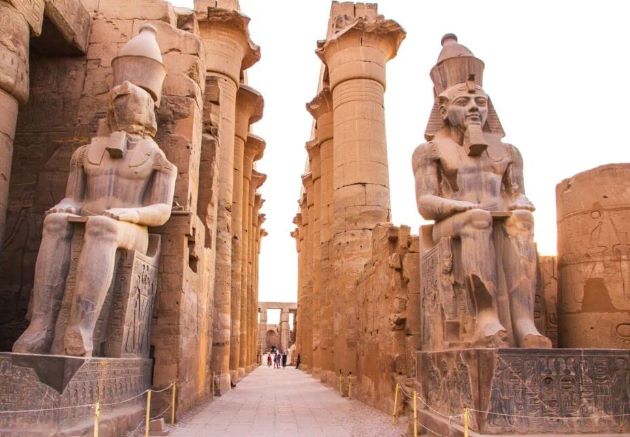
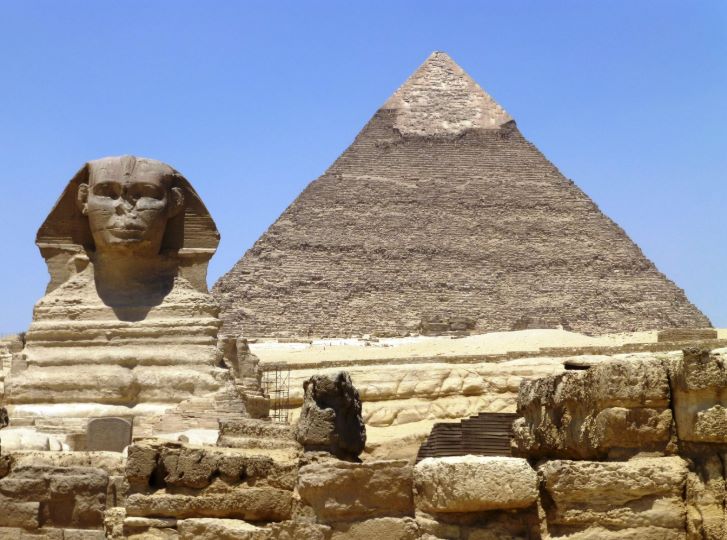
For many people, ancient Egypt is synonymous with monumental architecture and archaeological wonders. Images of the Great Pyramids of Giza, the Sphinx, and the treasures discovered in the Valley of the Kings often dominate discussions about this remarkable civilization.
However, Egypt’s greatest achievement lies beyond its extraordinary monuments; it is also evident in its sophisticated institutions, scientific discoveries, engineering innovations, and administrative systems that enabled one of the world’s longest-lasting civilizations to thrive and be studied long after the demise of the Pharaohs.
Before the emergence of the Greek and Roman empires, Ancient Egypt had already established an organized government, developed advanced agricultural systems, practiced medicine, built complex infrastructure, and maintained one of the earliest known writing systems.
At the heart of its success was the Nile River. Stretching over 6,650 to 6,853 km, the Nile transformed an otherwise harsh desert landscape into one of the most fertile regions in the ancient world. Its annual flooding deposited nutrient-rich silt onto surrounding farmlands, creating ideal conditions for agriculture. Unlike many ancient societies that struggled with unpredictable harvests, the Egyptians benefited from a relatively reliable agricultural cycle that provided food security and economic stability.
The Nile served as ancient Egypt’s primary source of water and supported its agricultural sustainability, ensuring a dependable food supply. It also became a source of connection for communities across distances, as well as a trade route, facilitating commerce, communication, and transportation.
Goods ranging from grain and papyrus to gold, ivory, timber, and precious stones flowed along its waters, linking Egypt with neighboring regions in Africa, the Mediterranean, and the Near East. These trade networks strengthened the economy and also exposed Egypt to new technologies and cultural influences while allowing it to export its own innovations.
Source: Wikipedia.org
As ancient Egypt flourished, so did its society. At a time when many societies were still organized around tribal communities, ancient Egypt developed a centralized state administered by the Pharaohs. Not only were they capable of administering vast territories, their efficiency in collecting taxes, organizing labor, and maintaining law and order was also a defining feature of this administrative structure.
While the Pharaohs carried immense authority, the day-to-day management of the kingdom relied on an extensive bureaucracy of officials, governors, tax collectors, judges, military commanders, and scribes. Detailed records of harvests, land ownership, trade, and public works were carefully documented, allowing the state to make informed decisions and allocate resources efficiently. In many respects, ancient Egypt introduced principles of public administration that remain essential to modern governments.
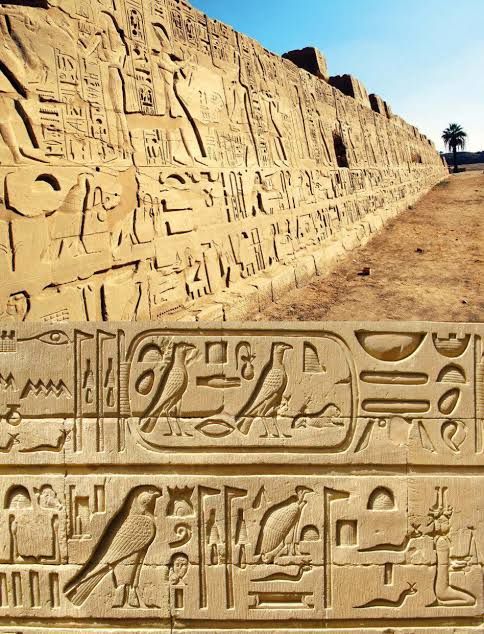
Writing played a vital role in strengthening ancient Egypt’s government and preserving its identity. Research proved that around 3000 BCE, Egyptians developed two writing systems: hieroglyphs for monuments and ceremonial inscriptions, and hieratic for everyday administrative work.
Early writing focused mainly on record-keeping, while longer literary works emerged much later.
Because literacy was limited to a small group of trained scribes, writing remained largely an official tool of the state. Hieroglyphs became a powerful symbol of Egyptian culture and authority and were rarely adapted for other languages. Even so, they are widely believed to have influenced the development of the alphabet, which later spread across much of the world.
While ancient Egypt excelled in governance, it also flourished in engineering. Although the Great Pyramids of Giza continue to dominate conversations about Egyptian ingenuity, they represent only a fraction of the civilization’s architectural accomplishments. Across the Nile Valley, magnificent temples, irrigation canals, reservoirs, fortresses, obelisks, and planned settlements demonstrated a remarkable understanding of mathematics, geometry, logistics, and construction.
Source: Medium
The Great Pyramids, one of the eight wonders of the world, continue to amaze humanity due to its shape and structure that required extraordinary coordination in building. Thousands of skilled workers, craftsmen, surveyors, architects, and laborers collaborated over many years to complete a structure that has endured for over 4,500 years.
Beyond engineering, the Egyptians displayed remarkable curiosity about the natural world. Their contributions to science, medicine, and mathematics were centuries ahead of many contemporary civilizations.
As a result of the annual flooding of the Nile, ancient Egyptians began studying the concept of time. Because the river rose and receded with remarkable regularity, the Egyptians created a calendar based on its cycle. The year was divided into three seasons: Akhet (flooding), Peret (planting and growth), and Shemu (harvest), with each season consisting of four 30-day months. This calendar system is widely relatable in modern-day agricultural practices.
Ancient Egyptians were also proficient in medicine. Egyptian physicians treated fractures, stitched wounds, performed surgical procedures, and prescribed herbal remedies based on careful observation.
Most importantly, ancient Egyptian civilization was distinguished by a culture that celebrated life, spirituality, and artistic expression. Religion shaped almost every aspect of Egyptian society, influencing architecture, literature, governance, agriculture, and even daily routines.
Their temples were not merely places of worship; they were centers of learning, economic activity, and community life. Priests preserved knowledge, observed astronomical events, and maintained calendars. Through documented records from archaeological discoveries, much of what life was like in ancient Egypt will continue to intrigue scholars for years to come.
As a lesson for modern-day Africa, ancient Egypt demonstrates that sustainable development requires more than abundant natural resources. It demands visionary leadership, strong institutions, investment in education, effective management of national assets, and the preservation of culture, history, and knowledge.

Okechukwu Nzeribe works with the Onitsha Chamber of Commerce, in Anambra State, Nigeria, and loves unveiling the richness of African cultures. okechukwu.onicima@gmail.com