Source: TV Guide
For a long time, superheroes have dominated comic books, television, and, in recent decades, the cinema. These stories repeatedly retell themes of heroism, courage, and justice in society. Yet for much of that history, Black superheroes rarely occupied the spotlight. The few that existed were often confined to supporting roles or placed on the margins of larger narratives.
Today, however, there is a noticeable and evolving shift in Black representation within the superhero genre, both on comic book pages and on cinema screens worldwide. Characters such as Black Panther, Storm, Blade, Miles Morales, Shuri, Sam Wilson, and Luke Cage are no longer just entertainment figures. Their presence represents powerful cultural, social, and even political statements about identity, justice, and representation. Many of them today reflect broader struggles for identity, relevance, and social change. An early and most significant cinematic example is Blade.
Portrayed by Wesley Snipes, Blade played a crucial role in bringing Black superheroes into mainstream cinema even before the modern superhero boom. Debuting in film in the late 1990s, Blade demonstrated that a Black-led superhero movie could succeed both commercially and critically. His popularity helped pave the way for later blockbuster successes.
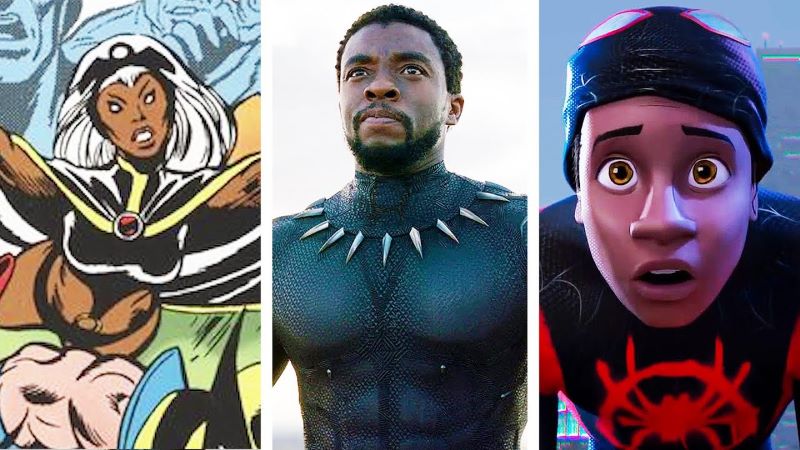
Another Black superhero who provided a powerful cultural anchor in both comics and cinema is Black Panther. First introduced in the comic Fantastic Four #52 in July 1966 as the king of Wakanda, a technologically advanced African nation, T’Challa represented a radical reimagining of Africa as a continent untouched by the burdens of colonialism. Instead of being portrayed through outdated stereotypes, Wakanda was depicted as a place of innovation, pride, and strength. The character challenged long-standing narratives that often presented Africa as dependent or backward.
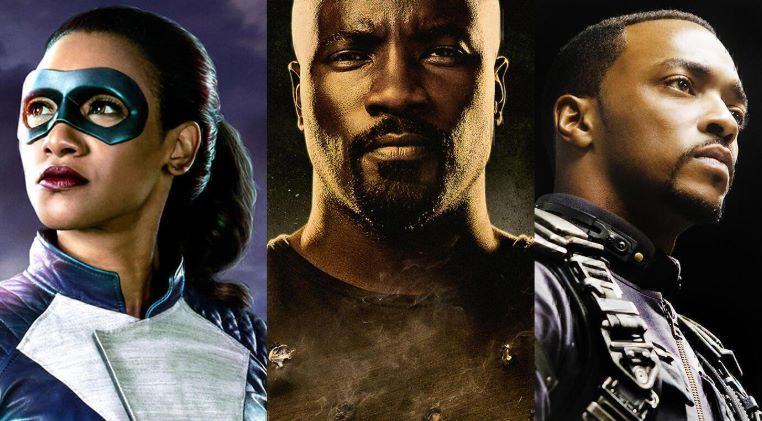
Also important in this narrative is Harlem’s own Power Man, Carl Lucas, better known as Luke Cage. Introduced in 1972, Luke Cage reflected the urban realities of Black America. Known as the “Hero for Hire,” his story begins with a wrongful imprisonment during which a dangerous experiment grants him superhuman strength and unbreakable skin. His story reflects the systemic injustices Black communities often face and highlights how courage and resilience are required to overcome them.
And then there is Storm, my teenage crush. African and often referred to as the magnificent wind-rider, Storm remains one of the most powerful mutants in the Marvel universe. As a Black African woman who can control the weather, Storm broke multiple barriers across race, culture, and gender. She became one of the first Black female superheroes to achieve global popularity and eventually led the X-Men, demonstrating that leadership and heroism are not limited by gender.
From Sidekick to Center Stage
Following the death of Peter Parker in Marvel’s Ultimate universe, the company introduced Miles Morales, a young Black and Puerto Rican teenager who would take on the mantle of Spider-Man. The response was mixed. Some observers, including the legendary comic book creator Stan Lee, applauded the move as an important way to create positive role models for children. Others, including critics from publications such as The Guardian, viewed it as an attempt by Marvel to embrace political correctness.
Regardless of the differing opinions, Miles Morales represented a new generation of heroes that reflect the diversity of modern society. Rather than replacing the classic Spider-Man, Miles expanded the idea that heroism can belong to anyone, regardless of background.
Another significant evolution occurred with the rise of Sam Wilson, portrayed by Anthony Mackie in the Marvel Cinematic Universe. Originally introduced as Falcon, Wilson spent years as Captain America’s trusted partner before eventually taking on the mantle of Captain America himself at the end of Avengers: Endgame.
Source: YouTube
This transition carried considerable symbolic weight. The iconic shield long associated with American ideals was now in the hands of a Black man. While opinions initially remained mixed, Anthony Mackie’s performance has gradually prompted many viewers to rethink traditional notions of patriotism, justice, and national identity.
The passing of Chadwick Boseman was a profound loss for the Marvel Cinematic Universe and for audiences around the world who had come to admire his portrayal of Black Panther. While many argued that the role should be recast, Marvel ultimately chose a different path.
The mantle of Black Panther was passed to Shuri, T’Challa’s younger sister, portrayed by Letitia Wright.
Shuri’s rise reflects both a narrative shift and an acknowledgment of the strength and leadership potential of Black women. Initially introduced as a brilliant scientist and technological genius, Shuri eventually evolves into a hero and leader in her own right. As a warrior and monarch, she represents the growing prominence of Black women within superhero storytelling.
Cultural Influence Across Continents
The influence of Black superheroes extends beyond comic book stores and movie theatres. These characters have become cultural symbols that influence fashion, language, activism, and identity.
The worldwide success of Black Panther sparked a global cultural movement. Audiences embraced the film’s African-inspired aesthetics, traditional clothing, and celebration of Black excellence. The phrase “Wakanda Forever,” accompanied by the now-iconic crossed-arm salute, quickly became a symbol of pride and unity across the African diaspora, and its influence continues to resonate strongly in Africa.
For many viewers across the continent, seeing a technologically advanced fictional African nation offers a powerful vision of possibility. Wakanda continues to challenge African societies to imagine development that is not dependent on external influence but driven by internal innovation and resilience.
Characters like Storm and Shuri also continue to inspire many Black women and girls. Young girls can see themselves reflected in heroes who balance family expectations with the responsibilities of leadership in a complex modern world. Their presence shifts attention away from superficial conversations about beauty and instead emphasizes qualities such as intelligence, strength, courage, and authority.
These heroes and heroines also influence broader conversations about representation in entertainment. Their success demonstrates that audiences are eager for stories that reflect diverse experiences while exploring universal themes such as justice, community responsibility, cultural pride and resilience.
While heroism may traditionally be interpreted as saving the world from villains, these characters broaden that definition. Heroism can also mean standing up for justice, protecting vulnerable communities, and challenging systems of inequality.
As the influence of Black superheroes continues to grow and new characters emerge, their stories will continue to reshape narratives within popular culture while inspiring audiences across continents.

Okechukwu Nzeribe works with the Onitsha Chamber of Commerce, in Anambra State, Nigeria, and loves unveiling the richness of African cultures. okechukwu.onicima@gmail.com