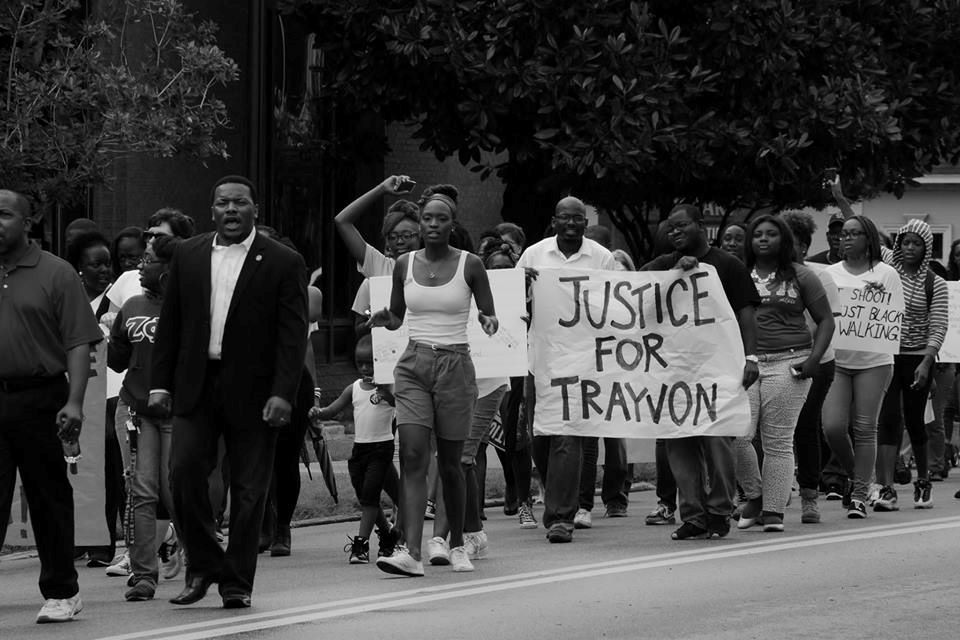
March for Trayvon Martin, 2013
Naacpga, CC BY-SA 3.0, via Wikimedia Commons
Grief has always been a part of human existence, whether it is the loss of a parent, child, spouse, or dear friend, death has remained a common denominator in the existence of mankind that people are left to process and deal with throughout their time on earth.
Dealing with loss stemming from a natural occurrence can be a struggle for families as they are urged to carry on with the memories of the loved one lost. The biggest challenge is when the loss of a loved one is from the actions of others.
Gun violence, Police Brutality, and violence against immigrants have become a common occurrence of loss, especially for many Black families.
According to the National Council on Family Relations, “more than half (58%) of gun violence victims in the United States are Black, and the overwhelming majority of victims are male. In 2015, Black husbands, fathers, sons, brothers, uncles, cousins, and nephews accounted for 91% of Black victims funeralized as a result of gun violence in the United States. Compounding this bereavement are the disparate number of unarmed Black men fatally shot by police in the United States.”
For many Black families, dealing with the aftermath of losing a loved one to any of these tragic occurrences can have a devastating emotional effect on the household, with many struggling to recover from the trauma over several years.
According to a commentary by Richard V. Reeves and Sarah E. Holmes titled – Guns and race: The different worlds of Black and white Americans, “Individuals who witness violence are also at increased risk for a variety of mental health issues, which can manifest as post-traumatic stress disorder, depression, poor academic performance, substance abuse, risky sexual behaviour, delinquency, and violent behaviour.”
But in moments of grief, several Black families have converted private mourning periods into public purpose. Driven by a need to address systemic injustices while ensuring violent acts towards Black people do not occur, some of these families have turned loss into legacy by founding scholarships, non-governmental agencies, and advocacy groups to push a message of strength and hope for many families struggling with the loss of a loved one while taking steps to correct the ills being experienced in society.
Turning Grief Into A Legacy
Trayvon Martin Foundation:
Walking back home from a convenience store, 17-year-old Trayvon Martin, an African-American, was accosted by Zimmerman, a neighbourhood-watch volunteer who had reported to the police that there had been several burglaries around the neighbourhood, and while profiling Martin as someone suspicious with a no-good intent.
Despite being told to wait for police to arrive, Zimmerman would go ahead to confront Martin, and in the ensuing scuffle, Martin was fatally shot by Zimmerman under the claim of self-defence despite no guns or weapons being found on the person of Martin.
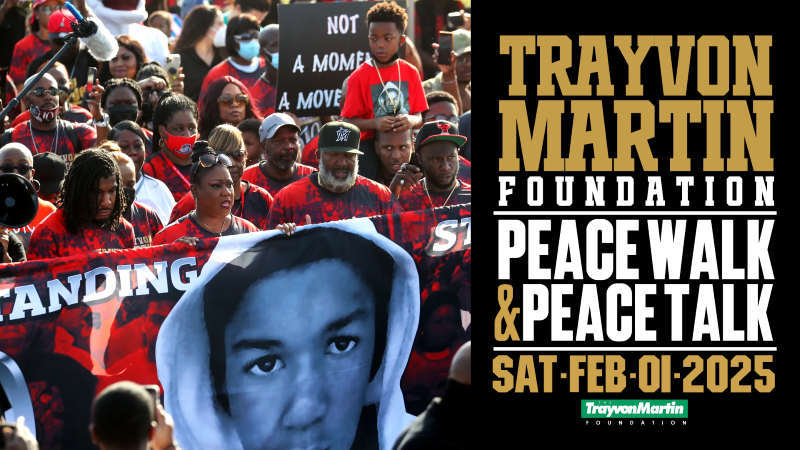
Source: Trayvon Martin Foundation
Seen as another incident of racial profiling, public outrage grew with national protests across cities in the United States, intensifying debates about racism. Due to a lack of sufficient evidence, Zimmerman was acquitted by a jury in 2013.
In honor of his memory, Martin’s parents later founded the Trayvon Martin Foundation. According to information on its webpage, the foundation is “committed to creating awareness of gun violence, promoting social justice, and providing educational and support programs for families who have lost loved ones to senseless violence. Through advocacy, outreach, and community engagement, the Foundation strives to build a world where every individual is valued and justice prevails. Its mission is to empower families, inspire change, and ensure that Trayvon’s legacy continues to drive progress toward equality and peace.”
George Floyd Memorial Scholarship
May 25, 2020, Minneapolis, Minnesota, the world watched in shock as former Minneapolis police officer Derek Chauvin pressed his knee over the neck of 46-year-old George Floyd for more than 9 minutes, which led to his death. In a private autopsy commissioned by the family, it was discovered that his death was a result of cardiopulmonary arrest, which was complicated by law enforcement subdual, restraint, and neck compression.
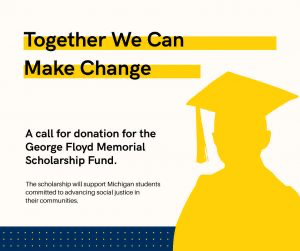
Source: University of Michigan
The result of his death sparked a set of protests not only in Minneapolis but throughout the United States and across the world as outrage poured over the killing of another Black man. Clashes between activists, Black Lives Matter demonstrators, and the Police were common as many demanded an end to police brutality and racial injustice.
Ex-Police Officer Derek Chauvin would later be convicted of murder and manslaughter and sentenced to twenty-two and a Half years in prison, along with his three other ex-police officers, who were also charged with two counts each of aiding and abetting in the death.
The aftermath of George Floyd’s death has not only led to sweeping reforms aimed at combating inequity, improving diversity, and addressing police operational processes, but has also inspired the George Floyd Memorial Scholarship across a dozen Colleges and universities, with the University of Michigan leading the charge and others following suit as a way to champion social justice in their communities.
Damilola Taylor Trust:
November 27, 2000, young Damilola, as a migrant, had moved to Peckham in England with members of his family in an effort to find a cure for the severe form of epilepsy of his sister Gbemi.

Source: Damilola Taylor Trust
Fuelled by an ambition to explore a career in medicine as a route to finding a cure for his sister and others like her, young Damilola, who had just started a new academic year at Oliver Goldsmith School, would set off for the Peckham Library. That was the last time he would ever make it back home.
In a senseless act of violence, brothers Ricky and Danny Preddie, just 12 and 13, would stab young Damilola, leading to severe blood loss and ultimately death for the young 11-year-old. His death brought forth many questions that bordered on violence.
Though burdened by the grief of the loss of their son, Richard and Gloria Taylor, Damilola’s parents, within months set up the Damilola Taylor Trust, which was targeted at supporting disadvantaged youths and to combat the same kind of violence that claimed their son.
Over the years, the centre has hosted youth achievement awards and advocated for mental health and community safety initiatives.
While these examples are a reflection of families who have turned their pain into purpose, they further remind us of the need to continually drive the value of social justice and human care in our communities so that violence against all races and colors is eliminated.

Okechukwu Nzeribe works with the Onitsha Chamber of Commerce, in Anambra State, Nigeria, and loves unveiling the richness of African cultures. okechukwu.onicima@gmail.com