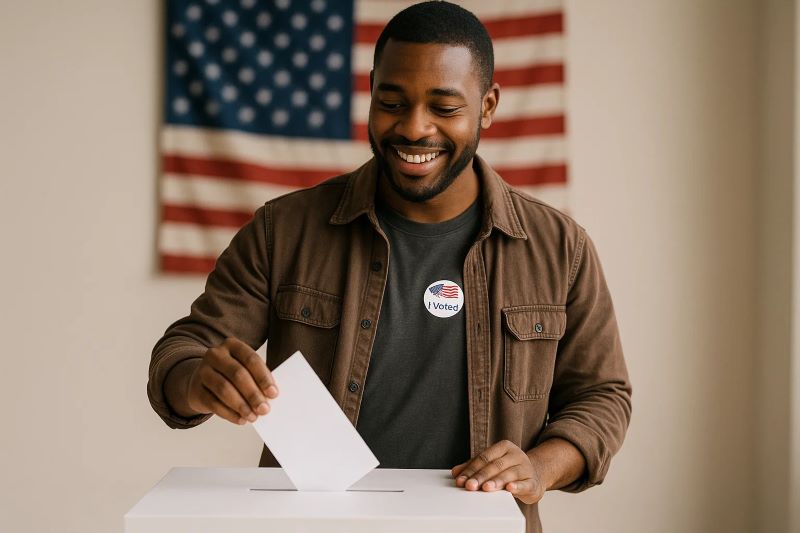
AI Generated image
This Is About More Than Politics
Your grandmother might remember when Black people in America couldn’t vote without risking their lives. Your parents remember when Philadelphia’s halls of power looked nothing like the neighborhoods they served. You remember the last time something changed in your community or the last time it didn’t, and you wondered why nobody was listening.
Here’s the truth: Black Americans make up 14% of all eligible voters nationwide, more than 34.4 million people. In Philadelphia, where our voices have shaped this city’s culture, economy, and soul, we hold the power to choose who runs our courts, who prosecutes crime, and who decides how our tax dollars get spent. On November 4, 2025, those choices are in your hands. Not Washington’s. Yours.
Nearly 40% of eligible voters in America, almost half, don’t vote at all. In Philadelphia’s 2024 election, only about 60% of registered voters showed up. That means 676,016 people voted while hundreds of thousands of Philadelphians stayed home. Compared to 2020, when 749,317 people voted, we lost over 70,000 voices in just four years.
Think about what that means. Elections in Philadelphia are often decided by tens of thousands of votes, sometimes fewer. When hundreds of thousands of registered voters don’t show up, a small fraction of the city decides everything for everyone.
This election includes the District Attorney, who determines whether your nephew gets a second chance or a prison sentence. The Controller, who audits whether city money actually reaches your neighborhood. Judges who decide if families get fair hearings when they’re facing eviction or fighting for custody. These are the people who decide whether Philadelphia invests in you or forgets about you.
This is about whether your voice matters. And it does.
Every Vote Is a Story
Think about the street where you grew up. Can you still picture it?
Maybe it had corner stores where everybody knew your name, churches where generations of families worshiped together, and porches where neighbors sat and talked on summer nights.
Now think about what’s changed. Maybe those corner stores closed, and nobody replaced them. Maybe your child’s school lost its music program, and you couldn’t do anything about it. Maybe the streetlights on your block have been broken for months, and the city keeps saying, “We’ll get to it.” Maybe you know someone who got stopped by police for no good reason, or someone who couldn’t make bail and lost their job while waiting for trial.
Here’s what connects all of those things: somebody made a decision.
A District Attorney decides bail policies and prosecution priorities. In Philadelphia, the DA’s office handles approximately 40,000 criminal cases each year. That means 40,000 families, many of them Black families, whose lives are shaped by one elected official’s choices.
A City Controller audits how Philadelphia spends money, whether recreation centers stay open, whether streets get repaired, and whether community programs get funded or cut. Judges determine whether working families get justice in court or get steamrolled by landlords and corporations.
These are decisions about whether your community thrives or struggles, whether your family feels safe or scared, whether your children inherit hope or frustration.
“Every ballot you cast is a love letter to the neighborhood that raised you.”
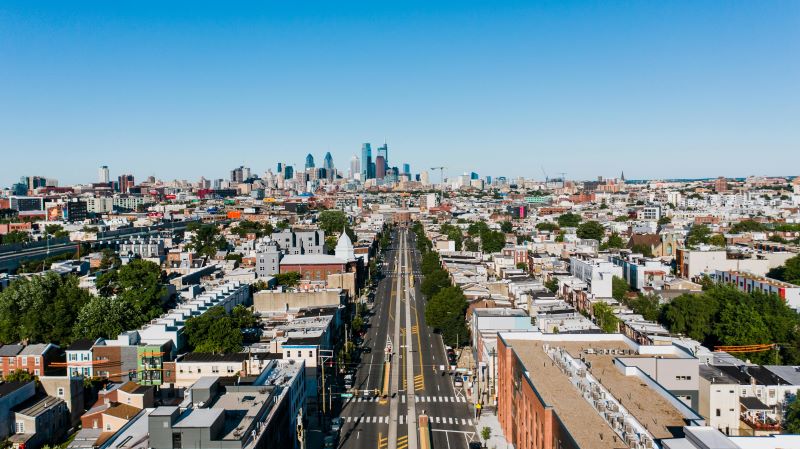
Photo by Kelly
We’ve Always Known Our Power
Our people have always understood what the ballot means. It’s not just paper. It’s power.
When Fannie Lou Hamer said, “I’m sick and tired of being sick and tired,” she was talking about the right to vote. When John Lewis got his skull fractured on the Edmund Pettus Bridge, he was fighting for the right to vote. When your grandmother registered despite the threats, despite the poll taxes, despite the terror, she was claiming power that belonged to her.
They didn’t fight for this right so we could scroll past election day like it’s just another Tuesday.
Research shows something beautiful and powerful: neighborhoods with strong community ties see higher Black voter turnout. When we show up together, when neighbors talk to neighbors, when churches organize, when block captains knock on doors, our turnout changes everything. Philadelphia politicians respond to communities that vote. They ignore communities that don’t. It’s that simple and that brutal.
When Black turnout is strong, city officials fund programs in our neighborhoods. They appoint people who look like us and understand our struggles. They listen when we say the criminal justice system is broken, when we demand better schools, when we insist on economic opportunity.
When we stay home, others decide for us. And they rarely decide in our favor.
“But My Vote Doesn’t Matter”
Let’s talk about that. Because it’s the biggest lie in American politics.
You know what feels powerless? Watching your neighborhood decline and thinking you can’t do anything about it. You know what feels empowering? Realizing that the person who prosecutes crime in Philadelphia, the person who audits city spending, and the judges who preside over local courts, you choose them.
Maybe you’re thinking: “Politicians all lie. Nothing ever changes. The system is rigged.” And listen, you’re not wrong to feel that way. Black communities have been promised everything and delivered disappointment more times than we can count.
But here’s the thing: when we don’t vote, we guarantee nothing changes. When we do vote, we force people to pay attention.
“I don’t have time.” Polls are open from 7 AM to 8 PM on November 4th. Vote before work. Vote during lunch. Vote after you put the kids to bed. If you truly can’t make it, request a mail ballot by October 28th at vote.phila.gov. You can vote from your kitchen table.
“I don’t know where to vote.” Go to vote.phila.gov and type in your address. Your polling place appears instantly. Write it down. Put it in your phone. Tell your neighbor.
“Voting feels scary or confusing.” You have rights. Poll workers cannot intimidate you. If anyone tries to turn you away or harass you, call 866-OUR-VOTE (866-687-8683) immediately. You have the law on your side.
The truth is, every obstacle has a solution. The question is whether we’re willing to push through.
“Your ancestors survived worse than a trip to the polls. Honor them. Vote.”
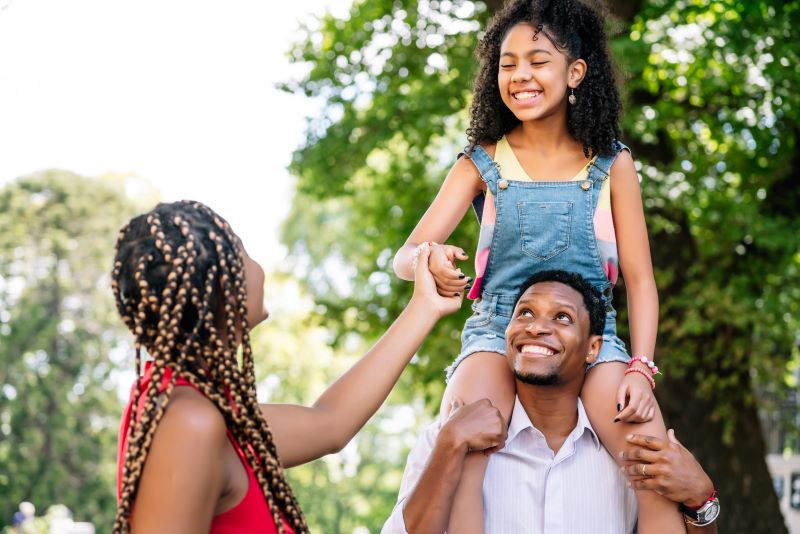
Image: Freepik
Local Power Is Real Power
Here’s something that might surprise you: the District Attorney affects your life more than the President does.
Think about it. The President doesn’t decide whether police in your neighborhood get prosecuted for misconduct. The DA does. The President doesn’t determine whether your son gets charged as an adult or given diversion. The DA does. The President doesn’t decide whether nonviolent offenders sit in jail because they can’t afford bail. The DA does.
City Controller audits every city agency and publishes reports on whether your tax dollars are wasted or invested wisely. When neighborhoods don’t get services, the Controller can expose it.
Judges determine whether families facing eviction get fair hearings, whether people accused of crimes get justice or just processed through a system, and whether civil rights get protected or violated in Philadelphia’s courts.
For Black communities, these local positions determine whether we get safety or surveillance, investment or neglect, justice or mass incarceration. Municipal elections directly control policing policies, school funding decisions, housing regulations, and economic development in neighborhoods where Black Philadelphians live, work, and raise families.
Presidential elections matter. But city elections shape your daily reality. They decide whether your block gets attention or gets forgotten.
What You Can Do Right Now
Stop reading for a second. Pull out your phone.
- Go to vote.phila.gov or pavoterservices.pa.gov. Check if you’re registered. It takes 90 seconds.
- If you’re registered: Find your polling place at vote.phila.gov. Write it down or save it in your phone.
- If you can’t vote on November 4th: Request a mail ballot immediately at vote.phila.gov or call 215-686-VOTE (8683). Deadline is Tuesday, October 28th. Your ballot must be received by 8 PM on November 4th.
- Put November 4th on your calendar. Set an alarm. Treat it like a doctor’s appointment you can’t miss.
- Make a plan. How will you get there? What time works best? Do you need childcare? Do you need a ride? Figure it out now, not on Election Day.
- Tell three people. Text your sister. Call your cousin. Talk to your neighbor. Voting is contagious. When people see others taking it seriously, they take it seriously too.
Don’t just think about doing this. Actually do it. Right now. Before you close this page.
This Is Your Moment
Your grandmother didn’t risk everything for the right to vote so you could skip election day because you’re busy.
Your parents didn’t fight for representation so you could sit on the sidelines and complain that nothing ever changes.
Your children aren’t watching you give up on democracy before they even understand what it means.
November 4, 2025, is your chance to decide who runs Philadelphia. Not who runs America, but who runs Philadelphia. Your city. Your neighborhood. Your schools, your streets, your courts, your future.
This is how change happens. Not through wishes or prayers or posts on social media. Through votes. Through showing up. By making politicians earn your support instead of taking it for granted or ignoring you completely.
Check your registration today. Request a mail ballot by October 28 if you need one. Mark November 4th on your calendar like your life depends on it, because your community’s life does. Your vote is your voice. Your voice is your power. And Black Philadelphia’s power, when we choose to use it, is unstoppable.
Don’t just read this and nod. Act. Today. Right now.
Your grandmother would be proud.

Anand Subramanian is a freelance photographer and content writer based out of Tamil Nadu, India. Having a background in Engineering always made him curious about life on the other side of the spectrum. He leapt forward towards the Photography life and never looked back. Specializing in Documentary and Portrait photography gave him an up-close and personal view into the complexities of human beings and those experiences helped him branch out from visual to words. Today he is mentoring passionate photographers and writing about the different dimensions of the art world.