Image: Freepik
Many people who want to look beautiful forever turn to major changes to their bodies, such as cosmetic surgery or elective surgery. These surgeries can have big and localized effects, but they usually require a lot of time and money. Before having any major surgery, it’s important to do a lot of research not only on the surgeon’s skills but also on the costs and how long it will take to recover. This careful due diligence is similar to the thorough research that is often required to understand the complexity of procedures and associated costs, such as the total rhinoplasty cost. But the real key to lasting beauty and youth isn’t these outside fixes; it’s taking care of and protecting the body’s biggest organ: the skin. The current beauty trend is moving away from treatments that are reactive and invasive and toward treatments that focus on the skin’s basic health to build deep, biological resilience. This new focus is on learning about and helping two important parts that are linked: the epidermal skin barrier and the skin microbiome, which is both delicate and strong. The key to getting a long-lasting, glowing complexion that doesn’t show age or stress from the environment is to master these two things.
The Skin Barrier: The Most Important Layer of Protection
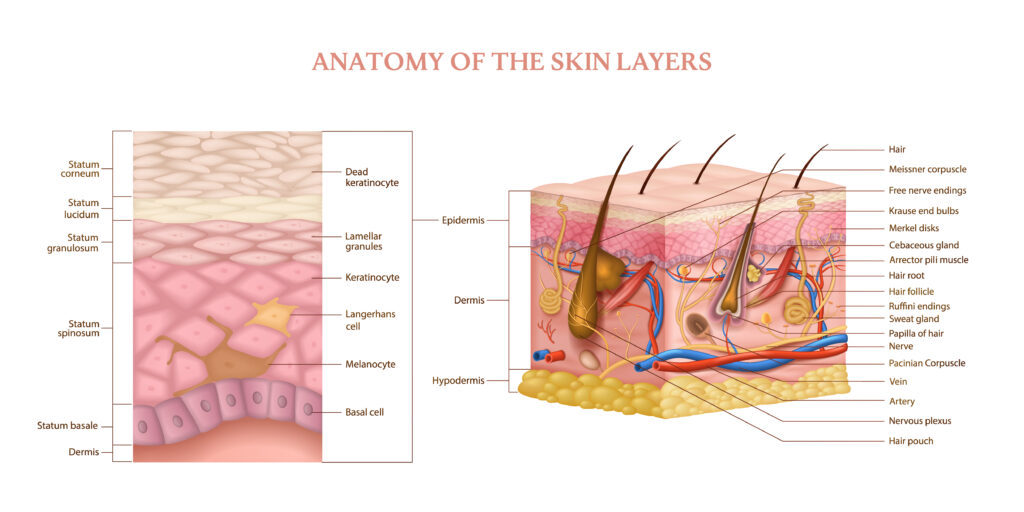
Image: Freepik | macrovector
The skin barrier is the outermost layer of the epidermis (the stratum corneum). It is often thought of as a “brick and mortar” structure. The “bricks” are the corneocytes, which are flattened skin cells, and the “mortar” is a lipid matrix made up mostly of ceramides, cholesterol, and fatty acids. This structure is more than just a surface covering; it is the body’s first line of defense and serves two important purposes.
To begin with, the barrier protects against outside threats like pollution, pathogens, UV radiation, and things that bother the environment. Second, and maybe more important for looks, it stops Transepidermal Water Loss (TEWL). When the lipid matrix is healthy and whole, it keeps moisture in the skin, making it look plump, smooth, and strong. On the other hand, a damaged barrier, which can happen from too much exfoliation, harsh soaps, or very hot or very cold weather, makes TEWL go up, which shows up as dryness, flaking, redness, and hyper-sensitivity. To fix the barrier, you often have to stop using harsh products and start using ones that are more like the skin’s natural makeup, like high-quality ceramides and squalane.
The Microbiome: A Living Ecosystem That Is Balanced
The microbiome is the skin’s second line of defense, and it is located beyond the physical barrier. There are billions of microorganisms, including bacteria, fungi, and viruses, that live together on the surface of the skin in this complex and diverse ecosystem. A healthy microbiome has a lot of different types of bacteria and fungi that work together to keep the skin healthy.
The microbiome is very important for the immune system. The good microbes fight off and compete with bad bacteria that cause disease, which helps control inflammation and sensitivity. When this ecosystem is disturbed, which can happen when broad-spectrum antibiotics, harsh cleaners, or big changes in the environment happen, harmful bacteria can grow and cause problems like acne, rosacea, and eczema.
Prebiotics, probiotics, and postbiotics are new types of skincare ingredients that have come about because of the shift toward supporting the microbiome. Prebiotics are like fertilizer for good bacteria, probiotics are the living bacteria themselves (though they can be hard to keep alive in topical products), and postbiotics are the good things that bacteria make when they ferment (like lactic acid or peptides) that help reduce inflammation and strengthen the skin’s barrier.
The Age of Customized Skin Care
The rise of true personalization in beauty has been driven by the knowledge of the barrier and microbiome. Routines that work for everyone are becoming less common. Modern diagnostic tools, like at-home DNA and microbiome testing, are helping people learn about their unique biological traits, like whether they naturally don’t make enough ceramide or are more likely to have too many acne-causing bacteria.
Dermatologists and high-end compounding pharmacies can use this data, which is often combined with AI-driven software, to make products that are very specific to each customer. Instead of just buying a moisturizer for “dry skin,” a customer might get a product that is specifically made to fix a diagnosed problem with the cholesterol-to-ceramide ratio, or a toner that is made with a specific postbiotic to keep their microbial diversity stable. This method not only works best, but it also cuts down on the irritation and sensitivity that can happen when patients switch between products that don’t work well for them.
In conclusion, the best way to invest in your long-term appearance is to take good care of your skin biology on a regular basis. By safeguarding the physical barrier and nurturing the microbiome’s internal ecosystem, individuals transcend superficial aesthetics, advancing towards authentic, foundational health. This informed approach is less about quick fixes and more about setting up a lifelong system of biological support that makes sure that radiance and resilience come from the inside out.