
Not viral doesn’t mean not vital. In an attention economy that rewards spectacle, many Black inventors tackling unglamorous, structural problems such as clean water, grid reliability, accessible health care, and safer buildings, often go unrecognized, even when their work is patented, piloted, or deployed in the field. This piece surfaces five such inventors whose contributions are documented through patents, peer-reviewed publications, credible news, and institutional records. The goal is not hagiography, but evidence-based respect: what the invention does, how it works in plain terms, where it’s being used, and why the story matters today.
Dr. Hadiyah-Nicole Green: Low-Cost Targeted Cancer Therapy With Nanoparticles
Cancer mortality remains disproportionately high in Black communities, driven by late diagnosis, access barriers, and treatment toxicity. A key need is tumor-specific therapy that minimizes collateral damage to healthy tissue and can be delivered cost-effectively in under-resourced settings.

Source: Dr. Hadiyah-Nicole Green’s Cancer-curing Technology – Twist Out Cancer
Dr. Hadiyah-Nicole Green has advanced a photothermal therapy approach using tumor-targeted nanoparticles activated by near-infrared laser light. In simplified terms: nanoparticles are conjugated to tumor-seeking molecules; once they accumulate in a tumor, an external near-infrared laser heats the particles, ablating cancer cells while sparing surrounding tissue. This leverages the tissue-penetrating window of near-infrared light and the high surface-area properties of nanoparticles to focus heat exactly where it is needed.
Dr. Lonnie Johnson: Solid-State Thermal-to-Electric Conversion (JTEC) for Clean Energy
Clean, dispatchable power is the missing piece for a high-renewables grid. Converting heat directly to electricity with high efficiency and no moving parts promises resilient systems for waste heat recovery, concentrated solar, and remote power.
Beyond inventing the Super Soaker, Dr. Lonnie Johnson has pursued the Johnson Thermo-Electrochemical Converter (JTEC), a solid-state heat engine concept that uses temperature-driven pressure gradients in a closed-loop electrochemical system to generate electrical power. In lay terms: heat on one side of the device changes the state of a working fluid and drives ions through a membrane to create an electrical potential; the cycle recovers on the cooler side, enabling continuous power generation without combustion or turbines.
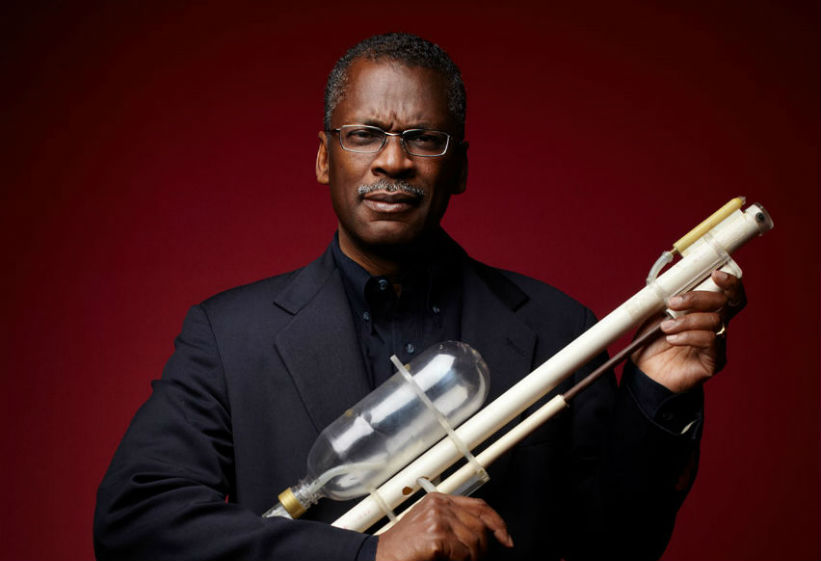
Source: Perseverance and prototypes | USPTO
JTEC has been profiled by reputable science media and tied to a portfolio of patents and prototypes out of Johnson Research & Development; the concept has drawn interest for potential higher theoretical efficiency compared to traditional thermoelectrics, though independent third-party performance validation at commercial scale remains the gating factor for adoption timelines. This places the technology in a late R&D/prototyping lane rather than mass deployment.
If scaled with verified efficiency, JTEC could harvest industrial waste heat and pair with solar thermal, cutting emissions and adding firm capacity. Even incremental gains in heat-to-power conversion translate to meaningful CO2 reductions across heavy industry.
Dr. Ashitey Trebi-Ollennu: Affordable Field Robotics for Planetary and Earthbound Infrastructure
Robotics capable of precision work in hazardous or remote environments can improve safety and maintenance efficiency, from planetary exploration to terrestrial infrastructure inspection. Black roboticists at top labs often receive less mainstream attention unless attached to a viral product demo.
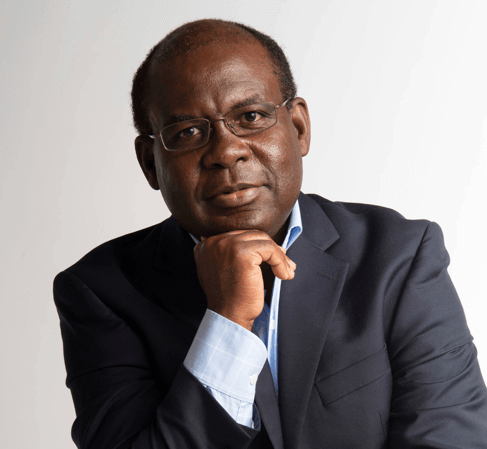
Source: Items – Alumni profile – Dr Ashitey Trebi-Ollennu – Queen Mary University of London
Ghanaian-American roboticist Dr. Ashitey Trebi-Ollennu has led and contributed to robotic systems at JPL, notably guidance, navigation, and control for robotic arms and landers operating autonomously in harsh conditions. The underlying approach uses sensor fusion (cameras, inertial measurement, sometimes LIDAR), robust control loops, and fault-tolerant software to execute manipulation tasks where human teleoperation is constrained by delays or safety limits. Such architectures also translate into earthbound inspection and manipulation tasks for utilities and construction.
Public technical records and institutional features document his role at JPL and contributions to field robotics missions; while spacecraft hardware is not “commercialized” in the usual sense, the same control and autonomy methods are regularly tech-transferred into inspection robots used by utilities and industry, a translation often documented by labs and standards bodies rather than splashy consumer tech coverage.
Robust autonomous manipulation reduces risk to human workers and downtime costs; at a planetary scale, it expands scientific reach. On Earth, it underpins safer inspection of pipelines, bridges, and generation assets.
Read also: 5 Major Historical Contributions by Black Inventors
Dr. Marian Croak: Scalable Voice-over-IP and Web Real-Time Communications Problem and Context
Reliable, low-cost voice and video over the internet are lifelines for telehealth, education, family care, and small businesses. The core challenge is engineering networks to prioritize, compress, and route real-time packets at a global scale.
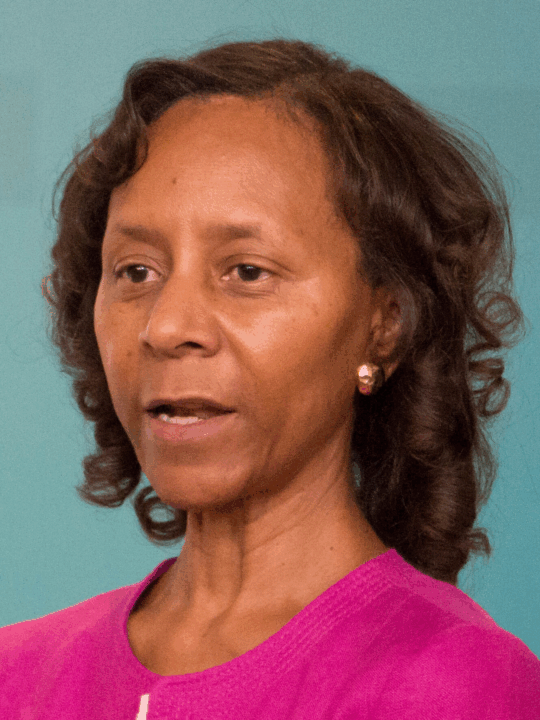
Source: Marian Croak – Wikipedia
Dr. Marian Croak pioneered VoIP technologies, building methods to convert analog voice signals into data packets and manage them end-to-end with quality-of-service guarantees. In lay terms: voice is digitized into packets; networks label and prioritize those packets so conversations arrive with minimal delay and jitter; error-correction cleans up losses; session control protocols set up and tear down calls seamlessly. These building blocks later undergird WebRTC-like experiences powering teleconferencing and app-to-app calling.
Her patent portfolio runs through the core of modern Internet telephony and enterprise communications; institutional recognitions and engineering society records document deployment at carriers and platforms that made Internet calling ubiquitous. The evidence sits in patent databases, standards histories, and major operator deployments rather than splashy consumer-brand narratives.
Global-scale VoIP lowered costs, expanded access, and became foundational during crises, from hurricanes to pandemics, when traditional PSTN capacity was constrained. The social impact is broad but often invisible to end users.
Dr. James E. West: The Electret Microphone’s Everyday Accessibility Problem and Context
Capturing sound clearly and cheaply enabled modern phones, hearing aids, voice assistants, and field audio. The challenge was building a sensitive transducer that could be mass-produced at low cost while maintaining performance.
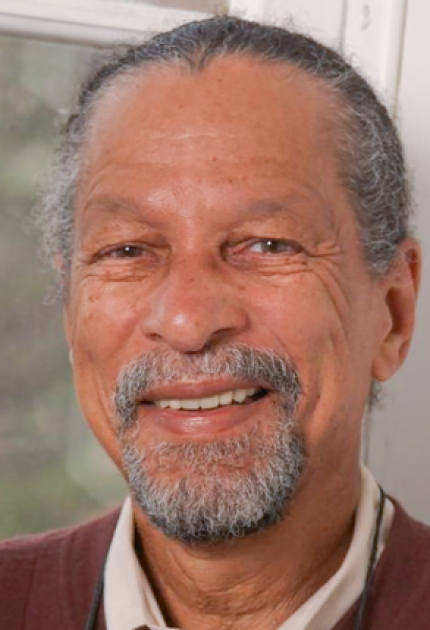
Source: James E. West | National Inventors Hall of Fame® Inductee
Dr. James E. West co-invented the electret condenser microphone, replacing bulky, expensive designs with a thin polymer film that holds a quasi-permanent electric charge. In plain language: sound waves flex the charged film; that motion changes an electric field, producing a signal proportional to the sound; the design is small, power-efficient, and easy to manufacture, which is why it ended up in nearly every mobile device and many medical and consumer products.
Electret microphones have been the dominant type in consumer electronics for decades, cited across institutional profiles and engineering society materials; West holds hundreds of patents and later served as a professor advancing acoustic research and STEM equity initiatives. The invention’s ubiquity is better documented in engineering histories than viral posts.
Microphone miniaturization and cost compression democratized recording, communication, and assistive tech, with particular benefits for accessibility devices and telephony in low-resource settings.

Anand Subramanian is a freelance photographer and content writer based out of Tamil Nadu, India. Having a background in Engineering always made him curious about life on the other side of the spectrum. He leapt forward towards the Photography life and never looked back. Specializing in Documentary and Portrait photography gave him an up-close and personal view into the complexities of human beings and those experiences helped him branch out from visual to words. Today he is mentoring passionate photographers and writing about the different dimensions of the art world.