

Maralal International Camel Festival, Kenya
Antony Trivet, CC BY-SA 4.0, via Wikimedia Commons
As the second half of 2025 continues to roll by, a flurry of festivals and cultural events begins to take centre stage across the continent from August up till the month of December. These long lines of festivities and ceremonies mark significant moments for many communities, cultures, and people.
As each showcases the beauty of Africa’s cultural festivities, it also offers a great opportunity to boost economic activities through tourism. Here is a look at the various cultural celebrations for the remaining part of the year.
August
Maralal International Camel Derby (Kenya): In Samburu County in Northern Kenya set on the hillside lies the dusty town of Maralal which is famous for its camel derby. Drawing riders, both professionals and amateurs, as well as spectators, the event is a combination of sporting activity and cultural celebration.
While Camel racers engage in the excitement and chaos of aiming for the victory prize, the town also comes alive with the best of Samburu culture like traditional music and dance, food, artworks, and a host of others. Providing a fun-filled cultural experience for all who visit.
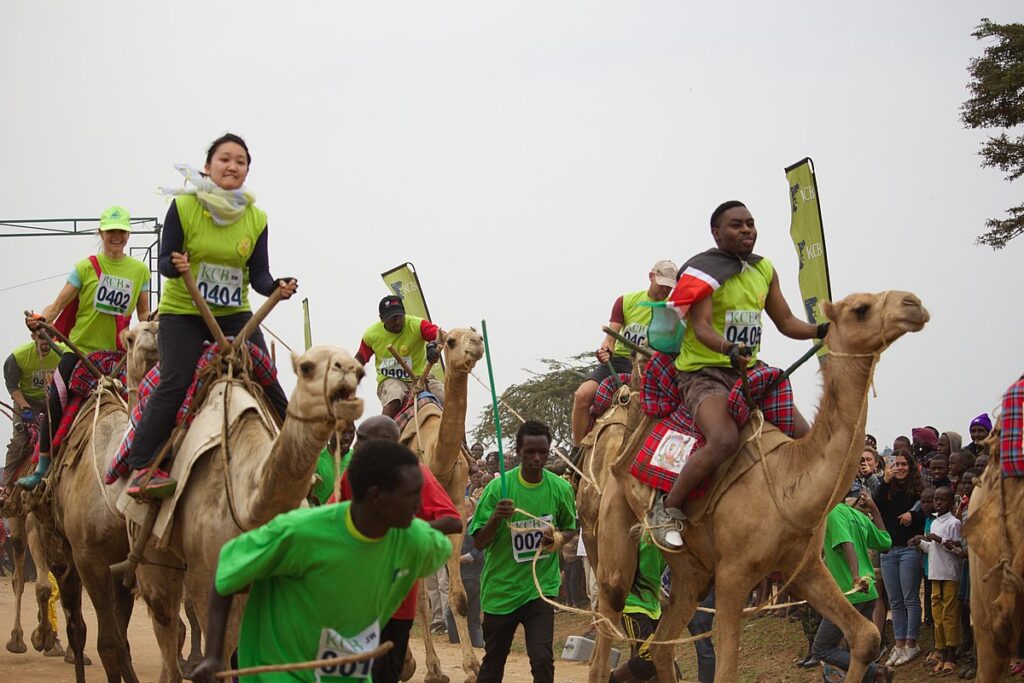
Maralal International Camel Derby. Sipee Kaphle, CC BY-SA 4.0, via Wikimedia Commons
Bayimba International Festival of Music and Arts (Uganda): Traditional Music, Contemporary beats, dance, theatre, and arts all coalesce this August at the 17th edition of the Bayimba International Festival of Music and Arts in Uganda. Set to take place at the Lunkulu Island, Mukono/Buikwe from 22nd – 24th, 2025, the festival will showcase the best of Ugandan local and international artists.
The festival is also a great platform to showcase up-and-coming Ugandan artists allowing them to work alongside global artists. For tourists looking to unwind and enjoy good music, the festival offers an immersive experience of the best of Uganda.
September
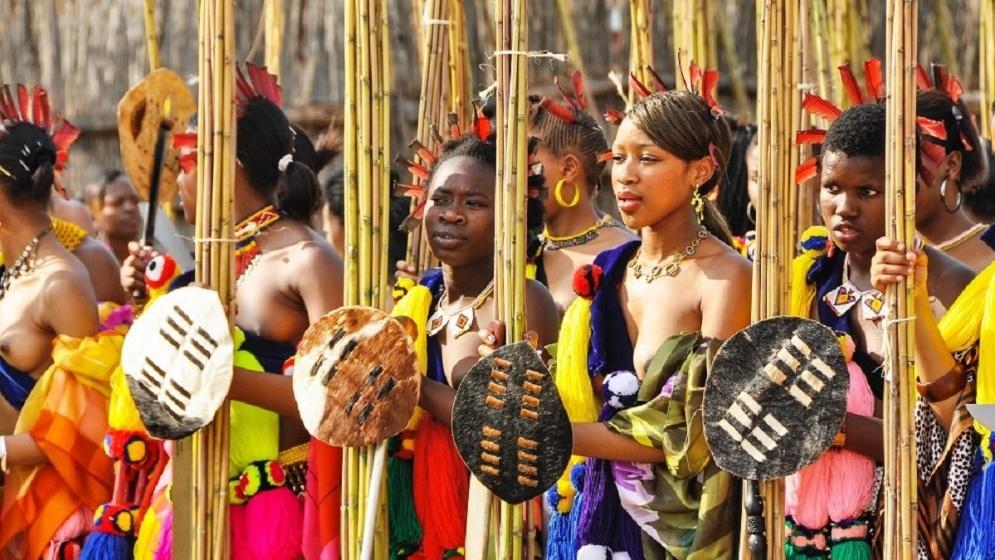
Mkhosi woMhlanga or Zulu Royal Reed Dance (South Africa): The Zulu culture comes alive in the month of September as a large number of young maidens from various communities in the province of KwaZulu-Natal join in the long procession to the KwaNyokeni Palace, the residence of His Majesty, the king of the Zulu nation.
By tradition, only virgins are allowed to participate in this ceremony as the ritual holds symbolic meaning acknowledging their dignity, purity, and the importance of womanhood in the Zulu culture.
At the start of the ceremony, the young maidens led by the chief princess bear a reed cut from the riverbed as a symbol of the power in nature. Adorned in colourful attire, the processions begin their journey towards the palace of the king of the Zulu nation. With jubilant singing and dancing, the maidens are received by the king who receives them as they present their reeds to him.
Learn more in this article: Cultural Significance of South Africa’s Zulu Reed Dance Festival
Kwita Izina Ceremony (Rwanda): Naming of Children is a sacred occasion for many cultures in Africa, and the belief that the name given to a child by his/her parents plays a role in shaping the future of that child is still considered valid. In Rwanda, the tradition of naming a child is done in the presence of friends and family members.
Following that same culture, the Kwita Izine ceremony which is also the Kinyarwanda term for name giving is the annual Gorilla naming ceremony where new baby mountain Gorillas are named. This internationally celebrated event which is aimed at supporting conservation efforts and boosting the local community attracts researchers, park rangers, conservationists, and tourists from all over the world.
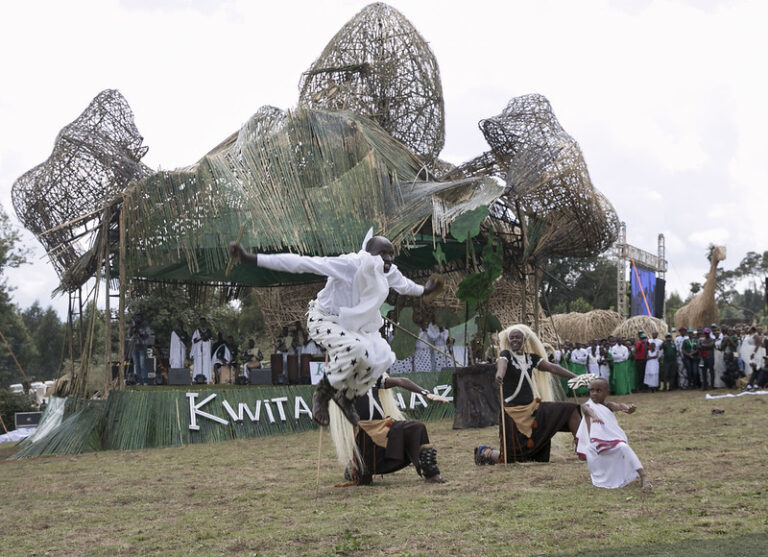
Kwita Izina in 2023. UWIMPUHWE Va, CC BY-SA 4.0, via Wikimedia Commons
Meskel Festival (Ethiopia): Celebrated on the 27th of September, the Meskel Festival marks the finding of the true cross upon which Jesus Christ was crucified by Helena, mother of Emperor Constantine. Considered a hugely important holiday in Ethiopia but viewed as a minor Christian feast by the Vatican, the festival attracts Christian faithful from across the country.
On the eve of the feast, families gather twigs which they build into a tall prism called the demera. Once completed a cross is placed on the pile in anticipation of the commencement of celebrations. After the liturgical celebrations the next day, families would set fire to the demera and use its ashes to put marks of the cross on their foreheads as a mark of their devotion to God.
October
Tobong’u Lore or The Lake Turkana Cultural Festival (Kenya): “Welcome Back Home” (Tobong’u Lore) is an annual event of the Turkana County in Kenya. The cultural festival which emphasizes the importance of reconnection and fosters unity within the communities also celebrates the heritage, customs, history, and traditions of the Tukana people and communities.
Highlights of the festival are fashion shows, traditional music and drinks, local food and cuisine, sports and games, exhibitions, and handicrafts. By promoting traditional values and fostering community togetherness, the festival offers a rewarding experience of the beauty of one of Kenya’s culturally vibrant communities.
Ofala Festival (Nigeria): An annual celebration all across several communities of the Igbo ethnic nation in the Southeastern part of Nigeria, the Ofala festival serves as both the renewal of the rites of the King or Obi and as an opportunity for his subjects to meet and pay homage to their King.
The event holds significant importance, especially in Onitsha where the programme attracts dignitaries from all over the country and abroad. The festivities are divided into two main days which are the Iru Ofala and Azu Ofala.
The Iru Ofala is set aside for the King who makes an appearance to the sound of traditional gun salutes and is surrounded by his cabinet members. Azu Ofala is an opportunity for the subjects, visitors, business organizations, and groups to pay homage to the King and receive his blessings.
Learn more in this article: Ofala Festival: A Journey Through The Rich Culture Of Southeast Nigeria
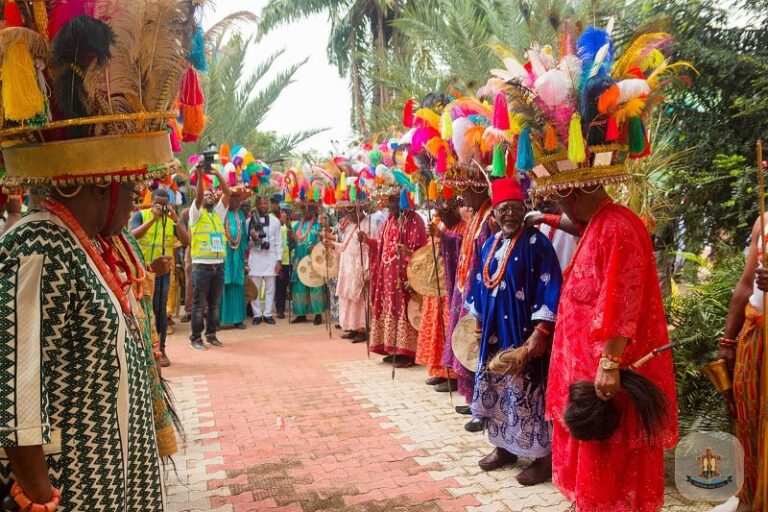
Ofala Onitsha. Eaghadiuno, CC BY-SA 4.0, via Wikimedia Commons
Bagamoyo Festival of Arts and Culture (Tanzania): First celebrated in 1982 after the founding of the Bagamoyo College of Arts (TASUBA), the festival is the largest and important festival in the country of Tanzania.
Offering a beautiful experience of theatre, acrobatics, exhibitions, music, and dance, the festival attracts groups from several parts of Tanzania, and other African countries as well as from Europe. With several international and local artists all over the world attending the event, the festival has gained popularity and is now used as a leverage to promote social awareness, bringing to light while supporting local artists, as well as fostering mutual cultural exchange.
Learn more in this article: Preserving Tanzanian Heritage: Museums and Cultural Centers
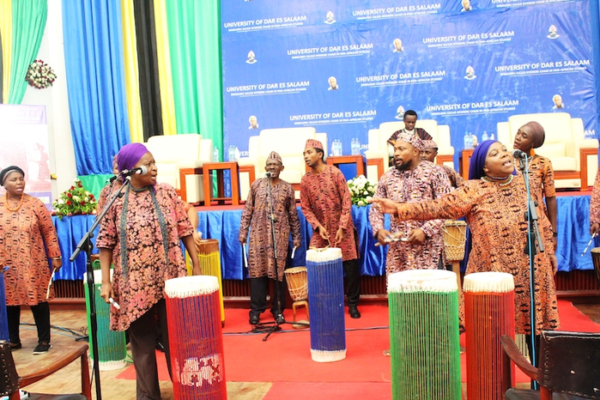
Musical performance at Bagamoyo Arts and Cultural Institute. Source: www.tasuba.ac.tz
November
Lamu Cultural Festival (Kenya): Held in late November to early December, the Lamu cultural festival is both a celebration of the past, present, and future as well as the promotion of the Swahili heritage and the preservation of its culture.
Popular activities associated with the festival are dhow sailing, henna painting, and donkey races along with Swahili poetry. Also to be are traditional Swahili wedding ceremonies and cuisines that offer visitors a chance to experience the culture of the people along with partaking in activities on the beautiful Archipelago Island.
Mombasa Carnival (Kenya): The month of November seems to hold a lot for the East African country as the Mombasa carnival also comes up in November. The Mombasa carnival is one of the biggest parades that takes place along Moi Avenue in Mombasa.
Attended by people of different race, activities that happen during these festivities ranges from parades, Taarab (a blend of music that combine sound influences from Indian, Arabic, and Swahili cultures), Chakacha (dance characterized by energetic movements and hip swaying), Benga (musical performance), arts and exhibitions and a taste of local cuisine.
Learn more in this article: Mombasa Carnival: Celebrating Kenya’s Premier Cultural Festival
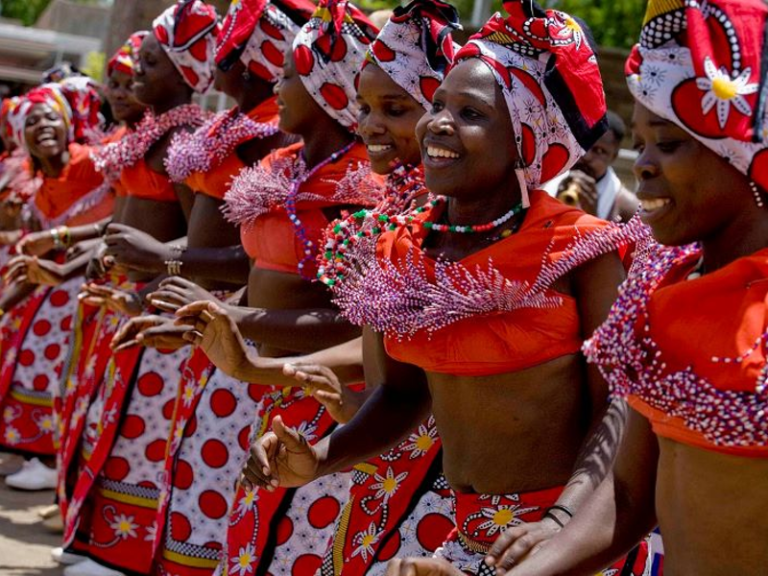
Traditional dancers. Kate Holt/AusAID, CC BY 2.0, via Wikimedia Commons
December
Banjul Cultural Festival (The Gambia): Organized by the Banjul City Council and held from December 25th to January 1st, the Banjul Cultural Festival is a local celebration that features a colourful parade of masquerades through the streets of the capital city. Also known as the Banjul Regatta and Festival, the history of the event dates back as far as the 1950s when it first became known due to the Gambia Yachting Association.
Over time it has become a festival that brings to light the uniqueness of the Gambia’s cultural heritage. The range of activities that become highlights of the festivities are the masquerade parade, traditional music and dance, along with several sporting events like canoe races and football tournaments.
International Festival of the Sahara (Tunisia): The four-day celebration is a traditional festivity that provides insight into the Bedouin culture. The event which started through trade activities between nomadic families has grown to a celebration of the desert culture and has continued to attract tourists and visitors from home and abroad.
As part of the festivities, dog races, camel marathons, horse races, traditional wrestling, poetry readings along with traditional music and dancing become the highlight of activities that occur during the four-day period.
Festival of Masks (Fêtes des Masques) (Côte d’Ivoire): Originally held in conflict-prone villages but with efforts to promote solidarity among the villages, the Fêtes des Masques or Goli Mask Festival became a notable celebration that showcased the beauty of Ivorian culture and traditions.
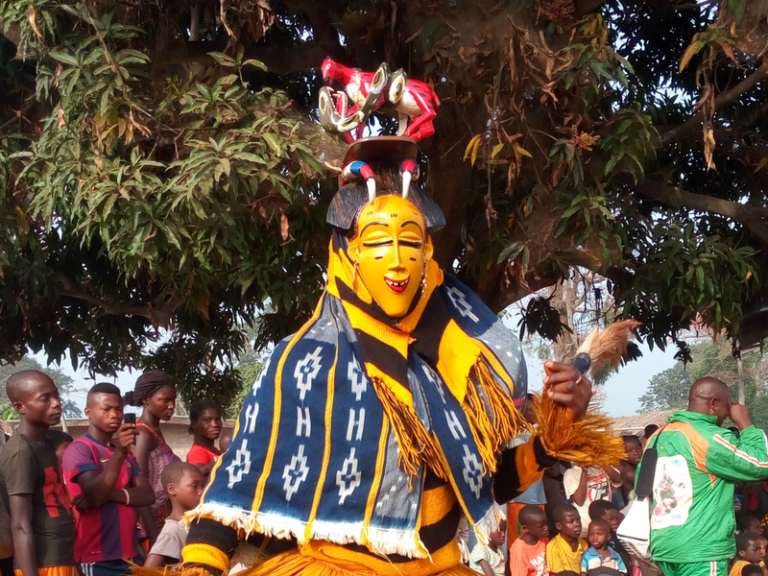
Zaouli mask of the Gouro ethnic group from the western Côte d’Ivoire. Emmanuel Dabo, CC BY-SA 4.0, via Wikimedia Commons
The festival became a ritual exercise to appease the spirits in the forest and villages and seek guidance. Communities adorn various masks and perform celebratory dances to connect to their ancestral spirits whom they believe embody these masks.

Okechukwu Nzeribe works with the Onitsha Chamber of Commerce, in Anambra State, Nigeria, and loves unveiling the richness of African cultures. okechukwu.onicima@gmail.com



.jpg)

I love these festivals and wish I could travel to see them. I love my African culture