
“The triumph of the written word is often attained when the writer achieves union and trust with the reader, who then becomes ready to be drawn into unfamiliar territory, walking in borrowed literary shoes so to speak, toward a deeper understanding of self or society, or foreign peoples, cultures, and situations.”
― Chinua Achebe, There Was a Country: A Personal History of Biafra
Africa’s literary Icon Chinua Achebe understood the importance that the power of literature held in fostering cross-cultural education, especially in the global space where the voices, histories, and experiences of people can be shaped by wrong stereotypes.
In championing African literature, Chinua Achebe, whose famous novel “Things Fall Apart” has been translated into over 50 languages and listed on the TIME 100 Best-English Language Novels from 1923 – 2005, has continually emphasized the need for African authors to tell their stories, for it becomes instrumental in reshaping narratives and stereotypes.
Today, the novel Things Fall Apart has gained widespread recognition in studies that delve into postcolonial and world literature. It is also a subject of secondary and tertiary analytical works, lending credence to the power of Black literature as a tool in bridging cultural divides.
Read also: Exploring the Rich and Diverse Voices of African Literature
Decolonizing The Curriculum
During pre-colonial and post-colonial Africa, literature materials available in schools prioritized more on Eurocentric works by known Western literary authors like Shakespeare, Charles Dickens, Edgar Allen Poe among many others while rarely extending considerations for works from Africa as well as other parts of the world.
This exclusion continued to reaffirm not only the colonial prejudice but also emphasized colonial superiority. According to Binaya Subedi in her December 2013 research publication “Decolonizing the Curriculum for Global Perspectives” she points out that “The Eurocentric curriculum, which has been propagated in higher education since its inception, was rooted in and based on colonial and white supremacist ideas and imaginations. The curriculum presented Eurocentric hegemonic worldviews as civilized and universal, while the knowledge and worldviews from Africa and most parts of the Global South were presented as uncivilized, underdeveloped, and irrelevant – Mudimbe, 1998; Subedi, 2013”.
Decolonizing the global curriculum provides an opportunity across various fields of study more so in social sciences, an accept that knowledge exists beyond Western understanding and realities. This integration of diverse voices encourages studies and research with a global perspective aimed at confronting complex human challenges that cut across cultures, race, inequalities, and power across various societies.
As pointed out by Manchester Metropolitan University in developing its Decolonising the Curriculum Toolkit, it points out that “Decolonising the Curriculum (DtC) is about identifying, acknowledging and challenging how colonialism has impacted upon perceived knowledge and learning. It is not about deleting existing knowledge or history, but about embracing knowledge systems outside of typical Western understanding, and which have hitherto been ignored”.
Read also: 5 Fiction Bestsellers from the African Continent
Black Literature in the Global Education Curriculum
The introduction of Black literature is beyond the need for inclusion or to drive acceptability, it also stems from encouraging a broader world view on issues which in turn encourages an unbiased form of thinking that approaches societal challenges through analytical reasoning, in-depth research, and an appreciation of the contemporary and historical issues that bedevilled various societies.
As pointed out by Kamal Shukla in his work – Black Literature: A Journey Through African American Literary Heritage and Global Black Voices, it was stated that “More than just entertainment, Black literature serves as historical documentation, social commentary, and artistic expression. These works preserve cultural memories, challenge stereotypes, and provide authentic voices that counter dominant narratives about Black experiences in America and beyond”.
In the book “Things Fall Apart”, Chinua Achebe sought to highlight the complexities that came to the fore because of the cultural clash between the Igbo ethnic nation and the colonialists. The book which was aimed at addressing the Eurocentric interpretations as well as the misunderstanding of African society and history, focused on allowing his readers to review the effect of colonialism and how it impacted the cultural nuances of the Igbo ethnic nation. All these he achieved by telling the story through an indigenous perspective.
The likes of Fredrick Douglass, Chimamanda Adichie, Maya Angelou and writings of a host of others have through their works sought to document and address the historical struggles and concerns of the Black man from the slave and colonialism era, post-civil war reconstruction, Harlem Renaissance, civil rights era, and in contemporary Black literature.
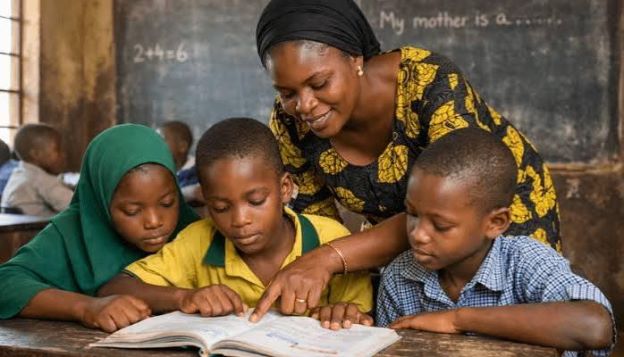
In classrooms where individuals from different races and cultures meet, Black literature provides a forum for intercultural dialogue which goes a long way in helping students explore cultural beliefs and diverse opinions. Students can better appreciate how many of these beliefs are not only linked but also share similarities with theirs and are interconnected.
As stated by Naveen in the blog post titled – The Importance of Reading Black Literature, it points out that “Reading books by Black writers is important in helping us better understand the world around us as well as what it means to be Black. We learn by understanding the richness of human experience and by exposing ourselves to new perspectives. Stories that help break down barriers of inequality, stereotypes, and bias”.
Literary discourse on Black literature or any other non-Eurocentric or Westernized literature not only encourages and fosters a sense of global citizenship, but it also promotes greater understanding and collaboration in addressing global challenges across various societies.

Okechukwu Nzeribe works with the Onitsha Chamber of Commerce, in Anambra State, Nigeria, and loves unveiling the richness of African cultures. okechukwu.onicima@gmail.com