
Space exploration was very much a man’s world, and the females who dared to follow that path needed to push past huge barriers in their pursuit of flight. The journey was not only physically and intellectually demanding, as pioneering women had to challenge norms and break through significant societal and institutional barriers every step of the way to earn their place among the stars.
It is even more challenging if you are Black and female, as you have to face a double burden of gender and racial discrimination. Yet, against all odds, some Black women have gone above and beyond to boldly carve their names into the annals of space history, bringing their dreams to reality.
Here are the Black women who have made it to space as astronauts, proving that Black excellence knows no bounds.
Dr. Mae Jemison
Born on October 17, 1956, in Decatur, Alabama, Mae Jemison received degrees in chemical engineering and African American studies. She went on to become a doctor of medicine in 1981 and an officer in the Peace Corps.
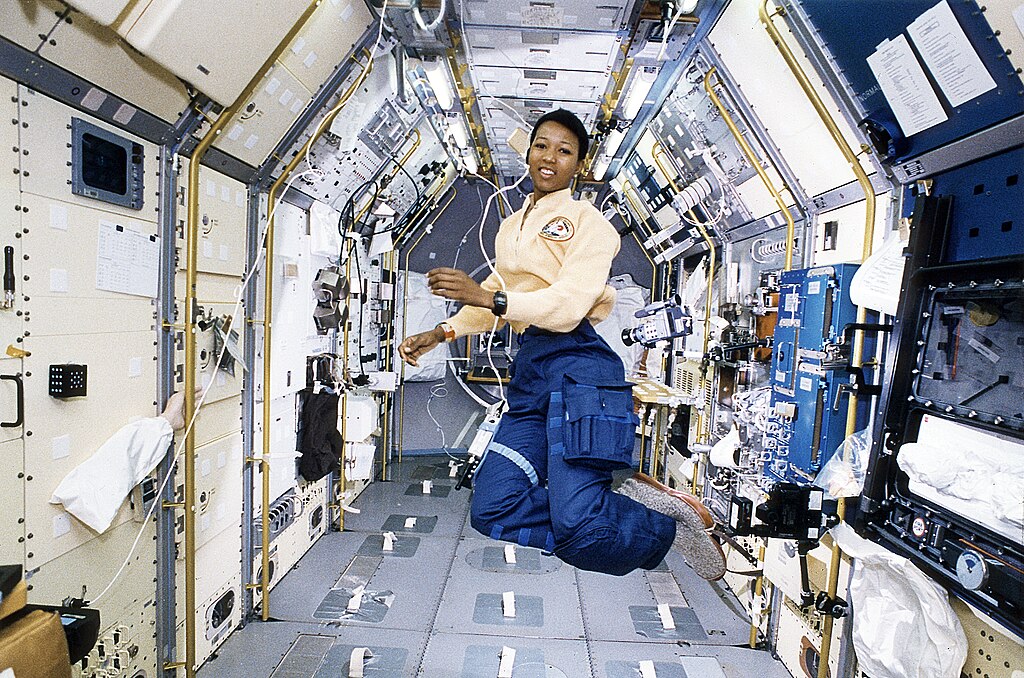
Photo source: NASA on The Commons, via Wikimedia Commons
In June 1987, she was chosen as part of NASA Astronaut Group 12. She was the first Black woman to be accepted into the training program. She made history again when she became the first Black woman astronaut in space on September 12, 1992. During her time at NASA, she flew on one mission, STS-47. The eight-day mission on Space Shuttle Endeavor saw Jemison log 190 hours in space, orbiting Earth 127 times. The mission included experiments in fluid dynamics, biotechnology, human health, and more.
Completing what would be her only flight, she returned to Earth on 20 September, and in 1993, she left NASA. She has been very successful in her post-NASA career and has continued to advocate for science education, particularly among minority students. Today, she works as a scientist and public speaker.
Stephanie D. Wilson
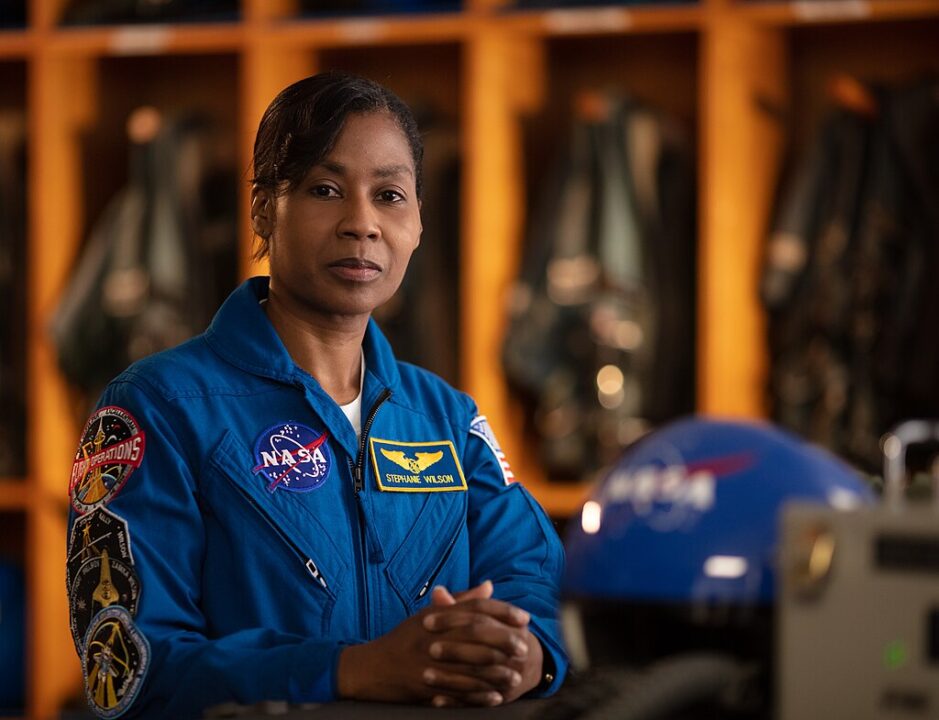
Photo source: NASA, Public domain, via Wikimedia Commons
Born in 1966 in Boston, Massachusetts, Stephanie Wilson earned degrees in engineering science and aerospace engineering and was selected as an Astronaut Candidate by NASA in 1996. Wilson, the second African American woman to fly in space, has gone on three Space Shuttle missions: STS-121 in 2006, STS-120 in 2007, and STS-131 in 2010.
She has logged more than 42 days in space, but her days of space travel are not yet over. She was selected as one of 18 astronauts for the Artemis team in 2020. The Artemis program (which started in 2017) is NASA’s plan to return humans to the Moon, bringing the first woman and first person of color to the lunar surface.
Joan Higginbotham
Born on August 3, 1964, in Chicago, Illinois, Joan Higginbotham earned a Bachelor of Science Degree in Electrical Engineering, a Master’s degree in management science and space systems, an honorary doctorate in aerospace science, and an honorary doctorate in humanities. She began her career at NASA in 1987 as a payload electrical engineer at the Kennedy Space Center (KSC), Florida. She actively participated in 53 space shuttle launches during her 9-year tenure here.
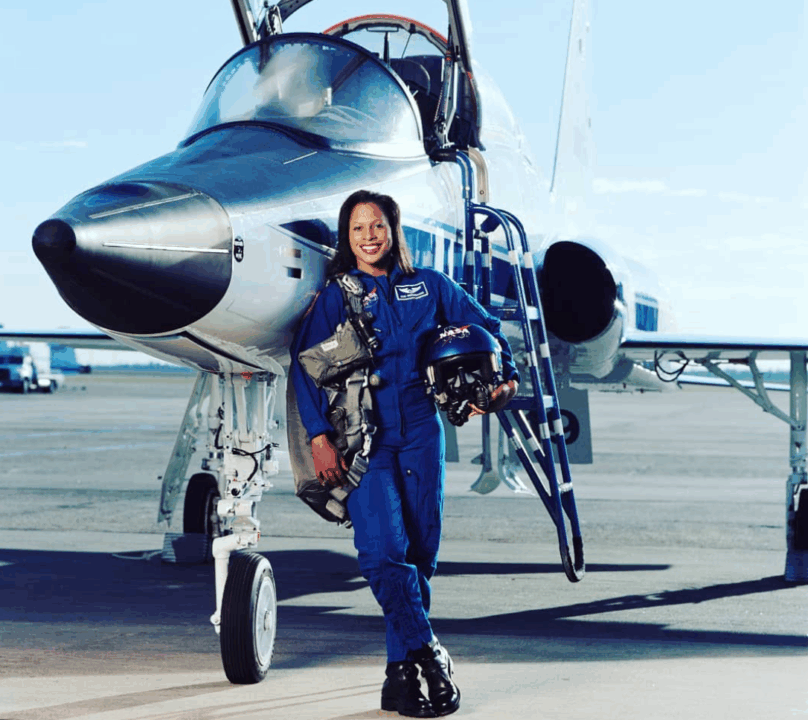
Photo source: Instagram / Joan Higginbotham
She was selected as an astronaut candidate by NASA in April 1996 and reported to the Johnson Space Center in August. The third Black woman astronaut in space, she completed her first mission with the crew of STS-116 in 2006, where her primary task was to operate the Space Station Remote Manipulator System (SSRMS).
Logging more than 308 hours in space, she played a key role in International Space Station assembly and operations. After a 20-year career with NASA as a real-life rocket scientist and astronaut, Higginbotham made a difficult decision to retire and pursue opportunities in the private sector in November 2007.
Dr. Sian Proctor
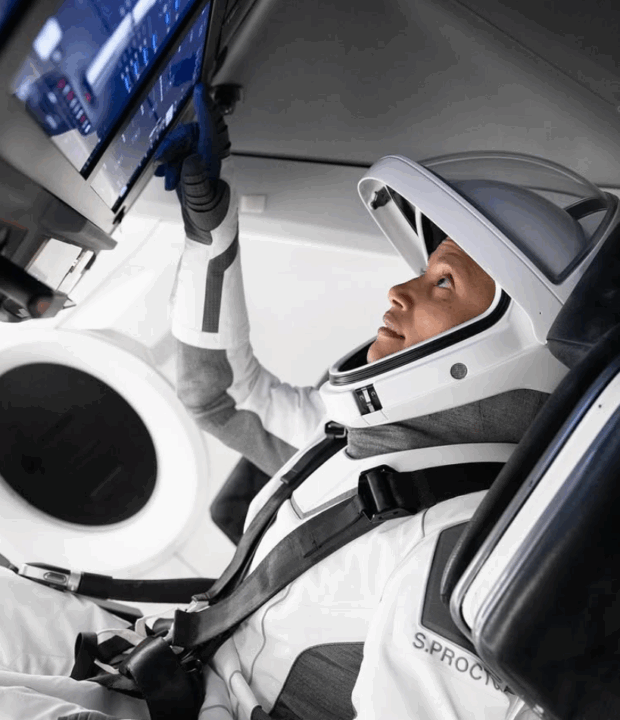
Photo source: Instagram/drsianproctor
Born on March 28, 1970, in Hagåtña, Guam, Proctor is an American commercial astronaut, geology professor, artist, author, and science communicator. She was a finalist for the 2009 NASA Astronaut Class but was not one of the nine astronaut candidates selected that year.
She was one of 47 finalists chosen from over 3,500 people who applied. However, she was not among the nine astronaut candidates selected that year.
A woman of many firsts, she flew to space, not with NASA, but as a private citizen. In September 2021, Proctor made history when she became the first African American woman to pilot a spacecraft and the only African American woman to ever be a mission pilot. She was also the first artist chosen to be an astronaut on the all-civilian orbital spaceflight mission Inspiration4 and the first African American astronaut to paint while in space.
Jessica Watkins
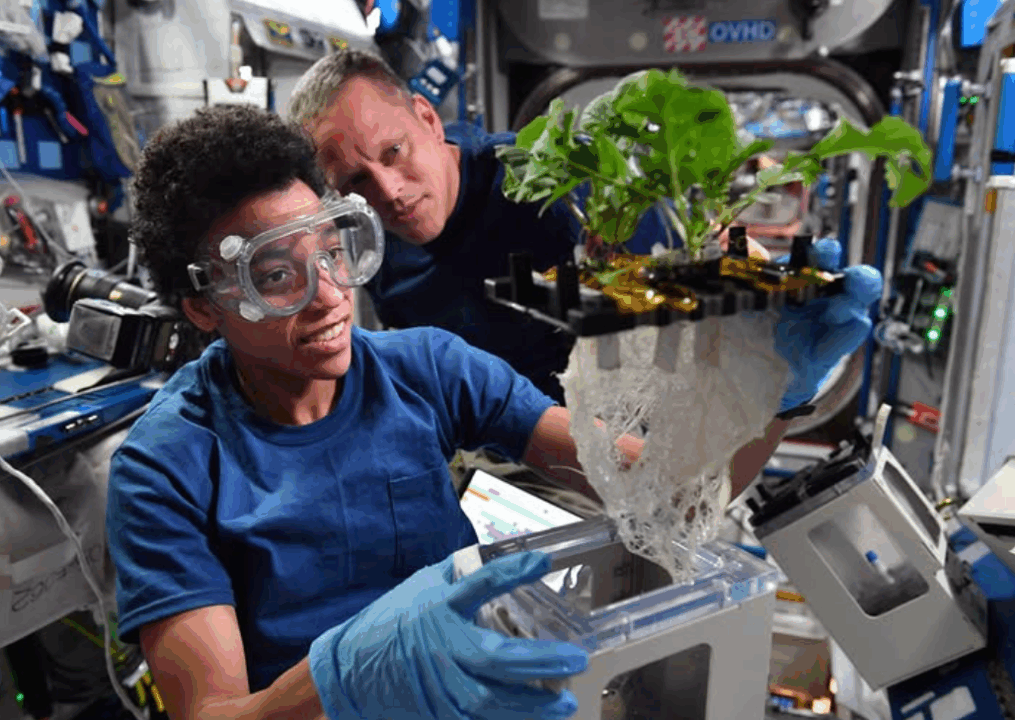
Born on May 14, 1988, in Gaithersburg, Maryland, Jessica Watkins earned a Bachelor of Science in geological and environmental sciences and a Doctorate in geology. She is an American NASA astronaut, a scientist who studies rocks (a geologist), and a former international rugby player. She was selected to be part of NASA Astronaut Group 22 in 2017, and in August, she started her two-year training.
She made history by becoming the first Black woman to live and work on the International Space Station (ISS) for a long time. Her first spaceflight was on the SpaceX Crew-4 mission, which launched from Cape Canaveral on April 27, 2022. She performed many experiments on the station, including growing crops in space without soil. She also served as the flight engineer on board the ISS as part of Expeditions 67 and 68. By June 9, 2022, having logged a total of 170 days in space, she had spent more time in space than any other African American woman, passing Stephanie Wilson’s record.
In December 2020, she was picked for the group of 18 astronauts eligible to fly Artemis program missions.
Jeanette Epps
Born November 3, 1970, in Syracuse, New York, Jeanette Epps earned her master’s and doctorate degrees in aerospace engineering. She was also a NASA GSRP Fellow.
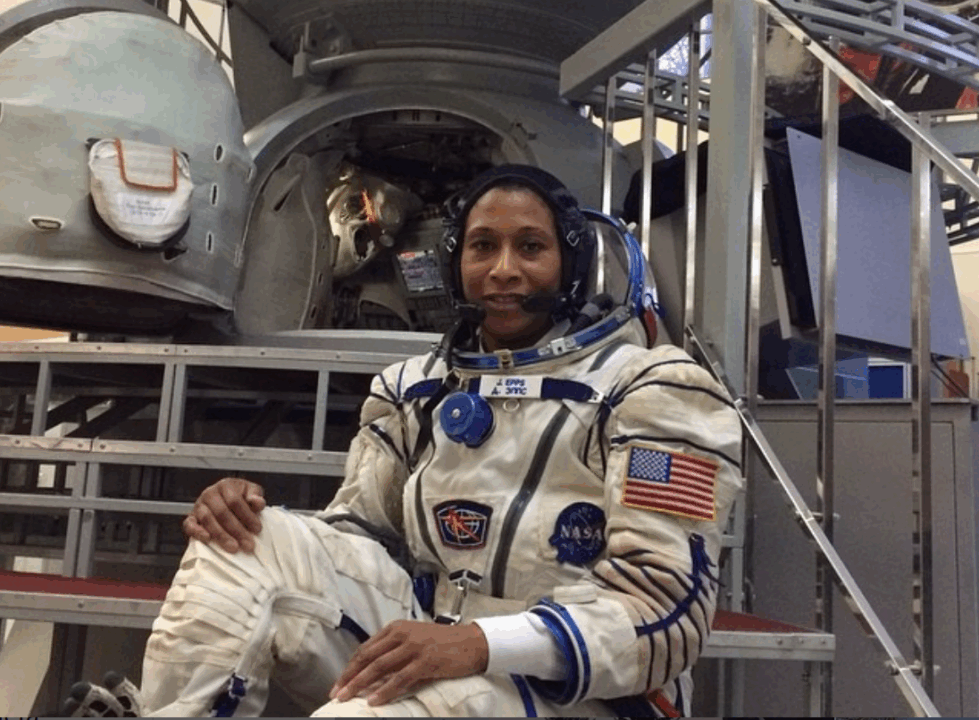
Photo source: Instagram/ jeanette.epps
In June 2009, Epps was chosen to train as an astronaut for NASA. She was part of the 20th group of NASA astronauts and finished her training in 2011.
She served as a mission specialist during NASA’s SpaceX Crew-8 mission. This groundbreaking mission in 2024 made her the second Black woman to complete a long-duration mission on the International Space Station. She spent an impressive 235 days in space from March 4, 2024, to October 25, 2024, including 232 days aboard the ISS, working on hundreds of scientific experiments during Expedition 71/72.
Epps was set to become the first Black female astronaut to be part of an ISS crew in May 2018. Unfortunately, her mission was canceled, and Jessica Watkins went on to achieve this milestone in 2022.
In 2024, Epps set the mark as the African American astronaut who has spent the most time in space, having logged 235 days on the ISS.
In June 2025, NASA announced that Jeanette Epps had retired after working for 16 years with the agency.