
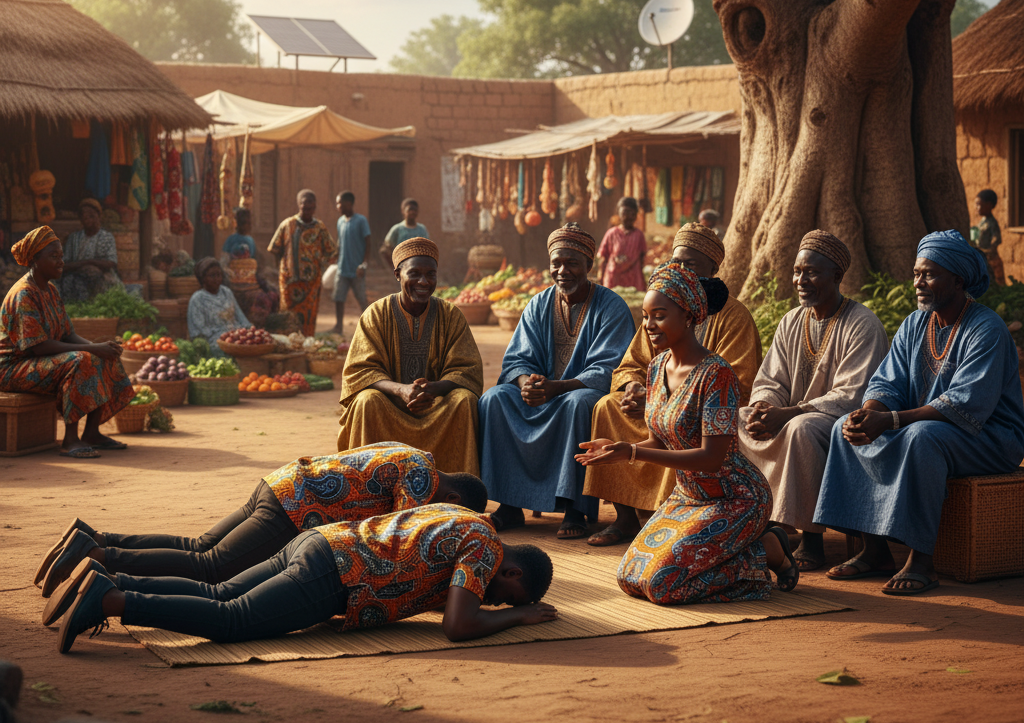
Growing up in the 90s, our neighborhood thrived on deeply rooted cultural and moral values. The rules of respect were unwritten, but every child knew to always greet those older and never to speak back to an elder. Every young adult knew to give up their seats when they saw an elder without one.
But today, things are different, and the question on most lips is: “Where did our respect go?”
You see children walk into a room full of their aunties and uncles, and wait to be reminded to greet. An elder can no longer correct a child, and any attempt may result in insults or being called names. Adults are also too preoccupied with new technologies and trying to stay “woke” to care about how we are slowly losing the cultural values that used to be the fabric that held African societies together.
What do We Mean by Respect and African Values?
When we talk about respect, we are not referring to the kind that tries to silence or humiliate the young simply because someone is older. It is not the type that endorses oppressive behaviors and injustice. It is not the type that requires a younger person to accept abuse, remain quiet in the face of wrongdoing, or fold their arms and watch while elders act unjustly.
True respect for elders in the African sense is more than that. It is valuing each other and respecting boundaries. It is being polite, treating our elders and everyone with care and compassion, listening to each other, and living in harmony. It is acknowledging and appreciating the role of the elderly in our lives, communities, and cultures.
As for African values, they are the written and unwritten moral codes and communal principles that are commonly held by African people in general. They emphasize respect, community, spirituality, hospitality, generosity, and collective responsibility, guiding behavior, relationships, and identity across diverse African societies.
Even though the continent is huge and diverse, these values are widely recognized and practiced across different African cultures and regions, shaping how individuals relate with one another and the world.
Why African Communities are Gradually Losing Their Values
There is no singular explanation for why the values African communities once held dear are gradually fading away. It is due to different influences, some of which include:
Westernization and Globalization: Coming in contact with the Western culture through colonialism and missionary activity, and the upsurge of globalization had both positive and negative effects. The Western culture challenged Africa’s way of doing things, and with time, Africans started to let go of some of its values, seeing them as archaic. We were taught to greet our elders properly. In some cultures, you had to kneel or prostrate. But in today’s world, it is seen as old-fashioned by many. A young child would come into the house and casually walk past an older person sitting in the room without greeting or just mumble a forced hello.
Gone are the days when respect was the norm. Children in Western society are encouraged to challenge authority and prioritize their own autonomy, which is quite different from what Africans teach their kids. But these days, you would find young teenagers talking back at their parents or even banging doors in their faces, a behavior they may have picked up from foreign media.
Urbanization and Migration: The community functioned as an extended family where every adult was a parent, and neighbors did not just know each other, but looked out for each other’s welfare. Elders could correct and guide the young, and parents trusted their neighbors to be vigilant co-guardians of their children. But as urbanization crept in and some moved abroad, people became more exposed. With this exposure came the loss of communal living and the gradual decline in collective responsibility. With economic pressures, it became survival of the fittest. Neighbors no longer knew neighbors, people became less likely to help one another, and parents no longer wanted other people correcting their children. Respect for elders was replaced by Western norms of independence and self-expression. People began to normalize selfish behavior for short-term gain.
Digital Influence: The digital age is arguably one of the most potent forces disrupting African values. While the internet and social media are powerful tools with a positive impact, they seem to reward clout over character and promote negative values among youth, like materialism and rebellion, which contradict traditional African values that emphasize things like modesty, respect, and restraint. People’s thinking and way of life have been greatly reshaped by social media and foreign influences, and in the process, they have lost the core African values that once held communities together.

Reclaiming African Values in a Changing World
In today’s fast-changing, globalized world, African values aren’t just slowly fading away; they are being overshadowed in our bid to copy the West. Many African communities are at a crossroads between maintaining traditional values and embracing modern influences.
Yes, the world is evolving and times have changed, but let’s be honest, showing respect can never go out of fashion. Our values are a source of strength, and shouldn’t be discarded or seen as an embarrassment.
The solution is not to reject change, but to reintegrate African values into modern life. We cannot keep copying others while we let the values that shaped who we are slip away.
We need to start holding each other accountable, elders and youth alike.
We must ask ourselves these questions: Is our concept of respect one that controls or one that uplifts? Are the values we are seeking to preserve ones that protect dignity or ones that perpetuate silence?
African respect is not about hierarchy or harmful practices disguised as tradition, such as silencing youth. We need to redefine respect and acknowledge what it really is: mutual dignity, not blind obedience. When respect is one-sided and about silencing or oppressing the younger person, they will fight it.