
Prof. Cord J. Whitaker
Prof. Cord J. Whitaker’s views on systemic leadership, the hidden roots of racism, and the work that starts inside.
Prof. Cord J. Whitaker suggests that the most influential element in many organizations right now is fear. It does not sit on the organization chart. It does not have a title. But it shows up anyway, quietly steering decisions, shaping what people will not say, deciding what to avoid, and determining how conflict is handled.
He is a South Philly native. But his formative years unfolded in Lawnside, New Jersey, a historically African American town founded as a haven for freed and fugitive enslaved people; the South Jersey borough is still majority Black. In Lawnside, history is not something you read for class. It is something you grow up with.
Whitaker credits that environment with shaping him into a literary historian. After growing up in Lawnside, he went to Yale University, where he discovered his love for the Middle Ages and medieval literature. That love became a vocation leading to a PhD in medieval literature, a dissertation at Duke University, and, later, a professorship in the English department at Wellesley College.
While studying the Crusades, Whitaker began to notice racializing rhetoric in Crusades-era writing, language that sorted and marked people in ways that sounded disturbingly familiar. What struck him was the presence of bias and the myth that this period was “non-racialized,” despite the evidence in the literature.
Much popular imagery of the Middle Ages, he notes, was basically “happy White people doing White things in forests and castles.” Yet the deeper he went, the more he saw a diverse world and the more he asked: Why has that been hidden? That question led him to write about the relationship between Blackness and Whiteness and Christian, Muslim, and Jewish identity. He recognized that modern racism has a long, complicated lineage.
In addition to his teaching job, Professor Whitaker absolutely loves teaching medieval literature, the history-of-race work, he also conducts systemic leadership consulting.
Why “systemic leadership” is not DEI with new packaging
Whitaker expounds that DEI, as it has been practiced in many workplaces, has a vulnerability. It can become a punishment-driven culture that triggers backlash without changing the underlying system.
He traces the origins of modern DEI back to early affirmative action. In the 1960s and 1970s, he explains, the “average white male worker” often had access to jobs through relationships. It was essentially, “the friend in the factory” effect. Workers of color were locked out of those insider networks. So, the federal government stepped in, attempting to become that “friend,” opening doors so workplaces could diversify after the Civil Rights era.
Over time, this strategy delivered uneven progress. And then another reality hit: Diversity brought different cultural experiences into the same workplace, and many organizations never built the trust systems required to hold those differences well. Instead, Whitaker says, they built policing systems.
He has watched white-identified employees become deeply afraid of saying the wrong thing. He has seen organizations generate lists of “biased words” that people should avoid. The result is often a culture of tension, where people speak carefully, resentfully, and defensively, and where majoritarian culture begins to experience DEI as surveillance.
What follows, he argues, is a predictable backlash, especially from the political right and center right, against the feeling of being policed. And traditional DEI has not been well-equipped to handle that backlash, because it has not always addressed the deeper engine driving the behavior: fear.

Whitaker teaching
The future of DEI is trust you can feel
Whitaker’s future vision for DEI is relational. He imagines organizations creating collectives that bring together the widest range of life experiences possible, and then building cultures where differences become benefits rather than threats.
To do that, he says, you need trust-building infrastructure – not vague “team culture” talk. Concrete trust.
One technique that he uses is guided meditation at the beginning of meetings, even meetings about charged topics like finance. People close their eyes in a room full of colleagues. That single act creates vulnerability leading to trust. And once the group comes through all of this safely, the trust becomes real. Then, if and when the meeting moves into disagreement, people can listen more empirically. They can actually hear one another.
Racism, tribalism, and the lie that we “used to be past this”
Whitaker’s historical lens changes how he interprets modern polarization. He rejects the idea that we are “going back” to pre-Enlightenment tribalism. The pre-Enlightenment world, he argues, was no more tribal than we are now. Tribalism did not disappear in the Enlightenment; it became “scientific.” He references “scientific races” and scientific racism, now understood as pseudoscience.
He explains that medieval racial thinking often divided the world into Asia, Africa, and Europe, connecting it to Noah and his sons, each of whom was said to have populated a region and to have manifested physical differences. When the Enlightenment arrived, similar frameworks persisted. He points to Hegel’s world history and its ladder of reason, with Europe positioned at the top, Asia below, and Africa described as eternally in darkness.
The unsettling conclusion is that racism resides close to the heart of modernity. Yet Whitaker insists this does not mean it cannot be healed. The person who still reacts to childhood abandonment can see it and act differently. Collectives can do the same. They can examine where humanity has been hurt, where it has hurt others, where it has done both, and in that process, begin dissolving what has been embedded for centuries.
Whitaker also speaks directly to a painful divide within the African diaspora: tension between African immigrants and Black Americans.
He describes how oppressors benefit from this division, sort of “colonialism 101.” And he breaks down the emotional narratives fueling it.
On one side, Black Americans may carry a historically accurate post-slavery narrative about stolen wealth, no reparations, no forty acres and a mule. When that narrative is unconscious, it can turn into assumptions like “They think they are better than me because they have more,” even if the other person does not believe that at all.
On the other side, immigrants may carry a post-colonial inferiority complex baked into societies where the colonizer’s language remains the unifying language. At the same time, they may see Black Americans as holding cultural capital, global music dominance, high-paid entertainment and sports visibility, making them feel their own insecurity.
When these two complexes collide, solidarity becomes fragile. Whitaker’s solution is again consciousness. That means spiritual and meditative practices, talking openly about wrongs, committing not to stay trapped in victimhood, and recognizing that disempowering colonial systems requires refusing to operate as their victims.
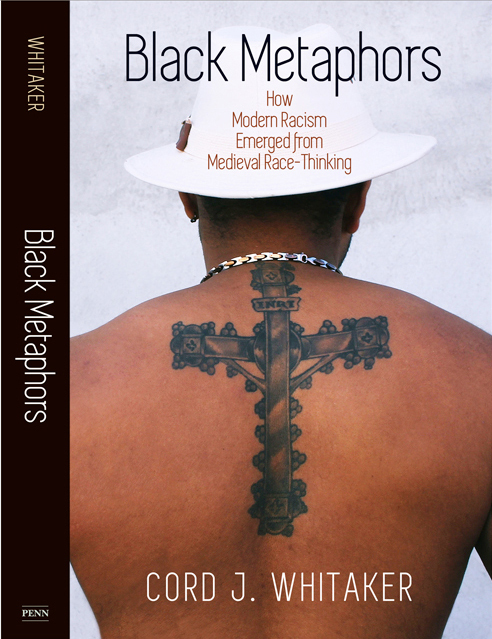
Book cover. Black Metaphors
Finally, Whitaker explains why equity cannot be sold as charity. Convincing leaders equity is in their best interest, he says; it is relational and emotional. Data alone does not persuade. Fear ultimately persuades people. He describes modern fear-mongering, threats of lawsuits, slander, and the rapid withdrawal of federal funding, all designed to make leaders act against their own interests. The solution is not only a legal strategy but simply fear management.
Leaders need to find the roots of their fears, whatever they are. The fear of losing a million-dollar job, fear of disappointing the board, fear of failing employees who rely on them – or any trepidation tied to earlier moments of failure in childhood, school, or family life. Those unexamined fears cause leaders to relinquish their power prematurely, to placate rather than lead.
And systemic oppression, he warns, always comes back for more. Unless a leader finds their power, the extortion will continue.
Whitaker built his consulting work with his wife, Lesley Curtis. She is a scholar of Haitian literature and history, trained through her doctoral research on the Haitian Revolution and abolitionism in the Francophone world. A few years ago, she founded their consulting firm, Sagely, based in South Philly.
Sagely brings together a rare mix: historical knowledge, critical race dynamics, gender analysis, leadership practice and neuroscience. And from that blend, they developed what they call systemic leadership, taught through the Sagely method.
The story of the crumb/Fishing for the crumb
Their consulting work, sometimes, is a study in displacement. Take the case of the home clean-out company finishing a job. The clients move away. Then the complaints begin repeatedly. “The house is not clean enough. You did not clean the house enough.”
The business owner reviews the photos. Everything looks clean. But the client keeps coming back anyway, “I see a crumb over there!” from a thousand miles away.
Three weeks of arguing. Frustration becomes self-doubt. The owner starts to wonder if he is losing his mind. Then Whitaker asks him a question: Was one of those departing (couple) resistant to moving? Yes, apparently one partner did not want to move at all.
And suddenly the conflict became visible: it was not about the house. It was about the couple’s internal tension. One wanted to move, the other didn’t, and they needed a place to put the blame, so they did not have to face the conflict between them. Punishing the company made their internal system feel better.
For Whitaker, that’s the essence of systemic leadership: Organizational challenges are often just the expression of a deeper fear, an out-picturing of what the system is trying not to feel.
In organizations, the “crumb” might look like a comment someone made in a meeting. Or a hiring decision. Or a moment of conflict that spirals into punishment. But the pattern is similar: a system becomes emotionally activated, and then people respond as if they are defending their survival.
Whitaker says Sagely has counseled leaders whose reactions to a key employee leaving were far stronger than the situation warranted. Leaders can become flooded with anger, sadness, and blame. In extreme cases, they may even try to sabotage the departing employee. And often, the true source is not the employee’s resignation. It may be an old wound.
He describes one leader whose mother abandoned the family for six months in childhood, then returned. The leader never fully processed the trauma. Decades later, each work departure triggered the same panic and grief. The workplace became the stage where an old story was replayed.

Whitaker acknowledges therapy can be deeply valuable. But he emphasizes something practical: in working life, sometimes the breakthrough begins with one clear recognition. “I am not reacting because Sue left. I am reacting because I was left thirty years ago.”
Once that is seen, he says, the emotional hijacking often begins to dissipate. The rational mind returns. The leader can release the reaction and focus on what is needed: hiring, stabilizing, and moving forward.
The conversation becomes even more delicate when Whitaker addresses victimhood, especially in identity-based contexts. He offers a quote from Jean-Paul Sartre: We are all “half victim, half accomplice, like everyone.” In his framing, it is not a moral accusation. It is a key that unlocks agency.
His method begins by helping people notice when they feel victimized and how that feeling can trigger a “blame circuit.” Once the victim’s feelings are named and seen, their grip starts to loosen. That creates space for “sovereign power”, a person’s sense of agency and empowerment. Then and only then can people begin to see where they might be harming others. That becomes more possible because they are no longer clinging to victimhood as armor.
Living as “always the victim” is psychologically exhausting, and limits leadership. He describes this as unfair to oneself and unhealthy over time, especially because traumatic experiences tend to grow in power when replayed repeatedly in the mind.
The goal is not to deny victimization. It is to loosen the grip of victimhood so a person can move through the world with more power and less reactivity.
Prof Whitaker sums up by admitting that if he had another life, or he could do it all over again, he would choose music as a vessel to connect. His life would consist of a dedicated band, arenas full of people and spiritual heights reached through song. It would be the perfect scenario. Why? Because such collective experience is the antidote for fear.

Dr. Eric John Nzeribe is the Publisher of FunTimes Magazine and has a demonstrated history of working in the publishing industry since 1992. His interests include using data to understand and solve social issues, narrative stories, digital marketing, community engagement, and online/print journalism features. Dr. Nzeribe is a social media and communication professional with certificates in Digital Media for Social Impact from the University of Pennsylvania, Digital Strategies for Business: Leading the Next-Generation Enterprise from Columbia University, and a Master of Science (MS) in Publication Management from Drexel University and a Doctorate in Business Administration from Temple University.