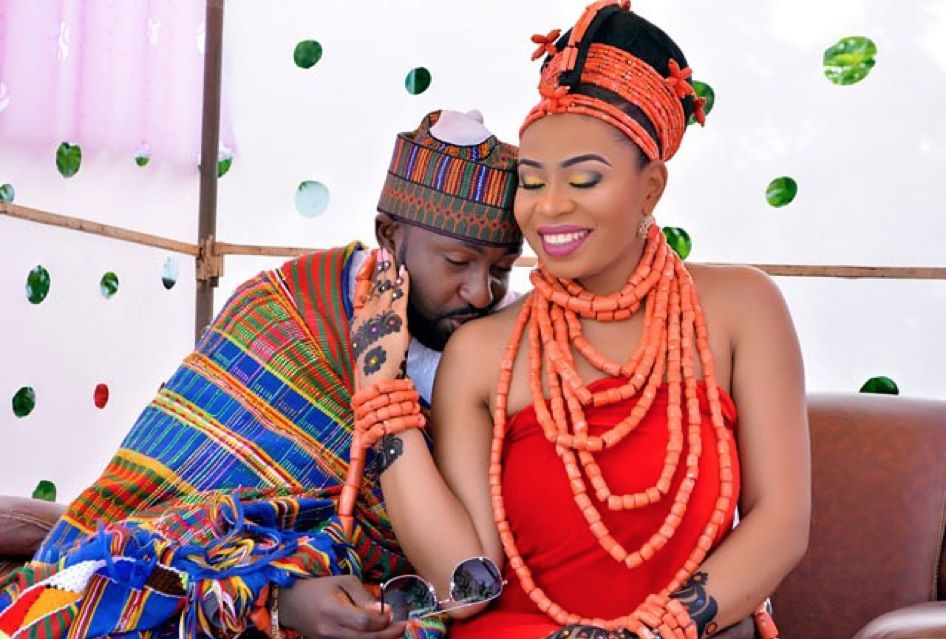
Image Source: YNaija | Facebook
It started as a journey, but not long after, it grew into several questions: Where are we headed? Is this how far you came in search of love? Are we ever going to get to our destination?
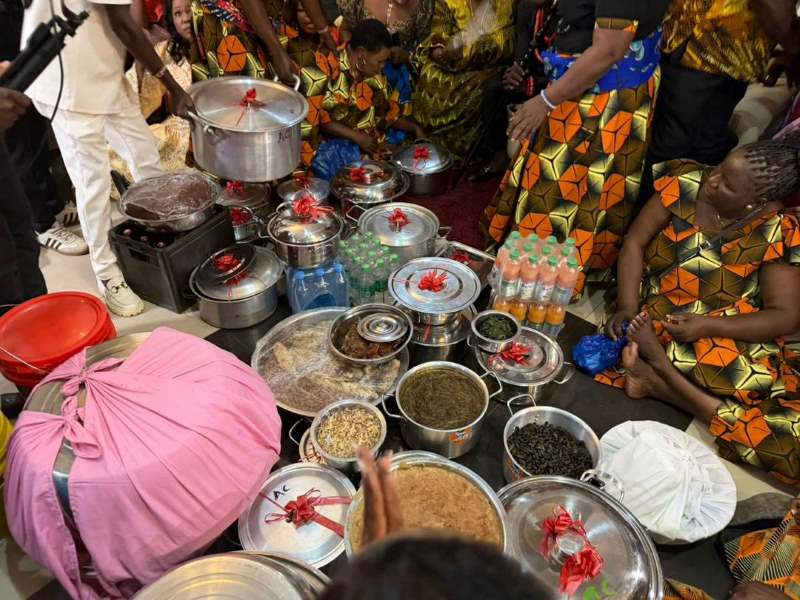
We accompanied my younger brother on his journey of love. He is Igbo, she is Urhobo, though of Nigeria, but two distinct worlds and cultures. ‘We should have brought our international passports,’ we teased him. But sadly, Nigeria’s ethnic diversity has remained a quiet subject. As a Sociologist, Karen Amaka Okigbo explains, “They come from a country comprising more than 250 ethnic groups. Yet contemporary studies of intermarriage often ignore ethnic differences within racial or national origin groups, especially among people of African descent.”
As the marriage rites commenced, I was fascinated by the customs and traditions. They seemed alien to me, but were a very necessary requirement for the conclusion of the union. Here were two cultures coming under one banner. The banner of love.
Popular narratives tend to spotlight the most aesthetic parts of intercultural relationships: blending cuisines, traveling across continents, learning new traditions, and raising “global” children. These moments are real and beautiful, but they are only part of the picture. What is less visible are the subtle negotiations that happen daily. The unspoken rules one partner grew up with that the other never learned. The emotional cues that mean safety in one culture and indifference in another. The assumptions about independence, family involvement, gender roles, time, finance, and respect. Assumptions so deeply embraced that they feel like common sense until they are challenged.
So when people say, “Love is love,” they are not wrong. But love does not exist in a vacuum. It lives inside culture, history, and social context. Pretending otherwise can make the relationship harder, not easier.
Read also: Beyond Borders: Exploring Intercultural Marriage in Black Communities
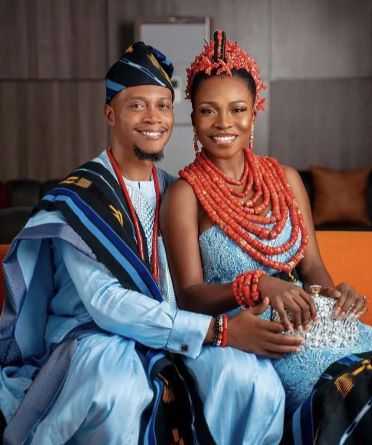
Image Source: Edo Traditional Weddings | Facebook
One of the most profound gifts of an intercultural relationship is how quickly it reveals that what you thought was “normal” was, in fact, cultural.
You might discover that what you consider honesty feels harsh to your partner, or that what you were taught as politeness feels evasive to them. You may also realize that the way your family expresses love, through teasing, silence, sacrifice, or physical affection, is not universal. These moments can feel disorienting. But they can also be deeply illuminating, providing a perspective on a whole different world that exists beyond your personal confines.
Couples, rather than being combative, could take a moment of pause to ask the question; Why do I react this way? Why does this matter so much to me? What am I protecting? With time, partners often begin to appreciate the different world views and approach to issues, while becoming more intentional, less automatic, and more emotionally fluent, not just with each other, but with the world.
Intercultural relationships can be exhausting in ways others do not always see. There is the fatigue of explaining your background repeatedly to friends, family, and strangers. The emotional labor of translating both language and intention. The sting of microaggressions disguised as curiosity. The discomfort of watching someone you love being misunderstood or misunderstanding them yourself.
Power dynamics can also surface. Race, nationality, immigration status, religion, and socioeconomic background do not disappear in a relationship. Neither do they vanish with the gift of children. Questions like, what language do the children learn? What culture do they become comfortable with? Whose family do they end up being close to? Sometimes these questions shape whose culture takes priority, whose traditions are followed, and whose comfort is prioritized. If not managed properly, it could trigger many uncomfortable situations in the home. These imbalances are not always intentional, but they are real.
The couples who thrive are not the ones who avoid cultural friction. They are the ones who learn how to work with it. This often requires an intentional approach to addressing issues. Asking questions like “Can you help me understand why this matters to you?” Or learning to pause when something feels “wrong” and ask for understanding behind what drove such a decision. Recognizing when a reaction is rooted in personal hurt rather than cultural difference can be a key factor in navigating conflict situations.
Many intercultural couples eventually create their own culture. A shared set of norms that belongs to neither partner’s upbringing entirely but is exclusive and has been embraced by both for the proper functioning of their relationship. New traditions emerge, and communication styles evolve to help couples navigate through their differences. This process is not always smooth, but it is deeply bonding. It is the art of building something that never existed.
Intercultural relationships ask more questions than they answer. They demand patience, flexibility, and a tolerance for discomfort. At their best, they remind us that intimacy is not about sameness; it is about presence. About staying curious even when it is inconvenient, about choosing understanding over being right.
Sources
Okigbo, Amaka Karen. Contexts: Sociology for the Public, 2023.
https://doi.org/10.1177/15365042221142836

Okechukwu Nzeribe works with the Onitsha Chamber of Commerce, in Anambra State, Nigeria, and loves unveiling the richness of African cultures. okechukwu.onicima@gmail.com