Image Source: ArtPhoto_studio via Freepik
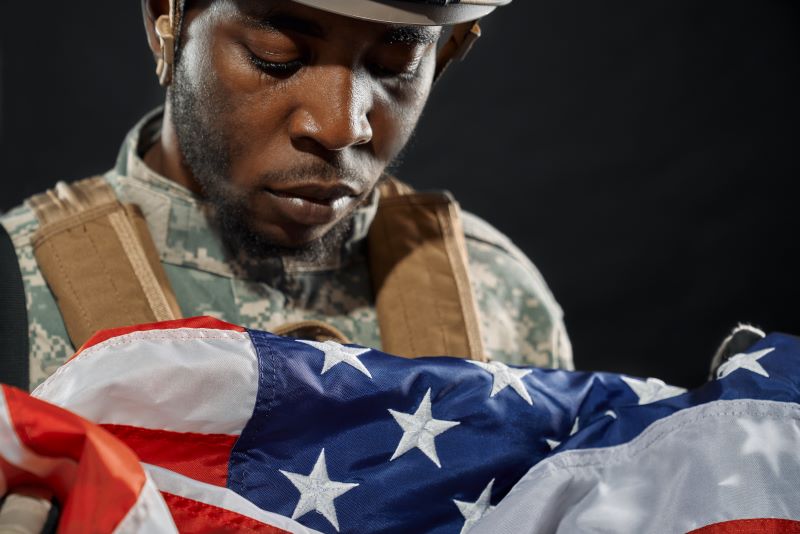
November 11, 2025, marks a Veterans Day of profound significance for African Americans, a day when historic legislative recognition collides with the stark realities of persistent inequality. On November 10, 2025, Senator Lisa Blunt Rochester and Congresswoman Joyce Beatty introduced resolution S.Con. Res 23, formally recognizing Black veterans across American history, honoring their heroic military sacrifices, and calling on the U.S. Department of Veterans Affairs to address the health and benefit disparities that continue to plague minority veterans decades after their service. This resolution arrives at a critical moment when generations of Black veterans who served with honor returned home to a nation that denied them equal rights, and when ongoing attempts threaten to erase African American military history from classrooms and military bases.
A Legislative Milestone
The congressional resolution represents a pivotal acknowledgment that Black service members have long faced unique challenges both during and after their military careers. Senator Blunt Rochester emphasized the need to “remember their sacrifice and service to our nation,” reinforcing America’s commitment to honoring Black veterans and ensuring their dignity. This legislative action follows her earlier efforts to commemorate the Tuskegee Airmen and signals a broader movement to confront the historical erasure of African American military contributions. The resolution specifically urges the Department of Veterans Affairs to continue seeking solutions to mend health and benefit disparities that have persisted for generations.
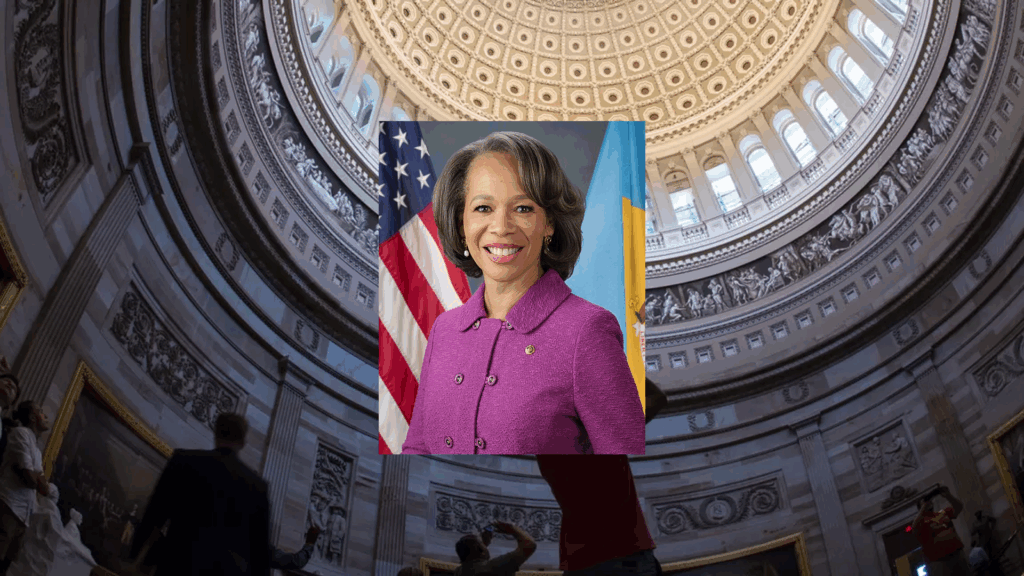
Image: Quiver Quantitative
Living History Marches Forward
The 102nd United States Colored Troops Company C, a student living history organization from Jackson, Michigan, will represent their state in the 2025 New York City Veterans Day Parade, the nation’s largest celebration of service. Their presence carries profound symbolic weight as they honor the legacy of the original regiment, first organized in 1863 as the 1st Michigan Colored Regiment before becoming the 102nd USCT. These soldiers were part of more than 180,000 African American soldiers who fought in the United States Colored Troops during the Civil War, including roughly 1,446 from Michigan. Their courage helped secure Union victory and advance the cause of freedom at a defining moment in American history. This participation comes as the military celebrates milestone anniversaries, the Army’s 250th anniversary on June 14 and the Marine Corps reaching this milestone on November 10, making 2025’s Veterans Day especially historic as part of the America250 anniversary preparations.
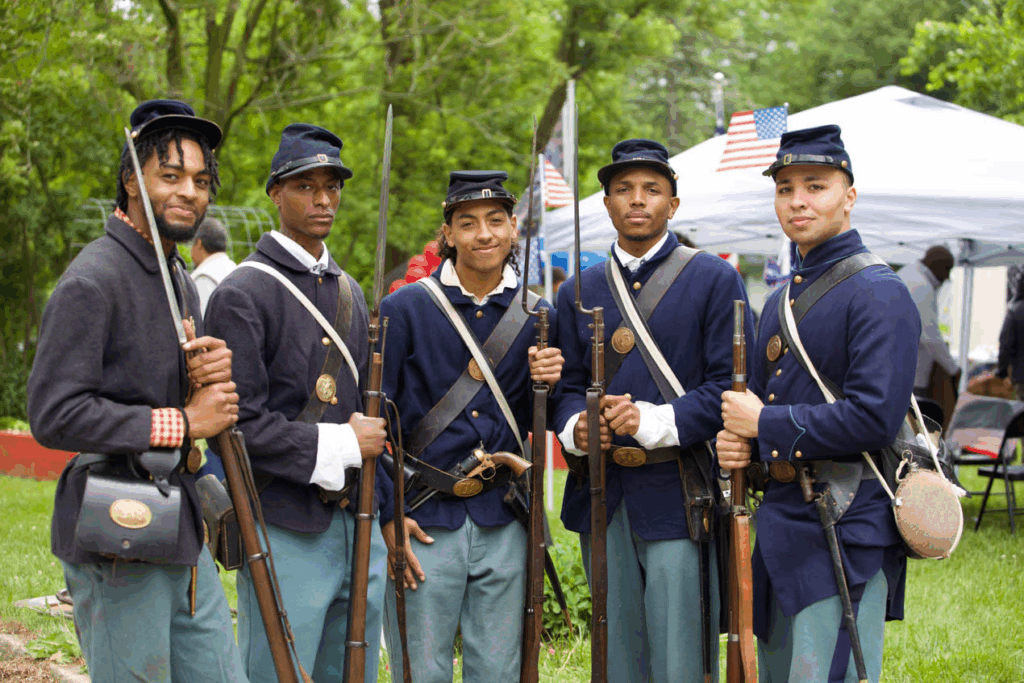
Image: JTV
The Burden of Disproportionate Service
While Black Americans represent just over 13 percent of the U.S. population, they account for nearly 19 percent of active-duty Army personnel. Yet this overrepresentation in service translates to disproportionate risk without equal support. Department of Defense data reveals that Black service members account for 19% of all enlisted personnel but only 9% of officers, while white service members comprise two-thirds of enlisted personnel but more than 75% of officers. This underrepresentation in leadership roles persists despite Black service members enlisting at higher rates than other minorities and whites relative to their population share.
Economic Disparities After Service
The unemployment rate for Black or African American veterans increased to 5.0 percent in June 2025, reflecting systemic barriers to civilian employment despite military training and experience. This pattern of “last hired, first fired” during economic downturns disproportionately impacts Black workers, as demonstrated when Black unemployment jumped 1.4 percent over the past year while rates for white and Asian Americans decreased. Research indicates that 45% of Black and African American respondents believe their racial or ethnic identity hurt their ability to get ahead at work, and 59% characterized their employment transition from military to civilian life as difficult or very difficult. Beyond unemployment, Black veterans face food insecurity at rates 1.5 times higher than their white counterparts.
Mental Health Disparities and PTSD
According to the VA’s National Health Study, 21.9 percent of deployed Black veterans screened positive for PTSD, compared to 14.1 percent of White veterans. Yet Black veterans are less likely to receive long-term, culturally competent mental health care and face more barriers to follow-up treatment. Hispanic and Black veterans were more likely than White veterans to screen positive for lifetime PTSD (17.8% and 16.7% vs. 11.1%, respectively), and Black veterans were more likely than White veterans to screen positive for current PTSD (10.1% vs. 5.9%) and drug use disorder (12.9% vs. 8.7%). Mental health-related discrimination, mistrust, and lack of confidence in mental health services lead to reduced engagement in treatment and care-seeking among Black veterans. Military justice records also reveal that Black service members are more likely to face court-martial than their white counterparts.
Veterans described overwhelming symptoms, including social anxiety, paranoia, hypervigilance, flashbacks, and difficulties maintaining employment and family relationships.
Service Connection and Benefits Disparities
Gender and racial disparities compound in VA benefit determinations, particularly for PTSD service connection. While 56.3% of men received PTSD service connection compared to 45.2% of women, the intersectional impact for Black women is particularly severe: only 35.4% of Black women received PTSD service connection compared to 50.8% of non-Black women. Though 88.1% of both Black and non-Black veterans had service connection for some disorder, the combined degree of service connection (total rating) was lower among those denied PTSD service connection. Nearly 31% of injured Black veterans have a disability rating of 70% or higher, compared to approximately 23% of injured white veterans, reflecting both the severity of injuries sustained and the disproportionate burden of service in combat roles.
A Call to Action
Veterans Day 2025 arrives as both celebration and reckoning. Despite facing racial discrimination during and after service, 89% of Black veterans say joining the military was a good decision. This remarkable resilience cannot excuse the nation’s continued failure to provide equal support and recognition. The introduction of S.Con. Res 23 offers a legislative acknowledgment, but words must translate into systemic reform.
Support Black veteran-owned businesses in your communities. Advocate for VA reform that addresses mental health disparities, housing discrimination, and culturally competent care. Attend local Veterans Day events that specifically honor African American service members. Ensure that Black military history, from the 102nd United States Colored Troops to the Tuskegee Airmen to contemporary service members, is preserved, taught, and celebrated. The America 250 anniversary preparations offer an opportunity to center these stories rather than continue their erasure.
While the civil rights era may have ended, racial disparities have not. The 2.4 million Black and African American veterans deserve more than gratitude; they deserve equity, justice, and the full benefits of the freedoms they fought to defend.

Anand Subramanian is a freelance photographer and content writer based out of Tamil Nadu, India. Having a background in Engineering always made him curious about life on the other side of the spectrum. He leapt forward towards the Photography life and never looked back. Specializing in Documentary and Portrait photography gave him an up-close and personal view into the complexities of human beings and those experiences helped him branch out from visual to words. Today he is mentoring passionate photographers and writing about the different dimensions of the art world.