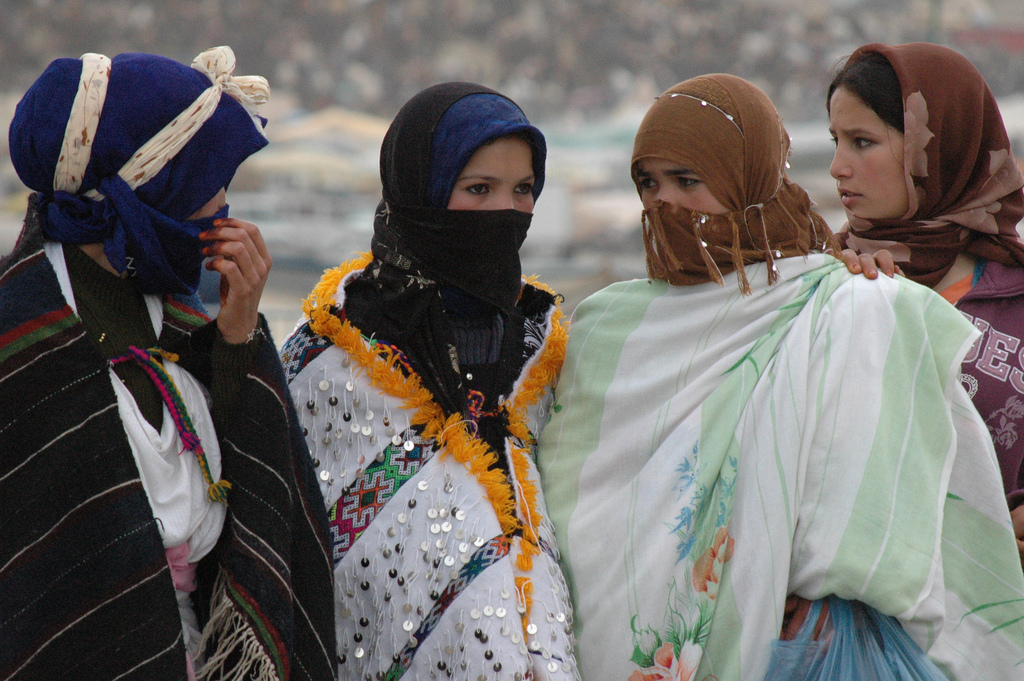
Women at the Imilchil Moussem in Morocco
Zakaria ElQotbi from Rabat, Morocco, CC BY 2.0, via Wikimedia Commons
“You have captured my liver or my liver pines for you”. In all romantic gestures, comments, and actions, these might be the strangest words to hear from someone who has indicated interest in being courted and involved in a relationship with you.
However, in the village of Imilchil in the Northern African country of Morocco, not only are these words a common phrase, but they are also uttered as part of the rituals of the Imilchil Marriage Festival.
Located high up in the Atlas Mountains in Morocco, Imilchil is a village occupied by Berber tribal clans with a long history, tradition, and cultures dating back centuries and preserved over the years. As part of its annual activity, the Imichil festivals, also known as September romance, are one of the prime attractions of the village’s festivities.
The festival held in Souk Aam and Agdoud N’Oulmghenni also attracts the surrounding tribes from Aït Sokham and Aït Bouguemmaz, who also participate in the festivities. Unlike other known courting and marriage processes where men are required to woo and court the woman of their choice, the uniqueness of the Imichil festival is that it stems from the Aït Yaazza annual culture for a collective marriage and matchmaking occasion, where women are also allowed to embark on a search to choose their husbands from among the many young men.
A Tale of Forbidden Love
All great love stories have their origins, and the same applies to the Imichil festival. Folklore has it that the festival came about as a result of the efforts of two young people from enemy tribes who met, fell in love, and sought to marry but would not be allowed to by family members due to the warring situation between both tribes. Burdened by grief and weeping due to their inability to be with each other, the tears they shed created two individual lakes. Lake “Isli”, which means bridegroom, and lake “Tislit”, which means bride, were both formed. It was in these two lakes that the two lovers, weighed down by decisions of their parents, would go ahead to commit suicide by drowning.
To pay homage to these lovers, the Imilchil Moussem, which is the marriage festival, was established to commemorate the memory of the forbidden love between the two young people from enemy tribes. Stories have it that with the two mountains separating both tribes, the souls of these young lovers remained separated. In an effort to correct the mistakes of the past, the tradition was set up and families from different tribes granted freedom to their children to choose whomever they preferred to marry. Today, all tribes come together at these lakes to celebrate the Imichil festival, and the women are allowed to choose their husbands.
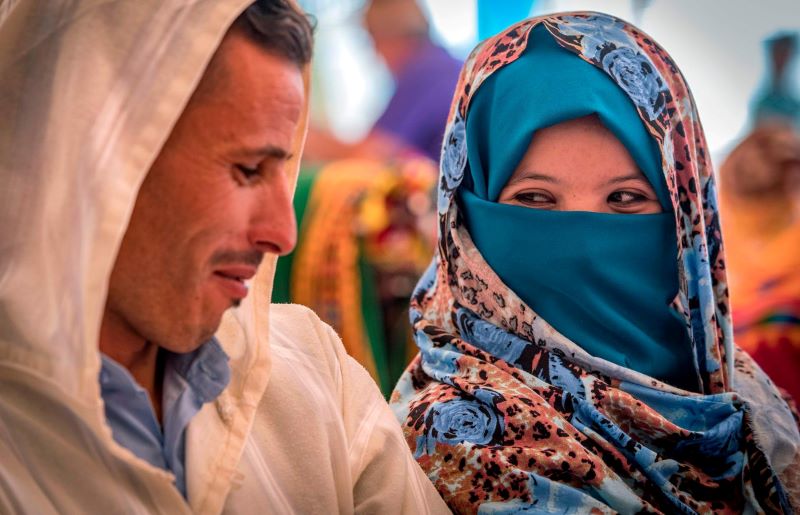
Image Source: Getty Images
Courtship and Finding True Love
For three days, high in the Atlas Mountains, 30,000 people with their flocks, camels, and horses gather near the site of the tomb of the Oldman. Young girls seize this opportunity to adorn themselves with their finest jewelry, while the men dressed up in their best attire also present themselves during the festivities.
In some instances, to overcome shyness, some men are always accompanied by a friend who assists them in making choices of a bride. Usually, an indication of interest is shown by a wink or a nod; once reciprocated, both couples then hold hands to show intent. Letting go of each other’s hands signals rejection. When the woman utters the word “you have captured my liver or my liver pines for you,” it indicates that she has found her love. In Bieber culture, the liver and not the heart is where love is believed to reside as a healthy liver ensures a wholesome life and aids digestion.
This summarily followed by a meeting of both families in a tent, where questions are asked and the marriage preparations are discussed. The marriage would later take place in the couple’s village. Divorce is also commonplace, more so if the union is an unhappy one. During the Imilchil festivities, divorced or widowed women are recognized by a pointed headdress.
The Future of Courtships In Africa
Marriages in Africa have largely attracted family involvement as parents actively play a role in determining the future spouses of their children. In several African societies, romance tends to take a back seat as the search for suitable spouses and negotiation between families becomes the primary focus.
Matchmaking has remained a common practice among many families, especially in situations where ensuring the happiness of the children becomes the driving factor, as well as securing the future of generations. Payment of dowries, family status, and lineage tend to take prime place above personal compatibility.
But as the world and societies continue to evolve, practices like the Imilchil festival, where tradition is blended with a modern approach of young couples being allowed to make their choice of life partners, will gradually become a norm across African societies.
Along with this is the prospect of migratory activities having a strong influence on the choice of spouses. As the saying goes that “the world is a global village”, the effect of cross-cultural marriages on the evolution of traditional marriage rites is certain. With couples seeking love not from amongst them but in far-off places, many strongly held traditional marriage rites are likely to become malleable, especially where the happiness of the spouses takes priority above all else.

Okechukwu Nzeribe works with the Onitsha Chamber of Commerce, in Anambra State, Nigeria, and loves unveiling the richness of African cultures. okechukwu.onicima@gmail.com