
Photo source: BarcarolIa, via Wikimedia Commons
The Maasai people, one of the most iconic tribes in Africa, are semi-nomadic people located primarily in Kenya and Northern Tanzania. In Kenya, they mainly inhabit the Rift Valley, Nairobi, Meru, Kajiado, Narok, Laikipia, and Baringo counties, while in Tanzania, they are mainly found in Monduli, Ngorongoro, and Simanjiro districts.
They are known for their striking red garments, unique customs, and close connection to the lands of the Maasai Mara. They speak the Maa language, which is categorized as one belonging to the Nilo-Saharan language family.
The Maasai people of East Africa have steadfastly refused the temptations of civilization, managing to retain much of their culture and traditions to this day. This tribe of nomads and warriors, who would not accept city life and modern technology, is content to live isolated from their neighbors in improvised huts while moving freely within the territories they consider their own.
The Maasai Mara game reserve in southern Kenya is named in honour of the tribe that still lives there.
Origin of the Maasai
According to Maasai history, they originated from the northwestern part of Kenya, north of Lake Turkana in the lower Nile Valley. In search of better grazing and agricultural lands, the Maasai later migrated south and settled in the Great Rift Valley and the Dodoma and Mount Marsabit region. It is believed that they arrived in what is now Kenya and Tanzania in the 17th and 18th centuries.
The Maasai territory reached its most dominant size in the 19th century when it covered most of the Great Rift Valley and adjacent lands from Dodoma and Mount Marsabit.
They had a fearsome reputation for raiding cattle as far east as the Tanga Coast in Tanzania and also forcibly displacing other communities.
The tribe continued to expand its domain by sending out younger generations of families to settle new pastures with a certain quantity of the home community’s livestock. Over time, as East Africa began to fill up with competing tribes and more population, the Maasai were forced to contend fiercely for their right to raise animals in a particular area.
Maasai Traditions and Culture
Despite increasing internal and external pressures, the Maasai people of East Africa have managed to retain much of their rich and enduring traditions, deeply rooted in their pastoralist lifestyle and spirituality. They have a very patriarchal society where Maasai men and elders make all of the important decisions for the tribe.
A man’s wealth is measured in terms of the number of children and the herds of cattle he has. A man with plenty of cattle but not many children is considered to be poor, and vice versa. The men often have several wives, each with her own house, which they must build themselves (fashioned from sticks, cow dung, and thatched roofs) every five years due to termites.
Based on a Maasai myth, God gave them dominion over all cattle, leading to the belief that cattle rustling from other tribes is a matter of claiming what is rightfully theirs, a practice that has now become much less common.
The young girls help their mothers gather firewood, cook, and handle most other domestic responsibilities, while the boys are expected to shepherd the family’s cattle.
Both sexes used to undergo emorata (a ritual circumcision), though the practice is slowly fading away due to criticism from Maasai activists and foreigners.
Adolescent boys who undergo the procedure are known as Moran afterward, and sent to live in a manyatta (or village) built by their mothers for many months. It’s a time of learning tribal customs and developing strength, courage, and endurance, which are traits associated with the Maasai warriors throughout the world.
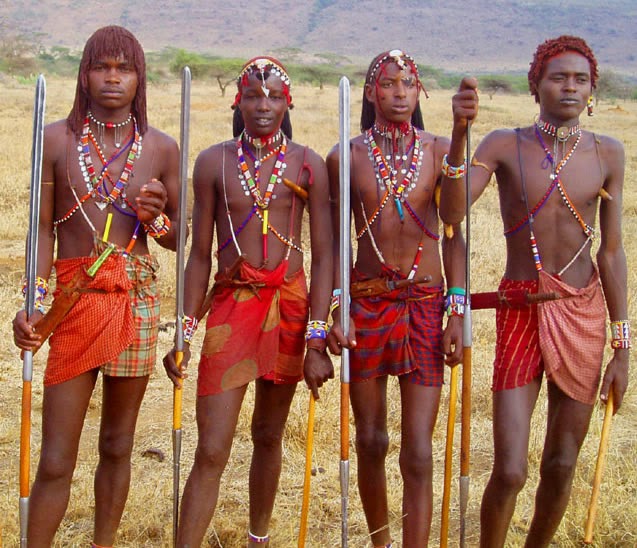
Photo source: Andreaambia, via Wikimedia Commons
The Maasai people are deeply spiritual and follow a monotheistic belief system centered around their God, named Engai or Enkai. However, their culture has been significantly impacted by Christianity.
They clothe themselves in color swatches of cloth known as Shúkà. They also have a rich musical tradition that is expressed through singing and dancing. The women are known to recite lullabies, hum, and sing songs of praise about their sons. There’s always one song leader, known as an olaranyani. The leader sings the melody while others sing polyphonic harmony on call-and-response vocals.
Another important part of their culture is the Maasai warriors, who are expected to protect the tribe from danger. The Maasai warriors typically wear red clothing, which is a symbol of strength and courage.
For the Maasai people, once an individual has passed, their journey has ended. They do not hold formal funeral ceremonies; instead, the dead are left out in the fields for scavengers. The deceased is considered a good person if the scavengers eat them on the first night. If the deceased is not eaten by the second night, he or she is considered a bad person.
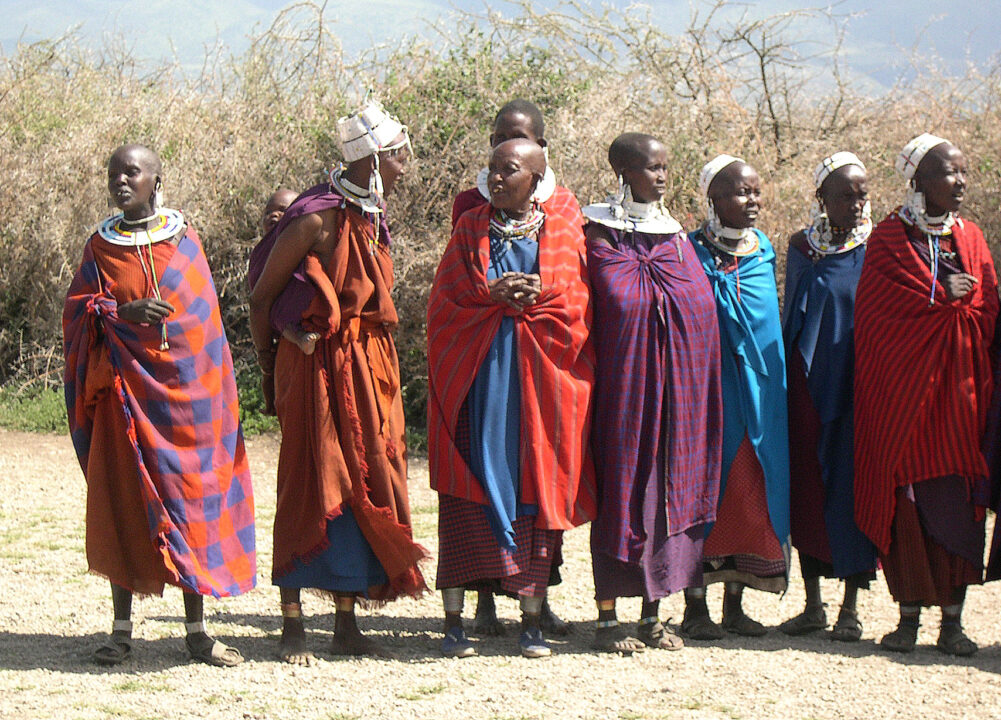
Photo source: Gailhampshire from Cradley, Malvern, U.K, via Wikimedia Commons
The Maasai’s Journey in the 21st Century
In a world where digital technology is changing the way people live their lives and modern pressures are reshaping the world, the Maasai tribe has been fending off foreign powers and fighting to preserve their culture.
While many other Kenyan tribes have adapted to modern-day living, sacrificing their lands and livelihoods, the Maasai have stayed true to the way of life of their ancestors. They had to contend for their land with colonizers in the 19th and 20th centuries, but their spears were no match for armed British troops and their lawyers. In 1904, the Maasai signed a first agreement, losing the best of their land to the European settlers.
Another treaty was signed with British settlers in 1911, which resulted in the Maasai controversially losing the best of their land, forcing them to relocate to less fertile parts of Kenya and Tanzania.
Now, in the 21st century, more changes are occurring that are affecting this powerful tribe. There have been several efforts by both Tanzanian and Kenyan governments, urging the Maasai communities to change their traditional nomadic lifestyles and adopt a more modern one, but they have strongly resisted.
According to cultural anthropologists, the Maasai are facing four critical issues that confront their culture, and they include technology, education, tourism, and Christianity.
Technology: Young Maasai visionaries are beginning to embrace technology, merging it with their deep-rooted cultural legacy and revolutionizing their communities. Some have started using mobile phones and social media to stay connected with their families and friends who may be living in different areas.
Education: Over the years, there has been a gradual shift in Maasai parents’ attitudes towards formal education. There are concerns that adopting Western education could erode traditional knowledge and skills that have been passed down for generations, as the curriculum doesn’t align with their pastoralist lifestyle.
Tourism: Although this might offer financial gains, it could come with a risk – the commodification of Maasai culture, which could result in its misrepresentation and exploitation.
Christianity: Though some still believe that Christianity is simply another tool of Western imperialism and conquest, others have converted. The spread of Christianity is bound to transform Maasai culture, as some of its doctrines directly challenge traditional beliefs and practices.
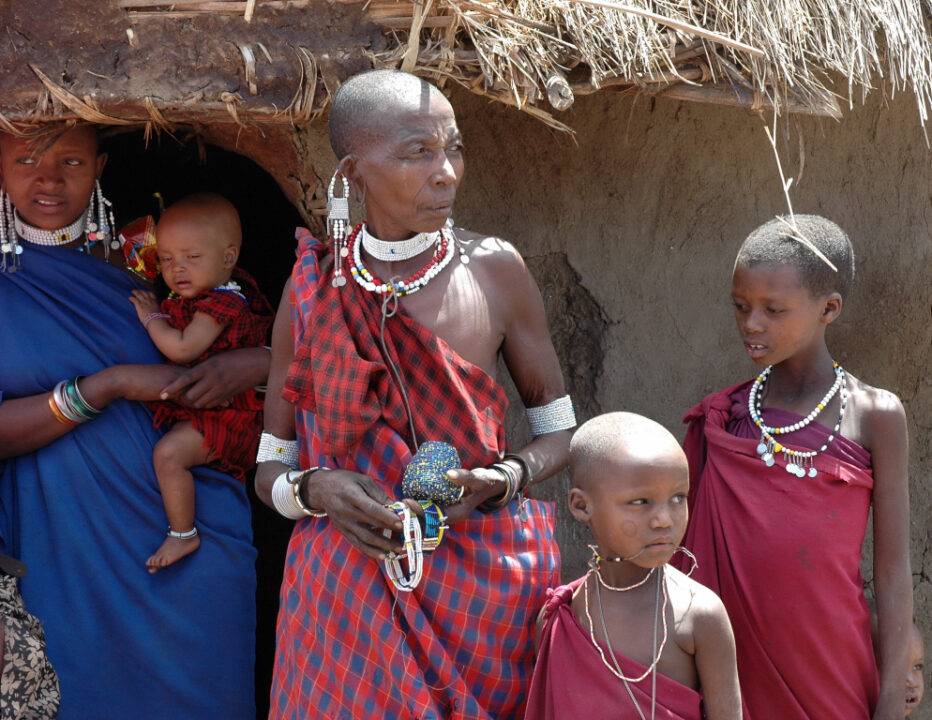
Photo source: Ruud Zwart, via Wikimedia Commons
The red-clad Maasai of Kenya and Tanzania may have lost control of large portions of Maasailand, and modernity may have infiltrated their communities, but they have retained many of their customs.
Most of the Maasai people still wear their traditional dress, Shúkà, in urban centers and even cities.
They have also managed to gradually eliminate some traditions. For instance, the Morani initiation that traditionally involved the killing of a lion and other displays of bravery by the warriors has been phased out.
Traditional, autonomous systems of decision-making still function on a daily basis inside Maasai villages.
Though aspects of modern life, like formal education and modern jobs, have influenced the Maasai’s traditional ways, others have continued to fight to preserve their identity, social structure, and pastoral lifestyle, showing that no matter what, they still have much control over how much they will accept or reject.
This fascinating semi-nomadic community has captivated the world with its ability to retain traditions and lifestyle in a fast-changing world. Travelers from around the world often flock to Maasai villages and regions to catch a glimpse of their way of life.