Photo Credit: Rev. Lamont Wells
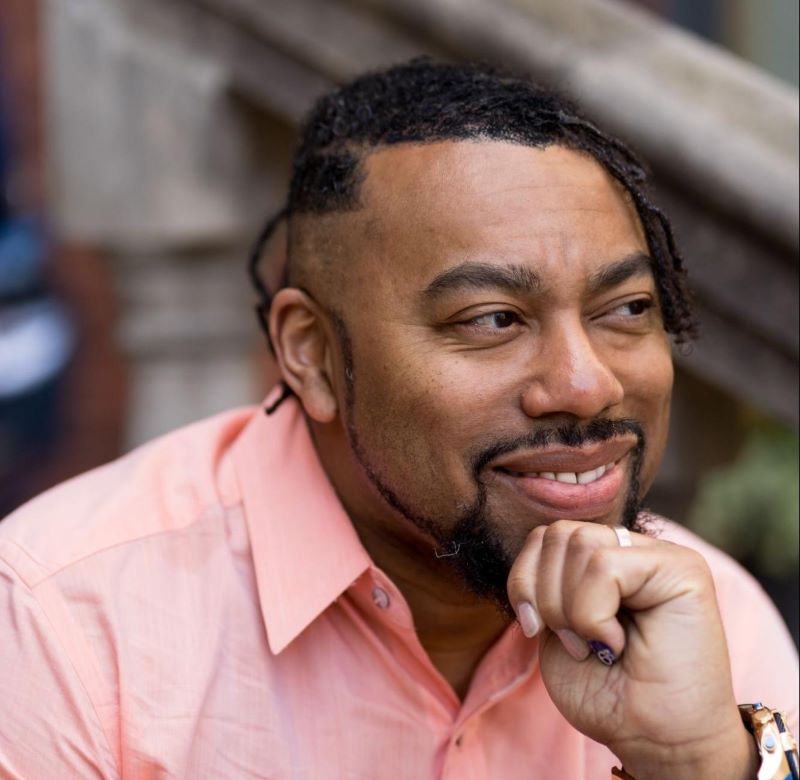
Higher education is under fire from every side: families questioning the return on investment, political pressure reshaping what campuses can say, and a cultural climate that treats disagreement as dangerous. And in the middle of that, Rev. Lamont Wells’ message throws a challenge: “If colleges were founded to widen access and form ethical citizens, why are so many institutions shrinking into fear?”
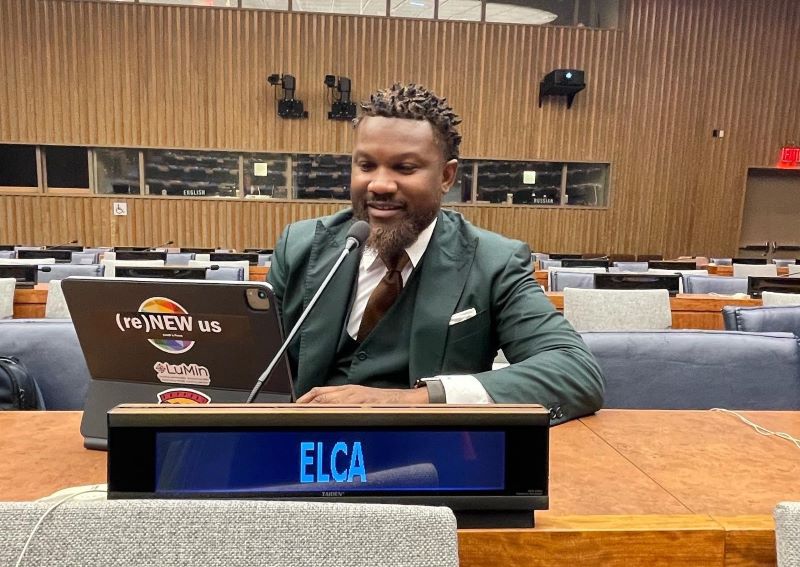
As Executive Director of the Network of ELCA Colleges and Universities (NECU), Rev. Wells avoids speaking like a bureaucrat managing a portfolio of campuses. He sounds like a pastor who believes education is part of a society’s moral infrastructure, and that the infrastructure is cracking.
The lens that makes him different
Wells’ story matters because it explains his lens. He is Philadelphia-rooted, shaped in Black church tradition, trained at Morehouse, and sharpened by social work before ministry. That combination gives him an unusual ability to read campuses the way community organizers read neighborhoods: not as brands, but as systems.
So, when he talks about “missional identity,” he means the original purpose many faith-based institutions claim but often struggle to live out. His job, as he describes it, is to “connect and convene” institutions around that purpose: access, equity, intellectual rigor, and the kind of formation that continues after students get their diplomas.
The hidden crisis: we have lost the art of dialogue
As he looks across campuses, he sees what many people feel but cannot always name: we are losing the ability to disagree without collapsing into conflict.
Campuses, like the rest of the country, are increasingly bad at disagreement. Students do not always arrive with civic literacy. Communities do not always know how to argue without escalating. Institutions do not always know how to hold tension without choosing silence.
Wells frames this as more than a campus culture problem. He treats it as a public safety, a democratic, and a faith issue. Because when people lose the ability to disagree with dignity, the social fabric tears. And when it tears, fear fills the gap.
So, in his view, NECU’s mission includes something almost old-fashioned: teaching students to think clearly, test claims, and engage opposing views without losing their humanity.
“Rooted and Open” is a survival strategy.
From the outside, “Rooted and Open” might sound like a nice phrase. But in Rev Wells’ world, it reads like a blueprint. Especially if you imagine it through the eyes of a student affairs team or a faculty senate trying to keep a campus steady in unstable times.
- Rooted: anchored in the Lutheran tradition of vocation and human dignity, education as formation, not just credentialing.
- Open: willing to evolve, engage pluralism, and resist becoming insular out of political fear.
This matters because many institutions are reacting to the current climate by getting quieter. Rev. Wells argues the opposite: that this is the time for moral clarity, rather than institutional shrinking.
Morehouse College Training
To understand why Lamont keeps returning to courage and public witness, you have to look at his formation.
Rev. Wells explains that his leadership is deeply shaped by the Morehouse College ethos of being a “public witness.” Listening to God, recognizing people’s needs, and actively serving them. Formed alongside classmates such as Raphael Warnock, the pastor of Ebenezer Baptist Church, Otis Moss III, and Jamal Bryant, he describes Morehouse as cultivating leaders who combine faith with social responsibility and advocacy.
He sees a natural connection between that tradition and Lutheran history, noting that Martin Luther himself challenged oppressive religious structures and insisted that faith and education be accessible to all.
Although many Lutheran institutions in the United States are predominantly white, Wells believes the shared commitments to justice, community, and reform allow the Black church tradition of Morehouse and the Lutheran reformation heritage to converge. He ultimately views his role as a bridge and catalyst for change, noting that even Martin Luther King Jr., the most famous Morehouse graduate, was named after the reformer Martin Luther, symbolizing the enduring link between the two traditions and their shared call to advocate for the marginalized.
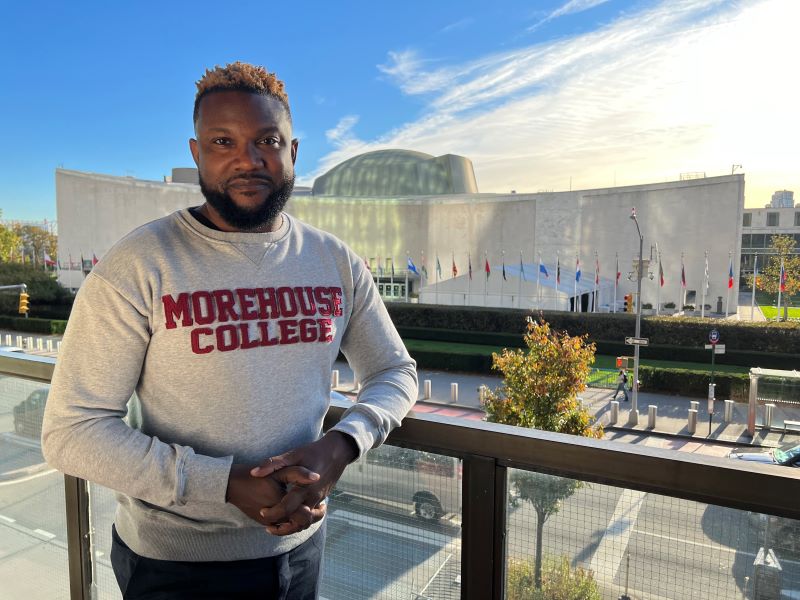
Photo Credit: Rev. Lamont Wells
Is college worth it?
The question is everywhere now on social media, in family group chats, at kitchen tables: Is college worth it?
Wells does not dismiss critics. He agrees that higher education has been “devalued,” but he points to the real culprit: cost.
His personal math is blunt: expensive tuition, service-oriented career paths, and decades-long loan repayment. It is hard to sell higher education as “transformative” when the financial structure feels punitive, especially for students pursuing public service (education, social work, ministry, healthcare).
From this angle, Lamont’s argument is not “college is always worth it.” It is: education still has enormous value, but the pricing model is breaking trust.
And that reframes the role of faith-based schools. If they claim a moral purpose, they cannot treat affordability as a side issue. Access is not branding. It is integrity.
The real DEI conversation: religious freedom and faithful witness
In a moment when institutions often speak in careful, slippery language, Rev. Wells does not.
Wells addresses DEI controversy without hiding behind institutional vagueness. He describes NECU’s engagement in advocacy and legal efforts, framing inclusion as different from political trend-following but as part of a faith-based commitment to neighbor-love and human dignity.
Whether readers agree or not, the perspective shift is important: he argues that the ability of these institutions to live out their values may be tested in cultural, legal, and political contexts.
From a campus perspective, that means leaders can not treat DEI as an “optional office.” If it is truly part of a school’s mission, then the institution must be ready to defend it as a matter of conscience and purpose.
Pluralism without erasure: a campus skill we do not teach enough
Wells’ vision of campus life is not that “everyone thinks the same.”
His own interfaith family experience gives him grounding that informs his religious pluralism. His take is especially relevant for higher education where people with different beliefs share same accommodation and learn to live together without dehumanizing one another. That is exactly the skill campuses claim to cultivate yet often struggle to practice when debate becomes heated.
For NECU schools, he frames pluralism as preparation for the world students will inherit, workplaces, communities, and public life filled with difference. The goal is not to dilute identity. It is to mature it.
Photo Credit: Rev. Lamont Wells
AI: not a threat, an access revolution (if handled responsibly)
When the topic turns to AI, Wells does not respond like someone trying to ban a new tool. He responds as if he has seen history repeat itself.
His view of AI comes from a faith and history angle as he compares it to the printing press during the Reformation, a technology that expanded access and disrupted the control of knowledge.
He acknowledges ethical and environmental concerns, but returns to a central point: AI can especially benefit people living with disabilities and learning differences by providing new ways to engage with information. The question becomes: will institutions fight it, fear it, or teach students to use it responsibly?
From a campus perspective, his argument implies a shift: schools should treat AI literacy like civic literacy, something students need for modern life, not something to pretend does not exist.
A replicable model: resilience + mentorship
For all the big ideas, Lamont’s most practical takeaway is surprisingly grounded: students need structures that help them endure.
Wells’s most practical “what works” takeaway is his emphasis on programs that build student resilience, especially for students of color facing racial aggression, and on structures that connect students with mentors.
His critique is not aimed at young people; it is aimed at adults. He believes older generations have pulled back from deep relational mentorship, leaving students to navigate a high-pressure world with too little guidance.
From this viewpoint, mentorship becomes a form of institutional justice: not a feel-good add-on, but a stabilizing force that helps students endure, persist, and flourish.
The message he keeps returning to
Rev. Wells’s message is clear:
- Access must be protected.
- Dialogue must be rebuilt.
- Pluralism must be practiced.
- Affordability must be confronted.
- And fear cannot be the strategy.
“Rooted and Open” is more than a theological phrase. It is a blueprint for how faith-based colleges can remain relevant: by becoming places where students train for jobs while learning to live, think, and lead in a divided world.
And if the next decade demands moral leadership, Lamont is betting that higher education, done with integrity, can still produce it.

Dr. Eric John Nzeribe is the Publisher of FunTimes Magazine and has a demonstrated history of working in the publishing industry since 1992. His interests include using data to understand and solve social issues, narrative stories, digital marketing, community engagement, and online/print journalism features. Dr. Nzeribe is a social media and communication professional with certificates in Digital Media for Social Impact from the University of Pennsylvania, Digital Strategies for Business: Leading the Next-Generation Enterprise from Columbia University, and a Master of Science (MS) in Publication Management from Drexel University and a Doctorate in Business Administration from Temple University.