
Source: https://www.mwckigali.com/
Rwanda’s stunning transformation from a nation scarred by tragedy to Africa’s emerging Silicon Valley stands as one of our time’s most remarkable development stories. We’ve witnessed how President Paul Kagame’s Vision 2020 initiative has connected the nation to 4G networks, enabling cashless bus payments and solar-powered digital services that reach every corner of this land of a thousand hills. As we prepare for MWC Kigali 2025 (October 21-23, 2025), Rwanda serves as the perfect stage for showcasing how African mobile innovation is reshaping our continent’s place in the global digital economy.
Event Overview & Significance
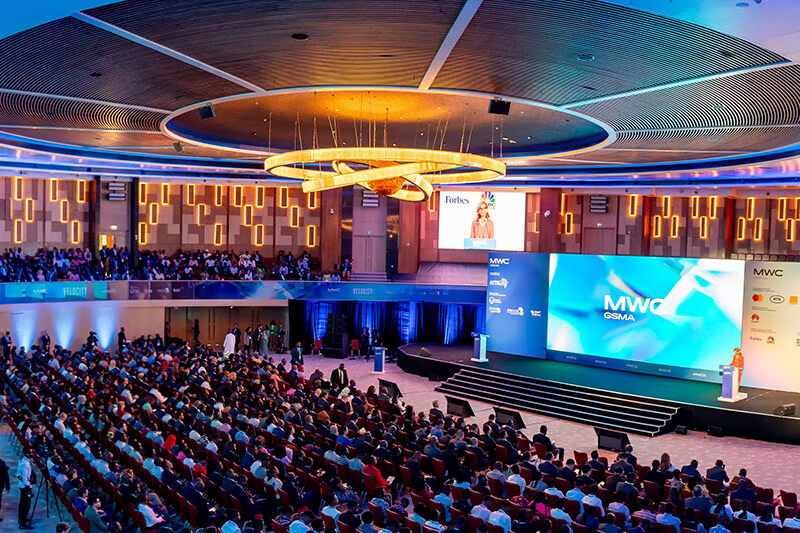
MWC Kigali 2025 represents GSMA’s flagship African connectivity event, taking place at the Kigali Convention Centre in partnership with Rwanda’s Ministry of ICT & Innovation. This year marks a pivotal moment with the launch of the new GSMA Ministerial Programme, bringing together public and private decision-makers like never before.
The event features an impressive lineup of keynote speakers, including Airtel CEO Sunil Taldar, MTN CEO Ralph Mupita, Orange’s Yasser Shaker, and Rwanda’s Minister of ICT Hon. Paula Ingabire. This gathering represents the continent’s most influential connectivity forum. The focus on cross-border collaboration and policy dialogue positions African leaders to shape the global digital conversation rather than simply participate in it.
Source: https://www.mwckigali.com/
Four Core Themes Driving African Digital Future
Connected Continent
Our continent is experiencing unprecedented mobile growth, with 4G connections forecast to account for 50% of total connections by 2030. Currently, we have 855 million cellular mobile connections across Africa, with countries like Nigeria leading with 150 million connections. The rapid expansion of affordable smartphones and the growth of 4G networks are connecting communities that traditional infrastructure never reached.
The AI Future
Artificial intelligence holds transformative potential for Africa, with projections indicating AI could increase our continent’s economy by $2.9 trillion by 2030, boosting annual GDP growth by about 3 percentage points. We’re developing local solutions that address uniquely African challenges, from agricultural optimization to healthcare delivery in remote areas.
Fintech Revolution
Mobile money has become our continent’s greatest success story, with over 1.1 billion registered accounts processing $1.1 trillion in transactions during 2024 alone. In countries like Kenya, Rwanda, Uganda, and Tanzania, mobile money contributes more than 5% to GDP. Sub-Saharan Africa’s mobile money sector added $190 billion to regional GDP in 2023, representing a 5% increase for several African nations.
Africa’s Digital Frontier
We’re witnessing leapfrog development opportunities that allow African nations to skip traditional infrastructure phases entirely. Rwanda exemplifies this approach, using drones for medical deliveries and implementing cashless payment systems that surpass many developed nations. Local talent ecosystems are flourishing, with Rwanda alone hosting over 55 funded startup companies.

Economic Impact & Market Opportunity
The statistics paint a compelling picture of untapped potential across our continent. Mobile internet penetration in Sub-Saharan Africa currently stands at just 27%, compared to a global average of 69%, indicating massive room for growth. Despite this gap, the mobile ecosystem already supports 1.5 million direct jobs and 2.2 million indirect jobs across the region.
5G adoption is accelerating rapidly and is forecast to contribute $10 billion to our regional economy by 2030, accounting for 6% of mobile’s total economic impact. However, only 1.2% of Africans currently have access to 5G networks, compared to the global average of over 20%, highlighting both the challenge and opportunity ahead.
The significant usage gap persists as our greatest opportunity; 700 million people remain offline despite living in areas with mobile broadband coverage. This represents not just a connectivity challenge but a $720 billion economic opportunity, as mobile money services have already boosted combined GDP by this amount across participating countries.
Industry Leaders & Innovation Showcase
Major exhibitors at MWC Kigali 2025 include global technology leaders Huawei, Meta, MTN, Orange, ZTE, TerraPay, and Telcoin, demonstrating the international recognition of African market potential. The Mobile for Development Theatre will feature discussions on AI applications, mobile money innovations, and humanitarian technology solutions.
The event showcases 90+ hours of content across multiple stages, including the new Ministerial Stage, where policy dialogue shapes the regulatory framework for Africa’s digital future.
What This Means for the African Diaspora

MWC Kigali 2025 represents a turning point where African innovation takes center stage globally, not as aid recipients but as technology leaders and solution providers. For African and African American communities worldwide, this signals unprecedented investment opportunities and partnership potential as our continent becomes the next frontier for digital innovation. We’re witnessing Africa’s emergence as a global technology hub, offering diaspora communities meaningful ways to engage with and contribute to our continent’s technological renaissance.

Anand Subramanian is a freelance photographer and content writer based out of Tamil Nadu, India. Having a background in Engineering always made him curious about life on the other side of the spectrum. He leapt forward towards the Photography life and never looked back. Specializing in Documentary and Portrait photography gave him an up-close and personal view into the complexities of human beings and those experiences helped him branch out from visual to words. Today he is mentoring passionate photographers and writing about the different dimensions of the art world.