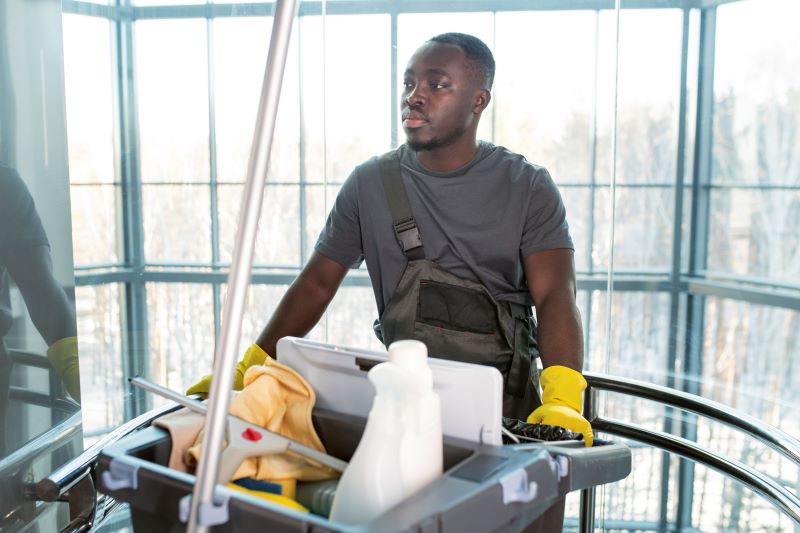
A man working as an office cleaner. Source: Freepik
“When I landed in Philly, I thought the hardest part was over. But really, it had just begun.” ~ Isabelle, Haitian refugee and mother of three
Philadelphia has long been known as the “City of Brotherly Love,” a city built by immigrants and shaped by a rich blend of cultures. But for many African and Caribbean refugees who arrive here with hope in their hearts, the reality of starting over can be as daunting as the journey itself.
This is the story of what happens after arrival; the quiet battles, the hidden strength, and the community ties that slowly turn strangers into neighbors.
A New City, A New Kind of Struggle
For many refugees, fleeing war, violence, or political unrest is only the first chapter. In cities like Philadelphia, adjusting to life after arrival means navigating everything from complex immigration systems to housing insecurity, language barriers, and cultural alienation.
“I had a degree. I was respected in my country,” says Peter, a former civil servant from Cameroon. “But here, I started over, cleaning office floors, working night shifts, just to stay afloat.”
Even basic services like enrolling children in school or accessing healthcare become massive hurdles when you’re unfamiliar with the systems and don’t know who to trust.
Stories of Resilience
Despite the odds, many refugees build lives marked by incredible resilience. Isabelle, who fled political instability in Haiti, now runs a successful food business in West Philly that serves traditional griot and pikliz to a growing community.
“You think you’re starting from zero,” she says, “but then you meet others who hold you up, who speak your language, who share your pain. That’s when you start to rebuild.”
Organizations like HIAS Pennsylvania, ACANA, and Nationalities Service Center have been pivotal in this journey; offering legal assistance, housing support, ESL classes, and employment services to help refugees not just survive, but thrive.
The Cultural Rebuilding
Faith and cultural pride also play huge roles. For many, African churches and Caribbean community centers become anchors of identity in a new land.
“They’re not just places to worship,” says Fatou, a Gambian refugee. “They’re where we share food, songs, advice, they remind us who we are.”
From Caribbean carnivals to African heritage parades, cultural celebrations are more than entertainment, they’re healing.
The Gaps That Still Exist
Yet, significant gaps remain. Affordable housing is scarce. Some refugees face workplace exploitation or xenophobia. Many feel overlooked in citywide policy conversations about immigrants especially when their African or Caribbean identity is not always centered.
“We hear about Syrian refugees, Ukrainian support… but where are the conversations about Congolese families in Southwest Philly? Or the Eritrean single moms working three jobs?” asks Malik, a refugee advocate.
Access to mental health services is another gaping hole. After fleeing trauma, many refugees suffer in silence due to stigma or lack of culturally competent providers.
So, what can local Philadelphians do?
- Volunteer with refugee support organizations
- Donate to local nonprofits doing the work
- Hire refugees in your businesses
- Amplify their stories online and in community spaces
- Vote for policies that protect immigrants and expand resources
“Philadelphia gave me shelter,” Isabelle says, “but it was the people who gave me home.”