

Image: DC Studio
Two Philadelphia-based companies, dbt Labs and GLOBO, earned spots on Deloitte’s 2025 list of the fastest-growing technology firms in North America.
Deloitte released its 31st annual Technology Fast 500 on November 19, ranking the fastest-growing North American companies in the technology, media, telecommunications, life sciences, fintech, and energy tech sectors based on revenue growth from 2021 through 2024.
Overall, this year’s winners achieved revenue growth ranging from 122% to 29,738% over the three-year time frame, with an average growth rate of 1,079%.
“This year’s rankings highlight both enduring leadership and breakthrough growth,” said Wolfe Tone of the U.S. Deloitte Private & Emerging Client Portfolio.
Philadelphia-based dbt Labs narrowly missed the top 100, ending up at No. 105 with 910 percent growth. Formerly known as Fishtown Analytics, the company also led the region last year, placing No. 77 with 1,756 percent revenue growth.
GLOBO also made it to the list at No. 365 with 200 percent growth. The translation and interpreting tech company jumped 90 spots from No. 455 last year, standing out as the only regional firm to improve its position on this year’s ranking.

Photo: Instagram / helloglobo
The Reality of Black Businesses in Philly Compared to Others
The achievement of these companies offers valuable lessons for Black-owned businesses striving to scale, innovate, and thrive in competitive markets. But one truth we cannot deny is that Black entrepreneurs face unique barriers that make this kind of growth significantly harder to achieve. They often operate under a different set of constraints compared to typical small businesses in the region.
A report from the Pew Research Center showed that Black businesses made up approximately 3% of all U.S. businesses identifiable by race or ethnicity. Also, they don’t generate more revenue because most of them, 71%, have small workforces, defined as between one and nine employees.
Before diving into the lessons, it’s essential to acknowledge some of the structural barriers that make things more difficult for Black entrepreneurs. Some of the challenges Black-owned businesses face include:
Limited access to capital: An Intuit QuickBooks report shows that 57% of Black business owners were denied a bank loan at least once when they started their businesses, compared to 37% of non-Black business owners.
Restricted access to established business networks and supplier diversity: Fast 500 companies leveraged extensive networks of investors, advisors, and strategic partners. Black entrepreneurs are less likely to have the personal connections that help them discover and win business.
Systemic bias and market challenges: There is even a racial gap in venture capital investment. According to a report, Black founders received less than 0.5% of US venture capital funding in 2023.
What Black Founders Can Learn From Fast 500 Companies
Although Black-owned businesses face distinct challenges that set them apart from those featured on the list, valuable lessons can still be drawn from their experiences.
Innovate and Adapt to the Changing Times
Growth requires genuine innovation. GLOBO and dbt Labs didn’t just sit still; they constantly developed unique software platforms, improved products, explored new markets, refined customer experience, and tested new ideas.
For Black businesses, this means leveraging your unique perspective and proximity to community-specific challenges to build truly innovative solutions. You can thrive when you identify pain points in your industry and offer innovative solutions. Relentless innovation keeps businesses ahead of the curve. Innovation is not just about technology; it’s about solving unmet needs that larger, less culturally attuned firms miss.
Practical steps to drive innovation include using no-code tools like Webflow to launch and test ideas quickly, collecting feedback through Typeform or Google Forms, tracking customer behavior using Hotjar or Google Analytics, and taking advantage of grant programs for Black businesses.
Embrace New Technology
One of the clearest patterns among Fast 500 companies is their early and intentional use of technology. dbt Labs built its success on cloud-based analytics and data transformation tools. GLOBO, on the other hand, leveraged AI-driven translation and interpretation services to meet global communication needs.
For Black businesses, the message is clear. They must integrate emerging technologies like AI, blockchain, cloud platforms, or robotics to remain competitive. Embracing technology is about working smarter, not harder.
Many Black-owned businesses struggle with time constraints and burnout due to over-reliance on manual systems. Technology solves this by creating repeatable, scalable workflows.
Black entrepreneurs can adopt these tools and platforms:
- Cloud platforms: AWS, Microsoft Azure, Google Cloud
- AI tools: ChatGPT, Jasper, Midjourney for content, product design, and automation
- CRM systems: HubSpot, Zoho CRM, Salesforce
- Accounting: QuickBooks, Wave, Xero
Build with Scalability in Mind
Many small businesses are built to survive today and not for the long term. The companies that made Deloitte’s list built strong systems that could grow without breaking. They documented processes and prepared for growth.
Black founders can learn from this. However, they face several challenges in scaling:
- Limited access to venture capital and bank loans.
- Over-reliance on founder-led operations without documented systems.
- Difficulty accessing mentorship networks compared to mainstream peers.
To build scalable systems, Black businesses should implement Standard Operating Procedures (SOPs) for every key function (e.g., customer onboarding, fulfillment, marketing posting). Tools like Notion or Asana can be used to document these processes. Creating financial systems that scale is an added advantage. They can use tools like Gusto, QuickBooks Online, or Xero.
Build Relationships and Strategic Partnerships
Neither of these companies grew in isolation. Most fast-growing companies align themselves with a network of strategic partners, investors, government agencies, and others.
Strategic partnerships are a powerful way to unlock resources that are often harder to access. For Black-owned businesses, building alliances with larger firms, community organizations, and investors opens doors that would be difficult to open alone.
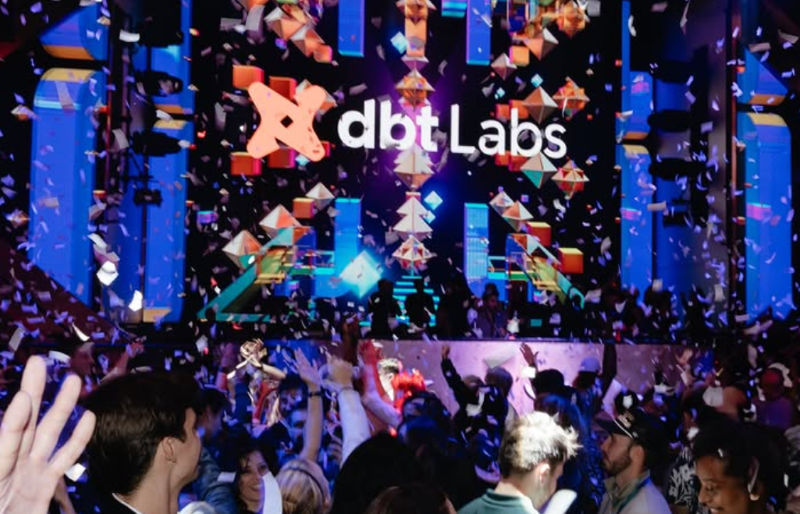
Photo: Instagram / dbt_labs
To build strategic partnerships, Black business owners should join the right networks, like the National Black Chamber of Commerce and Black Founders Network. They can also explore accelerators like Techstars, Y Combinator, Google for Startups, and Backstage Capital.
Getting certified, joining supplier diversity programs at Fortune 500, and joining mentorship programs are other ways to build a solid network.
Creating Value is Key
Growth is a result of the value you deliver. GLOBO and dbt Labs don’t just sell products; they solve problems. dbt Labs simplifies complex data workflows, while GLOBO breaks down language barriers for businesses and communities.
The lesson here is that true value creation lies in addressing unmet needs. This requires business owners to ask essential questions, such as:
- What problem does my business solve better than anyone else?
- How does my product or service tangibly improve my customer’s life or work?
- Why should someone choose me over a larger, more established competitor?
For example, Black-owned businesses can provide culturally relevant services like translation and ethnic foods.
When businesses position themselves as problem-solvers rather than product-sellers, they cultivate trust, loyalty, and long-term relevance. Value creation is not just about transactions; it’s about transformation.