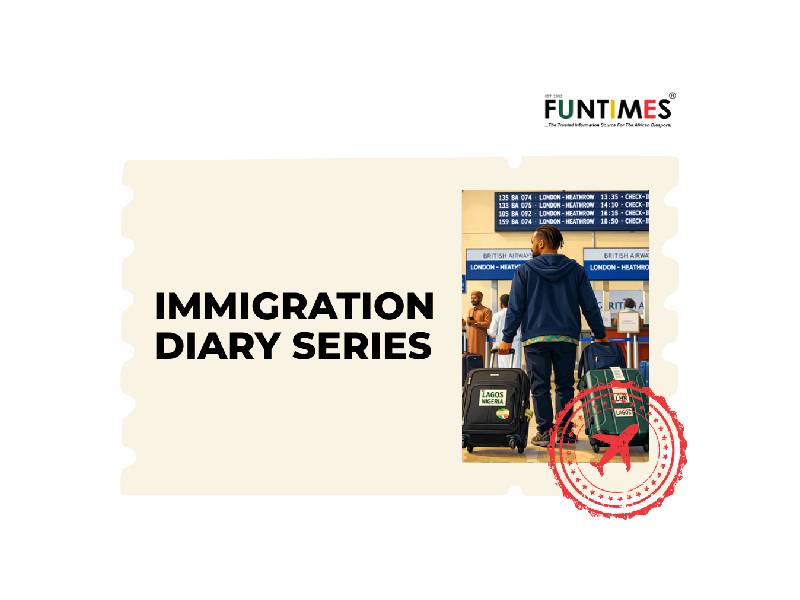

People often talk about relocation as if it’s the best decision anyone can take; better schools, better opportunities, a better life. Not many talk about the quiet sacrifices and the emotional strain. Imagine swapping the bustling and sunny Lagos for the biting cold of Glasgow. Now add chasing a Master’s degree with three energetic children, and a husband who is miles away.
When Tricia, 40, decided to pursue a Master’s degree, she thought it was going to be an easy ride. She soon realised that juggling school, taking care of kids with no nanny or help, and working was not for the faint-hearted. In this conversation, she opens up about motherhood without support, the reality of adult education, and the emotional cost of building a life abroad while leaving loved ones behind.
Why did you decide to study in Scotland while your husband stayed in Nigeria?
A friend who was already here recommended Scotland, saying it was better than England. The original plan was not for me to be here alone with three children. We were planning to go as a family, but somewhere along the line, my husband changed it, saying he would remain in Nigeria for a few months and then join us later. His reason was that we still needed the income from Nigeria in the meantime. In 2021, we all left to begin a new life in a new environment. My husband stayed for like a month and then returned to Nigeria. When he got back, the few months changed to more than a year of pleading with him to come and join us. He used to visit, but it was not enough.
How did you manage school alongside parenting?
Honestly, it was one of the hardest things I have ever done. Adult education requires discipline and focus, but how do you focus when you are alone in a foreign land with three children under age 10? Going to school at my age is not like going to university at 21, when your biggest responsibility is yourself. When you are a mother doing a postgraduate degree abroad where everybody minds their business, it looks like you are doing two full-time jobs.
There were days when I was exhausted, physically and mentally, but I still had to show up for my classes and meet assignment deadlines, while also supporting my children.
What was it like without any help in a new country?
I did not fully understand how hard it would be to do both school and motherhood alone. Imagine waking up early to prepare them for school, running school errands, rushing to your own lectures, and finding time in between to pick them up. Schools here are not like back home, where you can go at any time to get your kids. Here, you have to be at the child’s school at closing time, or you can be fined.
Back home, the marathon would continue. After sending them to bed, I would stay up late to finish my assignments. There was no maid or relatives to handle the children while I took care of other things. It was just me. I was a cook, cleaner, student, and mother. There were days I would just sit on the kitchen floor and cry because I was so overwhelmed. Other times, I would call my friends and family to lament. It got to a point where I started pleading and threatening to do something rash if my husband did not join us, as it was beginning to affect my mental health.
How often did your husband visit, and did his visits help?
He used to visit every three months, but that was an expensive venture that he could not keep up with, especially with the exchange rate. It then became twice a year. Though the visits helped, they were never enough. After about two years of coming and going, he finally decided it was time to join us. Also, using the naira to service pounds was telling on his pocket.
Discover More Migrant Stories of other Africans abroad.
Did living apart affect your family?
It was not easy. Before he joined us, we talked on the phone a lot and did video calls, but you cannot compare it to his physical presence. Doing the job of a father and mother drained me in ways I could not explain. But thank God all is well now.
To what extent does migration affect family relationships, including ties between siblings and friends?
Sometimes, the price one pays for a better future is high. We say we are doing it for our kids. But you end up missing out on precious moments in their lives while trying to make ends meet in this country. You are tempted to keep taking on extra shifts whenever you get the chance, instead of spending time with your children.
People don’t talk enough about how migration separates loved ones. Since I came here, I have not gone back home. I have not seen my siblings in over four years. I have missed family events like weddings. I see my friends hanging out without me, and I’m just watching from a distance. Your children only get to speak with their cousins over the phone, unlike when they used to spend weekends at each other’s houses. You’re building a better life, but at a cost that cannot be quantified.
Do you regret the move?
No. It was challenging at first, but now, I see progress.
Any advice for someone considering this path?
Prepare yourself mentally and emotionally. Make sure it is what you want, and that you are not making the move because everyone else is. If you are coming with children, understand that it will be double the work. You cannot leave your underage children at home alone, and childcare is not cheap. You need to have a plan, or else you will struggle as you never have before.