
Photo by DC Studio
For Black founders in Philadelphia, the tech scene has always been about more than just software. It has been about community, resilience, and building legacy. Whether you are operating out of North Broad Street or a lab in University City, you know that Philadelphia is a city of grit. In 2026, the strongest Black tech leaders are those who see themselves as a bridge. They are connecting the massive healthcare and legal markets of Philadelphia with the engineering brilliance of Black talent in hubs like Lagos, Nairobi, and Accra.
However, this global advantage comes with a new, heavy price tag: the cost of the silicon and electricity that power artificial intelligence. If we are going to build Black-owned companies that last, we have to master the math of the AI supercycle. Pallavi Mahajan of Nokia recently noted that “The AI supercycle has begun”. This cycle is driving a massive shift in how money flows through the global tech economy, and Black businesses must be positioned to ride the wave rather than be drowned by it.
According to the Deutsche Bank Capital Markets Outlook, capital expenditure on AI data centers could reach 4 trillion dollars by 2030. For us, that means we are competing with trillion-dollar corporations for the same GPU hours. This guide is about ensuring that Black-led startups in the Philadelphia community are not priced out of the future we are helping to build. We have to be more efficient, more disciplined, and more strategic with our infrastructure spend than anyone else.
Real Pricing Models for the Black Global Founder
Budgeting for AI in 2026 requires looking at the numbers with a cold, practical eye. Whether you are building a legal-tech tool for Black lawyers in Philly or a fintech app for users in West Africa, your cost per query is the most important number in your finance deck.
OpenAI: The Baseline for Black Tech Teams
Many of our Black tech teams start with OpenAI because it is easy to integrate. But as of January 2026, you must budget for the tiered pricing of their newest models. According to the official OpenAI pricing page, you are billed per million tokens.
Based on current market trackers, here is what Black founders should expect:
- GPT-5 Standard: Roughly 1.25 dollars per 1 million input tokens and 10.00 dollars per 1 million output tokens.
- O3 (Reasoning): Roughly 2.00 dollars per 1M input and 8.00 dollars per 1M output tokens.
If your Black-led app handles 100,000 queries a month, and each query uses a total of 1,200 tokens, your base model cost is about 500 dollars. This seems small, but at scale, this API tax can eat your margins faster than you can raise your next round. Black business owners must track these costs daily to ensure they are not burning through precious seed capital on inefficient prompts.
Anthropic and the Premium Reasoning Market
For Black founders who need deep context (especially for linguistic or cultural nuances across the African Diaspora), Claude 4.5 is the top choice. The CometAPI Guide to Claude 4.5 explains that this high-level intelligence comes at a premium.
- Claude Opus 4.5: 5.00 dollars per 1 million input tokens and 25.00 dollars per 1 million output tokens.
- Claude Sonnet 4.5: A more balanced 3.00 dollars per 1M input and 15.00 dollars per 1M output.
Using Opus 4.5 for that same 100,000 query app would cost you over 2,000 dollars a month. That is a 4x increase in your burn rate. For a Black founder trying to stay lean, choosing between Sonnet and Opus can be the difference between six months or twelve months of runway.
“Here’s the mindset shift founders need in 2026: treat your AI infrastructure like talent on your team. When an agent can actually do the work of a staff member—and the models are finally good enough for that—your compute costs aren’t overhead anymore. They’re payroll. That means being strategic about when you deploy Opus-level reasoning versus when a lighter model gets the job done. The cost difference between models can be 10x or more. Efficiency isn’t about spending less, but rather spending smart on the capabilities that move your business forward.” Akinyemi Bajulaiye, Founder | Pentridge Media
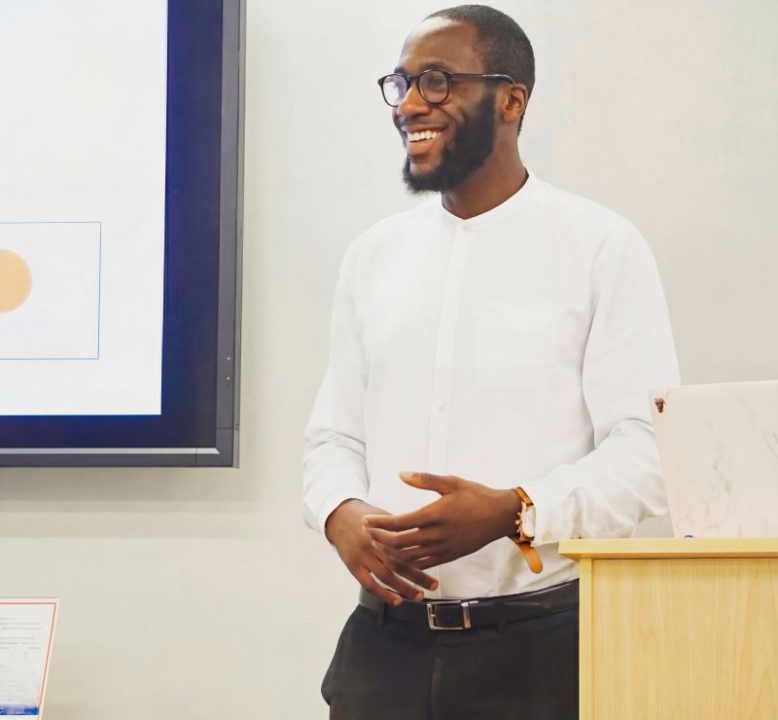
Photo Credit: Akinyemi Bajulaiye, Founder | Pentridge Media
The Black Founder’s AI Budget Template
Black-led startups often have to do more with less. Our budgets must be lean, focusing on high-impact Black talent and efficient computing. Use the following percentages to structure your 2026 infrastructure spend.
| Category | Specific Diaspora Focus | Allocation | Estimated Monthly (Scale-up) |
| Black Talent | ML Engineers in Philly and West/East Africa | 45% | $25,000 |
| Compute OpEx | GPU Rental (H200), Networking, Egress | 30% | $16,500 |
| Model Usage | API Tokens (OpenAI/Claude), Fine-tuning | 15% | $8,250 |
| Platform | MLOps, Security, Data Residency Tools | 5% | $2,750 |
| Risk Buffer | Retraining, Model Drift, Surge Pricing | 5% | $2,750 |
This structure assumes you are leveraging the talent arbitrage available between Philly and the African continent. By hiring senior Black engineers in Lagos or Nairobi alongside your Philly core team, you can spend that 25,000 dollars on a larger, more specialized team than you could in New York or San Francisco. This is a primary strategy for Black business sustainability in 2026.

Photo by Ron Lach
Nine Tactics for Black-Led Capital Efficiency
In the world of Black tech, efficiency is a form of independence. The more efficient your code, the more independent your company stays.
- Quantize Your Models: Do not use full precision unless you absolutely have to. Dropping to 8-bit precision can cut your memory costs in half with almost no loss in quality. This helps Black startups run powerful models on cheaper hardware.
- Prompt Caching: Caching repeated context is a game-changer. Both OpenAI and Anthropic now offer discounts of up to 50 percent for that cached data. This is essential for Black-led RAG applications.
- Model Distillation: Use a large model like GPT-5 to generate high-quality training data, then train a smaller, cheaper model to do the actual work. This protects Black founders from massive API bills.
- Batch Non-Urgent Tasks: If a user does not need an answer in two seconds, batch the request. Vendors offer 50 percent discounts for Batch APIs that process data over 24 hours.
- Use Spot Instances for Training: Never pay full price for training GPUs. Providers like Northflank offer H100s for about 2.74 dollars per hour if you use preemptible instances.
- Serverless Inference: Do not pay for a GPU to sit idle while your Philly team is asleep. Use serverless providers that charge you only when a prompt is actually running.
- Negotiate Committed Use: If you have stable traffic, sign a one-year contract. You can usually get 30 to 40 percent off the hourly rate by committing to a set amount of compute.
- Hybrid Infrastructure: Keep your research and local data on machines in your Philadelphia office. Only use the cloud to scale when you have real user demand.
- Smart Model Selection: Don’t use a premium model like Opus 4.5 for basic tasks. Use a mini model for classification or summarization to save 90 percent on token costs.
Buy versus Rent: The 12-Month Math
Many founders in the Black Philly tech community are debating whether to buy their own hardware. We want to avoid the monthly tax of the big cloud providers. But the math in 2026 suggests caution.
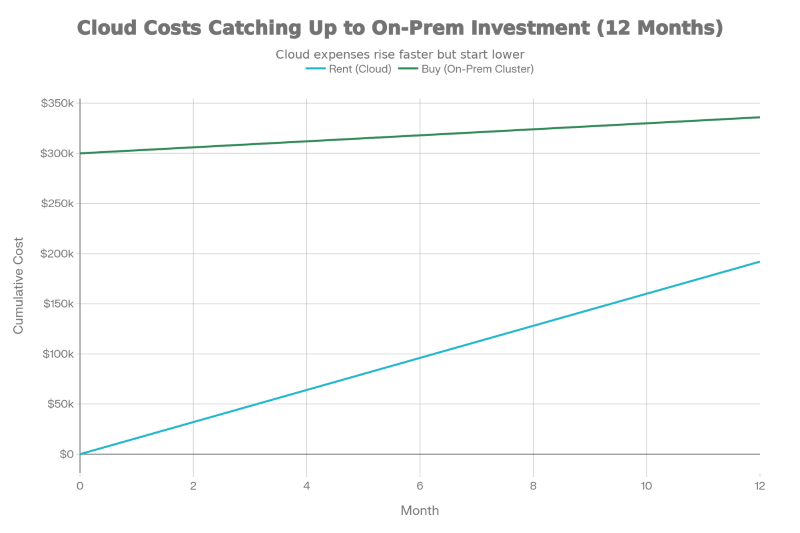
Break-even Analysis: Renting vs. Buying an 8x H100 GPU Cluster (12 Months)
As shown in the chart above, buying an 8-way H100 cluster requires an upfront investment of over 300,000 dollars. For a Black-led startup, that is a massive amount of cash that could be used for three senior hires or a year of marketing. Renting at roughly 2.74 dollars per hour remains cheaper for at least the first 14 months.
Furthermore, the technology is moving too fast for many Black businesses to buy right now. NVIDIA’s Rubin platform, announced at CES 2026, claims to offer “up to 10x reduction in inference token cost”. If you buy old hardware today, you might be stuck with inefficient machines just as the cloud providers start offering 10x cheaper Rubin-based compute next year.
Philadelphia and Africa: A Bridge for Black Innovation
Building across the Diaspora means navigating two very different landscapes. Black founders must understand both to succeed.
The Philadelphia Reality
If you are working out of North Philly or West Philly, pay close attention to your utility bills. Running high-end GPUs locally can add hundreds of dollars to your monthly electricity costs. Also, remember that Philly talent is being recruited by NYC firms every day. You have to budget for competitive salaries but focus on the mission of building Black-owned tech to keep your best people.
The African Continent Reality
For your Black engineering partners in Lagos, Nairobi, or Accra, the hurdles are different.
- Data Residency: Laws like Nigeria’s NDPR may require you to process certain data within the country. This might mean you can’t just use a server in Virginia for everything.
- Latency: The delay from US East servers to West Africa is often over 150 milliseconds. To give your African users a good experience, you must budget for edge-computing or regional data centers in South Africa.
- Power Stability: If your engineering team is running local development servers, budget for high-quality backup power to ensure 100 percent uptime.
Negotiating as a Black Founder
Cloud account managers have diversity and inclusion credits that they don’t always advertise. You have to ask for them. Use this script to get the best deal for your Black-led startup:
“We are a Philadelphia-based startup building for the global Black community, with team members in both the US and West Africa. We are currently spending X dollars on on-demand compute. We are ready to commit to a 12-month window for 2,000 GPU hours per month. We are seeing rates of 2.74 dollars per hour from specialist providers like Northflank. What reserved pricing and diversity-focused credits can you offer to help us scale on your platform while protecting our equity?”.
Final Checklist for Black Founders
Before you approve your next big infrastructure spend, run through these 10 items:
- Have we tested a mini model for this specific feature?
- Is prompt caching enabled to save 50 percent on repeated instructions?
- Do we have a hard cap on daily API spend to prevent bill shock?
- Are we using Spot instances for at least 80 percent of our development work?
- Have we checked local Philly utility rates before buying any local hardware?
- Is our data strategy compliant with both US and African partner laws?
- Have we applied for the specific Black Founder credit programs from AWS, Google, and Azure?
- Does our finance lead have a dashboard showing Cost per Active User?
- Are we ready to migrate to Rubin chips when they launch to get that 10x saving?
- Do we have a 5 to 10 percent risk buffer in the budget for model retraining?
Sources
- Deutsche Bank: Capital Markets Outlook 2026.
- OpenAI: API Pricing and Billing Documentation.
- CometAPI: Guide to Claude Opus 4 & 4.5 Pricing (2026).
- NVIDIA: Rubin Platform Press Release.
- Northflank: Cheapest Cloud GPU Providers Comparison.
- Axios: The AI Supercycle and Network Infrastructure.
FAQ: AI Budgeting for Black Tech Leaders
- Should I buy GPUs or rent? Renting is usually better for Black founders in the first 14 months to preserve cash and stay flexible for new chips.
- How to forecast token costs? Multiply your active users by queries per month and then by the average token count, then use OpenAI or Claude prices.
- What contingency percent to set? We recommend 5 to 10 percent for Black startups to handle surges and retraining.
- How to save on Claude 4.5? Use prompt caching and switch to Sonnet 4.5 for tasks that don’t need Opus-level reasoning.
- Are there Black founder specific cloud credits? Yes, major providers have programs like “AWS Activate for Underrepresented Founders” that provide up to 100,000 dollars in credits.
- What is the cheapest 2026 GPU? Specialized providers like Northflank offer H100s for roughly 2.74 dollars per hour.

Anand Subramanian is a freelance photographer and content writer based out of Tamil Nadu, India. Having a background in Engineering always made him curious about life on the other side of the spectrum. He leapt forward towards the Photography life and never looked back. Specializing in Documentary and Portrait photography gave him an up-close and personal view into the complexities of human beings and those experiences helped him branch out from visual to words. Today he is mentoring passionate photographers and writing about the different dimensions of the art world.