Photo: Freepik
Thanksgiving holds different meanings for different people. For some, it is a day of gratitude and getting busy in the kitchen, cooking up a storm for the family. For others, it’s an emotional reunion, the one time of year when everyone shows up from far and wide, and the house is full of life.
For many African immigrant families across the U.S., Thanksgiving is never just about turkey. It is a chance to blend cultures, flavors, and family traditions, creating something uniquely their own.
From Philadelphia to New York, Michigan to Texas, African, Caribbean, and African American households are redefining Thanksgiving by blending African cultures with American rituals, creating tables that tell stories of migration, memory, and love.
Traditionally, turkey and mashed potatoes and numerous side-dishes used to be the order of the day, but over time, fresh traditions have joined the table.
Some Thanksgiving traditions often include prayers and expressions of gratitude, focusing on family recipes passed down through the generations. However, it is never one-size-fits-all; every family spices it up, infusing their personal touches, from playful games to powerful stories and food competitions. However different the traditions may be, they all centered around the same thing – strengthening bonds and connections.
Black Families are Redesigning the Thanksgiving Table
For many African immigrants, Thanksgiving wasn’t part of their upbringing. It was something they used to hear about in movies or read in books. But they had to quickly adapt to their new environment.
The Okoro family in Maryland, originally from Nigeria, didn’t know how to prepare the Thanksgiving turkey with stuffing when they first arrived. They simply stuck to what they knew instead of missing out on the celebration altogether.
“We didn’t know how to stuff the chicken. I had to go on YouTube for answers. I really did not like the outcome and the taste, so we just made do with our jollof rice and grilled chicken,” Mrs Okoro recounted.
Since then, they have continued doing Thanksgiving their own way without the regular stuffed turkey.
For some other Black families, you will find local delicacies like pepper soup, suya-spiced turkey, Ghanaian kelewele, curry goat, peppered goat meat and gizzard, alongside the traditional African American staples like baked mac and cheese, collard greens, sweet potato pie, candied yams, and others.
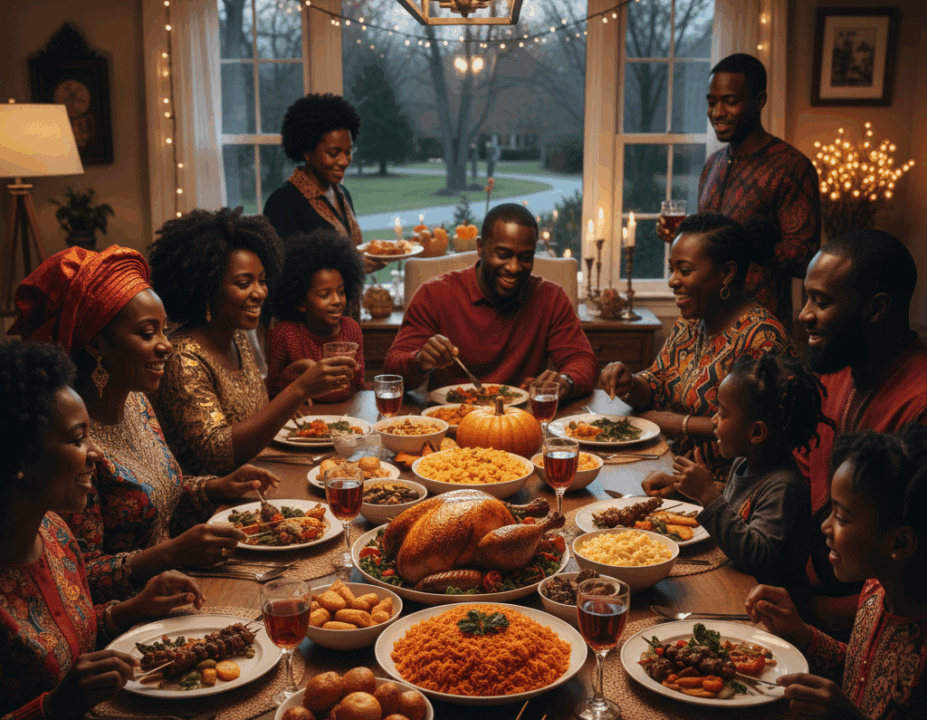
Image: AI-generated
A Time to Reunite, Reflect, and Build New Families
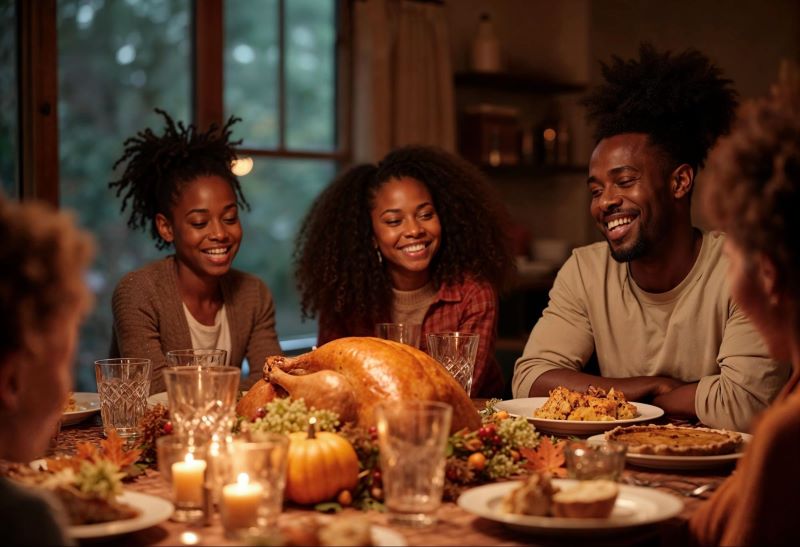
Thanksgiving is one of the few times when aunties, cousins, grandbabies, and others gather under one roof. It’s a moment to catch up, pass down stories, and feel the heartbeat of home, and for Black families, it’s sacred.
Sometimes, family is more than blood. It’s the aunties and uncles who aren’t biologically related, or the friends and neighbours turned family.
Thanksgiving becomes a massive reunion, gathering migrants from different countries who have no extended families in the U.S. One living room can hold Nigerians, Ghanaians, Jamaicans, Sierra Leoneans, Black Americans, and friends from everywhere.
For many, it’s a chance to celebrate community and culture while expressing gratitude for the networks that make life in America feel less lonely. Thanksgiving becomes a bridge that brings together American customs and core African values like respect, unity, and hospitality.
Amanda moved to the US in 2023. With no family close by, she celebrates Thanksgiving with friends.
“I always make Nigerian meals like jollof and fried rice, and sometimes egusi soup. I invite friends over for what I call Friendsgiving. That way, I don’t feel left out of the celebration, while also blending my African traditions with the American holiday.”
Passing Heritage from One Generation to the Next
At the heart of many Black Thanksgiving gatherings are the stories, those oral histories our elders hold dear. In some Black families, after the hearty meal comes the storytelling. The children gather around as elders pass down family histories. Some recount life in the village or how they came to the U.S. with little or no money, or how the community contributed money to send them abroad.
The younger ones also exchange stories of gratitude, recalling past events.
These storytelling moments close the generational gap, offering American-born children who may only know Africa through stories a link to their African roots. It is an opportunity to teach the younger generation about where they come from.
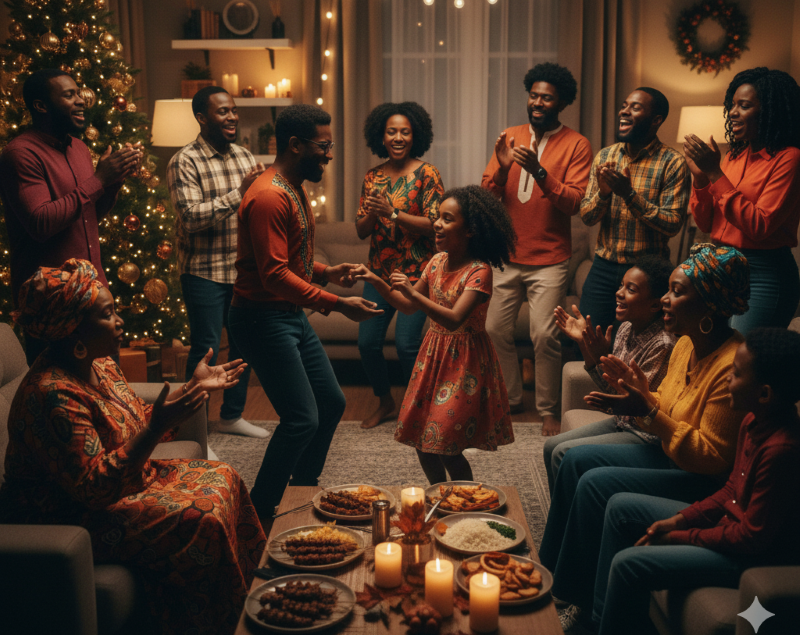
Image: AI-generated
Music and Vibes
Can it even be called a celebration in a Black home if there’s no music or good vibes? Expect aunties and uncles dishing out old school dance steps or trying to catch up with the Gen Zs as they vibe to Afrobeats, gospel, and soul classics playing in the background.
Some families even host karaoke sessions and play games, while laughing over family jokes.
Every laugh shared, every story told, and every plate passed around the table tells us that joy, community, and cultural pride are the true flavor of the Black Thanksgiving experience. All of these traditions are more than just having fun; they remind us that Thanksgiving isn’t about what’s on the table or the material things we own, but about connection and building relations, while also preserving our culture.