Source: Minority Rights Group
1994, a year the world would rather forget, yet is compelled to remember because of its failure to act when and where it mattered most. In that year, while the world stood on the sidelines, Hutu militia groups known as the Interahamwe (“Those Who Attack Together”) and Impuzamugambi (“Those Who Have the Same Goal”) embarked on mass killings of Tutsi ethnic communities in Rwanda, along with fellow Hutus who were deemed not to share in their bloodlust.
Using dehumanizing language such as “cockroaches” to describe Tutsis, Hutu civilians, fueled by radio broadcasts, were encouraged not only to identify their Tutsi neighbours but also to exterminate them.
Over the course of 100 days, from April 7 to mid-July 1994, machetes and other crude weapons were used to carry out the killings. It is estimated that over a million people were murdered, an act of genocide that not only shamed the world but forced it to confront one of its darkest chapters in modern history.
On December 3, 2003, the United Nations General Assembly adopted Resolution A/RES/58/234, designating April 7 as the International Day of Reflection on the Genocide in Rwanda. In doing so, it encouraged member states and organizations to honor the victims and survivors while reflecting on the consequences of humanity turning a blind eye.
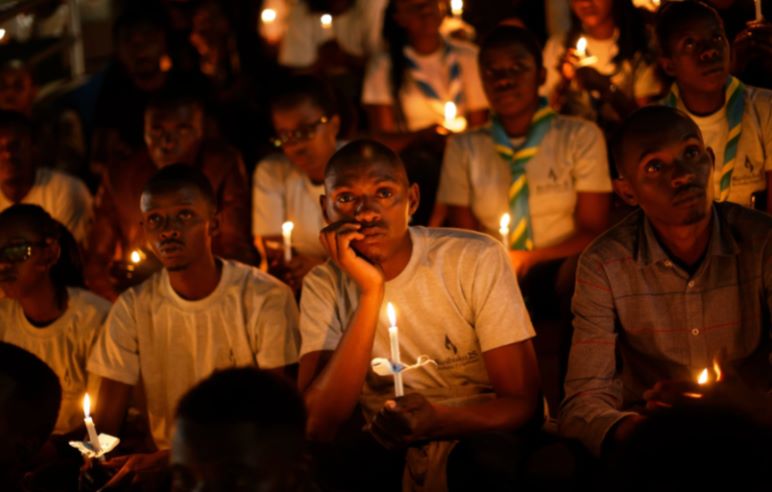
Today, the memory of the genocide has become a painful yet necessary reminder of humanity’s failings and abdication of our collective responsibility to be our brother’s keeper. Through testimonies, memorial sites, and annual commemorations, the voices of those lost continue to echo through time.
In Rwanda, remembrance has become embedded in national life. Through memorial ceremonies and education, the nation seeks to rebuild its future by teaching younger generations to reject bigotry and ethnic hatred in favour of unity and coexistence.
But remembrance is not Rwanda’s responsibility alone; it is a global duty. The international community’s failure to act decisively in 1994 remains a stark lesson. It challenges us to reconsider our tendency to remain passive in the face of injustice, discrimination, and hatred. Remembering Rwanda compels us to ask: What is our role when injustice unfolds not just within our borders, but beyond them?
While Rwanda’s tragedy reached its peak in 1994, the larger question remains: Has the world truly learned from its failure?
Across the globe, conflicts continue to devastate lives and communities. From the Second Congo War (1998–2003) and the Eritrean-Ethiopian War (1998–2000) to the Russia-Ukraine War (2022–present), humanity appears persistently drawn to conflict over dialogue, reinforcing cycles of destruction.
When does it end?
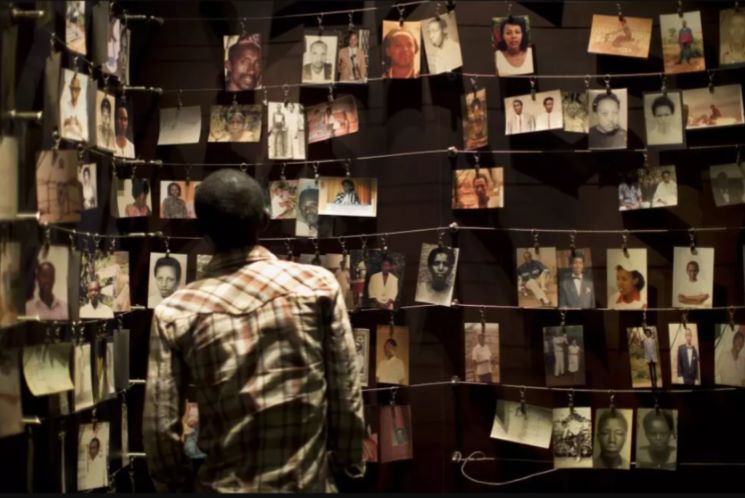
Source: SAPIENS, Associated Press
Commemorating victims while important risks becoming ritualistic. Leaders issue statements, candles are lit, and history is revisited in classrooms and documentaries. Yet, the true essence of remembrance lies not in repetition but in transformation, ensuring that root causes are addressed and never allowed to shape future actions.
The phrase “Never Again,” widely invoked after the Holocaust and echoed after Rwanda and the Biafran genocide, has too often become a moral slogan stripped of urgency. If remembrance does not provoke action, if it does not change how nations respond to early warning signs, then it becomes little more than symbolic mourning.
During the genocide, warning signs were evident: escalating hate speech on radio broadcasts, organized militias, political instability, and targeted propaganda. These signals were not hidden; they were visible, documented, and largely ignored by the global community.
Even after the killings began, the world invested more in rhetoric than in action, more in platitudes than in decisive intervention. Today, similar warning signs persist in different regions. Ethnic tensions, extremist ideologies, and systemic violence continue to emerge. The question is no longer whether the world can recognize the signs but whether it is willing to act before it is too late.
In honoring the victims of the Rwandan genocide, one might imagine that their greatest wish would not be memorials or speeches, but swift, decisive action when human lives are under threat.
Hateful rhetoric is no longer confined to radio broadcasts. In today’s digital age, online platforms have become powerful tools for spreading both information and misinformation. Just as radio propaganda fueled the genocide in Rwanda, social media, online forums, and algorithm-driven content now amplify hate at an unprecedented speed and scale.
This is further exacerbated by individuals, leaders, and groups who publicly promote unity while covertly fueling division. Hate speech no longer requires state-controlled platforms to reach global audiences; a single post can spread false narratives, conspiracy theories, and targeted disinformation, leading to increased prejudice and deliberate dehumanization.
To truly honor the victims, remembrance must go beyond speeches and wreath-laying. World leaders and institutions must take concrete steps to prevent and address emerging conflicts, while actively combating hate speech both online and offline.
To honor the victims is to ensure their stories are not reduced to statistics or anniversaries. It is to recognize that remembrance carries responsibility. It demands vigilance, courage, and action.
The world failed Rwanda once. The true measure of remembrance is whether we allow it to fail again anywhere, at any time.

Okechukwu Nzeribe works with the Onitsha Chamber of Commerce, in Anambra State, Nigeria, and loves unveiling the richness of African cultures. okechukwu.onicima@gmail.com