Image Source: CAF Online, all rights belong to original owner
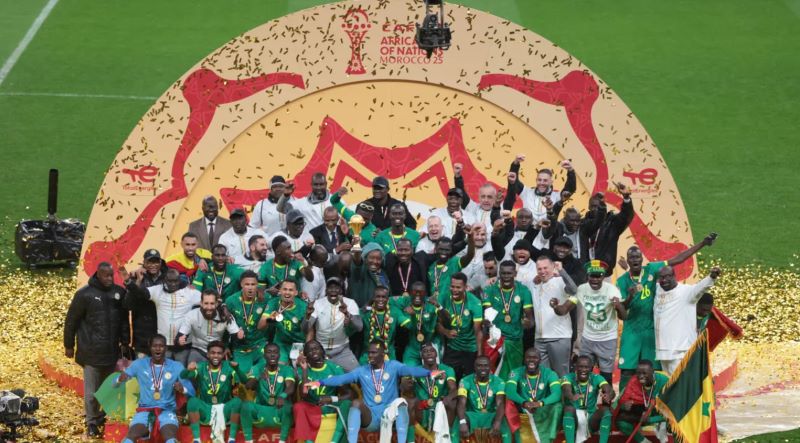
Senegal claimed their second Africa Cup of Nations title on January 18, 2026, defeating hosts Morocco 1-0 after extra time at Prince Moulay Abdellah Stadium in Rabat. Pape Gueye’s 94th-minute goal secured the victory, capping a tournament that showcased not only high-stakes competition but also the remarkable journey African football has undertaken since the competition’s inception.
From Three Nations to Continental Powerhouse
The Africa Cup of Nations was first held in February 1957 in Khartoum, Sudan, with only three participating nations: Egypt, Sudan, and Ethiopia. South Africa was initially scheduled to participate but was disqualified due to apartheid policies. What began as a modest assertion of African footballing identity during the height of decolonization has evolved into one of the world’s premier continental tournaments.
The competition’s format has changed dramatically over time, with the number of teams increasing from 3 in 1957 to 24 in 2019. The structural evolution reflects the tournament’s growing ambition and Africa’s expanding football infrastructure:
- 1957-1962: Simple knockout format with 3-4 teams
- 1962: Introduction of qualification rounds
- 1968: Tournament became biennial, expanded to 8 teams
- 1992: Grew to 12 teams with quarter-finals introduced
- 1996: Reached 16 teams in four groups, a format that lasted over two decades
- 2019: Expanded to the current 24-team structure with six groups
In 2013, the tournament shifted to odd-numbered years to avoid clashes with the FIFA World Cup. More recently, CAF announced in December 2025 that the tournament would revert to even-numbered years and become quadrennial starting with the 2028 edition.
Professionalization and Global Recognition
The tournament’s transformation from regional competition to global spectacle occurred gradually through deliberate institutional development. Under CAF president Ydnekachew Tessema’s leadership from 1972 to 1987, the cup earned greater international prestige. Professionalism was allowed in 1980, and corporate sponsorships were accepted in 1984.
The 1990s marked a crucial turning point for African football’s global visibility. Cameroon became the first African nation to reach the FIFA World Cup quarter-finals in 1990, having stunned Diego Maradona’s defending champion Argentina in the opening game. Nigeria’s gold medal triumph at the Atlanta 1996 Olympics further elevated continental football’s international standing.
As AFCON professionalized during the 1980s and opened up to the increasing number of African players based outside the continent, it also commercialized rapidly. This commercialization accelerated through the 2000s and 2010s as African stars became fixtures at Europe’s elite clubs.
The tournament’s economic growth reflects its enhanced status. Prize money increased from $7 million in 2023 to $10 million in 2025. The 2025 edition recorded more than 1.1 million spectators by the end of the quarterfinals, the highest attendance ever for a single AFCON tournament.
Morocco’s Hosting Excellence and Infrastructure Development
Morocco was named host of the 2025 edition on September 27, 2023, after Guinea was stripped of the hosting rights due to inadequate preparations. The North African nation’s successful delivery demonstrated the continent’s capacity for world-class event management.
Morocco’s hosting prowess gains additional significance given their upcoming role in the 2030 FIFA World Cup, which they will co-host with Spain and Portugal marking only the second time the World Cup will be held on African soil since South Africa 2010.
The 2025 edition broke the record for most goals scored in a single AFCON tournament, with 120 goals as of the semifinals, surpassing the previous record of 119 from 2023. Moroccan striker Brahim Díaz became the first player in AFCON history to score in each of the first five matches of any edition, finishing the tournament with five goals to claim the Golden Boot.
Looking Forward
The 2027 edition will be jointly hosted by Kenya, Tanzania, and Uganda, bringing the tournament to East Africa and further demonstrating AFCON’s pan-continental reach. The three-nation hosting model follows successful precedents and allows countries to share infrastructure costs while expanding the tournament’s geographic footprint.
The decision to make AFCON quadrennial from 2028 aligns with other major continental championships, such as the European Championship. CAF also announced that an annual African Nations League would commence in 2029, providing regular competitive fixtures between AFCON editions.
These structural changes reflect CAF’s strategic vision for the development of African football. The balance between tournament frequency, player welfare, commercial viability, and competitive quality will continue to shape AFCON’s evolution in the coming decades.
Cultural Significance Beyond Sport
AFCON transcends athletic competition to serve as a celebration of African identity, unity, and achievement. The tournament provides moments of collective joy for nations across the continent, offering a platform for cultural expression and national pride that few other events can match.
The tournament’s official anthem “Africallez,” performed by Angélique Kidjo, Lartiste, and Jaylane, captures the fusion of generations, styles, and nations united by football. The competition’s emotional intensity where football becomes intertwined with history, politics, and social aspirations creates an atmosphere found nowhere else in world football.
From its origins as a three-nation tournament asserting African footballing equality during decolonization, AFCON has evolved into a world-class competition that showcases the continent’s tactical sophistication, organizational capacity, and extraordinary talent. Senegal’s 2025 triumph, secured through defensive excellence and mental fortitude, exemplifies the modern tournament’s competitive standards while honoring the tournament’s rich history.
As African football continues its global ascent, AFCON remains the continent’s premier platform for celebrating achievement, fostering unity, and demonstrating that African football belongs among the world’s elite.