West Africa is not new to political crises; from sanctions, coups, and political impasses, the region has seen the best and worst of it. For the Economic Community of West African States (ECOWAS), the regional bloc has been at the forefront of addressing concerns faced by its member states and of finding solutions to ensure peaceful relations within the region.
On January 28, 2024, when the Military leaders of Burkina Faso, Mali, and Niger announced their exit from the regional bloc, which later came into effect on January 29, 2025, it marked a major crisis for the 15-member state regional body, which has now become a 12-member regional group with the exit of the countries. Their exit raises questions about the continued effectiveness of the regional body, especially as West Africa continues to experience recurring upheavals that the body was set up to address.
How ECOWAS Came to Be
On May 28, 1975, in Lagos, Nigeria, West African countries, in a bid to promote economic trade, cooperation, self-reliance, regional collaboration, and facilitate the free movement of people, services, and capital, established the Economic Community of West African States (ECOWAS).
As noted by the World Integrated Trade Solution in highlighting the revised treaty, “the Community shall, by stages, ensure; (a) the harmonization and coordination of national policies and the promotion of integration programmes, projects and activities, particularly in food, agriculture and natural resources, industry, transport and communications, energy, trade, money and finance, taxation, economic reform policies, human resources, education, information, culture, science, technology, services, health, tourism, legal matters; (b) the harmonization and coordination of policies for the protection of the environment;(c) the promotion of the establishment of joint production enterprises” among several other aims.
Headquartered in Abuja, Nigeria, the regional body is made up of 15 member states which are Benin, Côte d’Ivoire, Gambia, Ghana, Guinea, Guinea-Bissau, Liberia, Mali, Niger, Nigeria, Senegal, Sierra Leone, Togo, Burkina Faso and Cape Verde with specialized commission in trading, customs, immigration, and monetary payments, industry, agriculture, and natural resources, transportation, telecommunications, and energy as well as social and cultural affairs.
A Shifting West Africa
West Africa is continually experiencing several political shifts that have tested the capacity of the regional body. From military takeovers, public protests, electoral malpractices, and violence. Across the region, political arrangements are facing resistance, accompanied by protests, especially from the younger generation, who are committed to expressing their grievances over the slow pace of governance, the lack of employment, and the obvious wealth inequality brought about by politicians’ corruption.
Added to this is the growing insecurity plaguing the region. With weak border controls facilitating the movement of weapons, insurgents, and illegal products, there has been a rise in cases of violence from extremists, as seen with the continued onslaught from ISWAP and Boko Haram in places like Nigeria, Chad, Niger, and Cameroon. Also, the growing case of transnational crimes like drug trafficking, arms smuggling, money laundering, and human trafficking is unsettling the stability of several African countries.
ECOWAS Response
Once recognized as a regional body with the capacity to shape regional development, the body has come under criticism due to growing scepticism from several governments and citizens alike. With some believing that it has deviated from protecting the interests of the region while advancing that of western nations.
This was pointed out in an article by Human Rights Watch where it states that “in a joint statement, the three countries accused ECOWAS of becoming a threat to its members, of being “under the influence of foreign powers,” and of betraying its founding principles. They also accused the regional body of failing to support their fight against “terrorism and insecurity,” while imposing “illegal, illegitimate, inhumane and irresponsible sanctions” following military coups.
Notwithstanding its many successes especially in its peace keeping and conflict intervention efforts through its Economic Community of West African States Monitoring Group (ECOMOG), introducing the ECOWAS Trade Liberalisation Scheme (ETLS) in 1979 to boost regional trade and allow small to large scale businesses expand into new markets, introducing the Common External Tariffs (CET) in 2015 as well infrastructural development in sectors like transport, trade and Energy, the regional body has come to be viewed as more of a political platform with little effort to influence any change more so when criticisms from the body are reserved only for military takeover while looking the other way on incidences of constitutional coups.
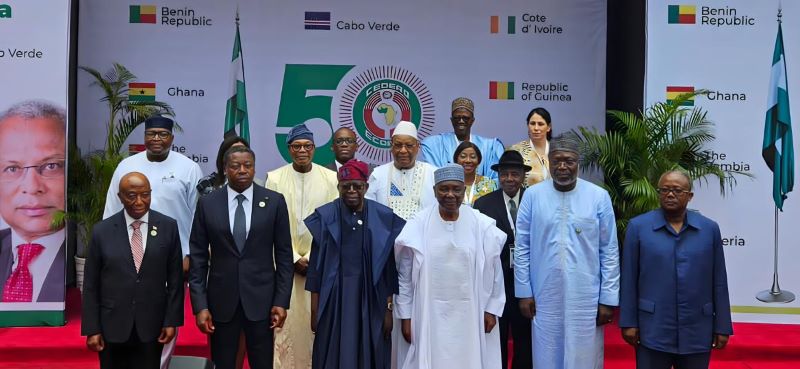
Image Credit: United Nations, ECOWAS Commission
What The Future Holds
In an article titled – Sahelexit raises questions about the future of West African integration, by the London School of Economics and Political Science, in noting the possible impact of the exit of the Sahel countries from the organization explains that “this joint withdrawal, referred to as Sahelexit, represents over a fifth of ECOWAS’ member states and 63 million of its 409 million citizens. The withdrawal delivers a profound shock to the regional organisation and signals that fragmentation is ‘no longer a theoretical concern but a stark reality’. Sahelexit reflects not a complete rupture but a reconfiguration of regional institutional ties”.
With this withdrawal, the regional body’s influence has been greatly weakened, with the possibility of more states exploring withdrawing from the body, especially given the region’s obvious lack of force or capacity to enforce sanctions.
Moreover, with the growing accusation of dominance by a few members of the body, several countries feel their interests are not served by the organization and would rather pursue interests that are focused on their country rather than the regional bloc.
As noted by Anu Maria Joseph in an article titled ECOWAS at 50: What are the achievements, issues and challenges by NIAS Africa Studies, she noted that “Many West Africans perceive ECOWAS as a club of presidents and elites whose objectives do not sincerely align with the aspirations of the people, but with the objective of staying in power. Often, political, economic, and security decisions of the bloc are dominated by the interests of the countries led by these elites.”
Reinventing Itself for a New Era
In an article titled – Will ECOWAS Survive Until 2030 by the Foreign Policy Research Institute, it notes that “the world has changed, and citizens worldwide aspire to democratic governance and leaders who understand their needs. ECOWAS stands at a critical juncture where bold decisions must be taken for its survival. The persistent reluctance among some of its leaders to adhere to democratic principles, particularly regarding term limits and the suppression of political dissent, poses an existential threat to its long-term viability and moral authority.”
As the future unfolds, ECOWAS must maintain a firm stance against constitutional crises by ensuring that political leaders, especially those within its member states, adhere to their countries’ constitutional arrangements. By creating mechanisms for conflict resolution, intervention, and engagement, they can address issues before they escalate.
Also, it is imperative that the regional body begin to explore the option of security cooperation among its member states, especially with the rise in terrorist activities due to the activities of ISWAP, Boko Haram, and other forms of organized crime. By sharing intelligence and fostering joint security initiatives, many of the region’s security problems can be dealt with decisively.
African youths will remain the driving force of the continent’s growth in the future. Supporting policies that impact education, entrepreneurship, and job creation, while also encouraging greater political involvement from younger generations, will help bring the energy and creativity of the next generation to shape the future of the regional body.

Okechukwu Nzeribe works with the Onitsha Chamber of Commerce, in Anambra State, Nigeria, and loves unveiling the richness of African cultures. okechukwu.onicima@gmail.com