Image source: FunTimes AI
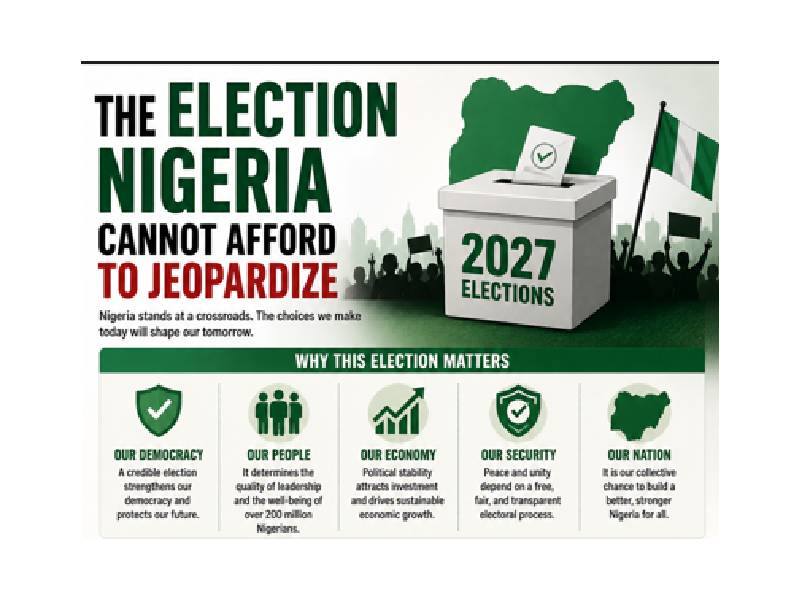
Nigeria is approaching another general election cycle, and if history is any guide, the country is also approaching another moment of selective amnesia. Each cycle usually begins with outrage, loud promises, louder campaigns, swells with hope, and ends in a quiet return to the same outcomes. It is safe to say that the country may repeat this dangerous habit in the upcoming 2027 elections. Hence, the real crisis is no longer bad leadership, but a system that survives because it is repeatedly forgiven.
There is a truth many avoid saying out loud: Nigerian elections are not always won by the best ideas, but by the strongest structures. Money moves faster than conviction, influence travels further than integrity, and by the time votes are counted, the real contest has often already been decided elsewhere. Until this imbalance is confronted, elections will continue to reward power over performance.
What about the accountability crisis? How it easily dissolves after elections. Campaign promises are treated like ceremonial language. Important in the moment, irrelevant afterwards. Nigerians are told what will be done, but rarely demand proof of what has been done. And so, governance becomes a cycle of declarations without delivery. Let’s also not forget the culture of political recycling that has become so normalized that it barely raises eyebrows anymore. Familiar figures re-emerge with rebranded narratives, and the question voters ask is not “Why again?” but “Why not?” This quiet acceptance is how stagnation sustains itself, without resistance, without urgency, and without consequence.
One of the most evident results of this electoral dysfunction is the ever-lingering economic hardship. Yet even this reality risks being reduced to talking points in campaign speeches. But the real question is not who can describe the problem most passionately, but rather, who has demonstrated the discipline and clarity to solve it.
Nigeria cannot afford another election built on explanations instead of execution.
The issue of identity politics is also one of the most effective tools in the political playbook. Not because it is persuasive, but because it is familiar. Ethnicity and religion continue to shape decisions that should be guided by competence, creating a powerful distraction. It works precisely because it asks less of voters: not to evaluate, but to simply align.
There is also an uncomfortable contradiction at the heart of Nigeria’s youth movement. It is loud, visible, and digitally active, but often fragmented when it matters most. Given the disturbing voting margin, another question for the 2027 election is whether this energy will translate into coordinated action or dissolve into online expression that never reaches the ballot box.
According to TheCable, the systemic decline in voter numbers over the years is concerning. In 1999, 29.8 million Nigerians voted for President Olusegun Obasanjo, and 24 years later, only 24 million voted, a drop of 5.8 million. The highest recorded voter turnout was in 2003, when 39 million people, representing 69% of registered voters, voted in the elections. Since then, voter turnout has been on a downward trend: 57.5% in 2007, 53.68% in 2011, 43.65% in 2015, and 34.75% in 2019. The 2023 figure of 26.71% is the lowest voter turnout so far. What will be the fate of the 2027 general elections?
However, trust in the electoral process is fragile, and not without reason. Reforms have been introduced, technologies deployed, assurances given, but belief is not built on systems alone; it is built on consistency. Beyond watching elections, Nigerians are judging whether those elections deserve their faith. And then there is the hardest truth of all: the Nigerian voter is both a victim of the system and a participant in its continuation. Vote-buying exists because it works. Weak accountability persists because it is tolerated. The system bends because, at critical moments, many people allow it to.
Nigerians, “the ball is in your court.”
The 2027 election is more than a political event; it is a test of national direction. It will not simply reveal who holds power; it will reveal what Nigerians are willing to accept. Because in the end, the greatest threat to Nigeria’s future may not be its politicians, but the standards its people are prepared to lower.

Victoria Ezechukwu-Nwagwu is an Associate Editor at FunTimes Magazine with a strong background in media, strategic communications, and editorial leadership. She brings a thoughtful, detail-driven approach to storytelling, content development, and collaboration, ensuring high editorial standards.
She plays a key role in shaping impactful narratives and driving creative innovation across the publication.