
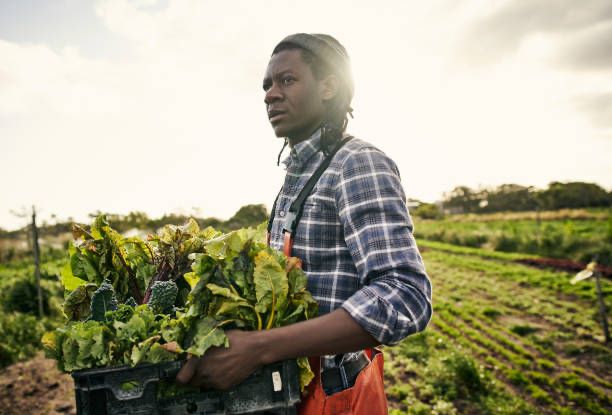
Source: iStock
For decades, the economic narratives of Botswana and Namibia have been carved directly out of the earth. Diamonds and raw minerals have been the historic anchors of these Southern African nations. But as we move through the second quarter of 2026, global diamond markets are facing sustained volatility, forcing a profound realization: the future of these economies doesn’t lie beneath the soil, but in what can be grown above it.
For African Americans and the African diaspora in the U.S., looking toward the continent for investment and connection, the traditional gaze usually lands on the bustling “Silicon Savannahs” of Kenya or the fintech hubs of Nigeria. But there is a quieter, perhaps more vital, revolution happening in the arid climates of the Kalahari and the Namib. Botswana and Namibia are actively rewriting the rules of climate-smart agriculture and agribusiness, transforming environmental vulnerabilities into technological testbeds.
Botswana: From Security to Sovereignty
In early April 2026, Botswana signaled a massive structural pivot with the presentation of its National Agriculture Draft Policy 2025. The shift is not merely about producing more food; it is a fundamental realignment of the nation’s economic DNA.
The government is aggressively pushing for agricultural digitization, precision farming, drone monitoring, and climate-smart practices to build resilience. Speaking before Parliament on April 1, 2026, acting Minister of Lands and Agriculture, Dr. Edwin Dikoloti, laid out the stakes, noting a deliberate shift from basic “food security” to outright “food sovereignty.”
“Rooted in the principles of environmental stewardship, the right to food and nutrition, stakeholder engagement, social inclusivity and evidence-based decision-making, the policy embraces innovation, promotes agri-entrepreneurship and reinforces the central role of farmers and agribusinesses…” Dr. Dikoloti stated.
He further emphasized the technological backbone of this initiative:
“This shift is expected to enhance service delivery and digitise data, improving transparency, traceability, and efficiency across the sector.”
This isn’t just rhetoric. Botswana’s Vice President and Finance Minister, Ndaba Gaolathe, recently outlined concrete plans to triple agriculture’s contribution to the national GDP, a move heavily reliant on agro-processing, value chains, and foreign direct investment to modernize yields and drought resilience.
Source: iStock
Namibia: The Painful, Necessary Restructuring
Across the border in Namibia, the approach to agricultural innovation in 2026 is rooted in a necessary, pragmatic restructuring of state assets to make way for commercial viability and private-sector ingenuity.
For years, the Agricultural Business Development Agency (AgribusDev) managed the government’s irrigation and green schemes. In late April 2026, the Ministry of Agriculture, Fisheries, Water, and Land Reform drew a hard line in the sand, setting a strict deadline to dissolve the financially challenged entity by June 2026, thereby allowing incoming service providers to assume control and modernize these critical projects.
During the ministry’s 2025/26 performance review, Minister Inge Zaamwani made the directive clear, prioritizing efficiency and service delivery:
“I would therefore like to highlight several key deliverables that I wish to see a clear agreed way forward and timelines at the end of the workshop. The Department of Agriculture Development to dissolve AgribusDev by the end of June 2026.” (Source: The Brief Namibia)
By shedding bureaucratic bloat and handing green schemes over to commercially driven operators, Namibia is clearing the runway for agritech investments, specifically in climate-smart horticulture and water management systems.
The April 2026 AgriTech Dashboard
To understand the scale of the opportunity, one must look at the data driving these policy shifts. Here is the current state of play:
| Metric / Initiative | Data Point (Current as of Spring 2026) | Strategic Goal |
| Botswana GDP Target | Current Agri Contribution: ~2% | Grow to 6% of national GDP through export-oriented agritech. |
| Botswana Cattle Herd | Baseline (2024): 1.6 million | Target: 4.6 million by 2030 via resilient breeds and tech management. |
| Namibia Infrastructure | June 2026 Deadline | Dissolution of state-run AgribusDev to privatize/modernize green schemes. |
| Tech Funding (Pan-African) | $65,000 Prize Pool | The Innovate for Impact Challenge 2026 opened applications this spring for early-stage AgriTech startups addressing climate-smart farming. |
Source: iStock
The Diaspora’s Call to Action
Why does this matter for the diaspora in Atlanta, Houston, or Washington, D.C.? Because the innovations required to make agriculture thrive in Botswana and Namibia, AI-driven irrigation, soil moisture sensors, drought-tolerant crop biotechnology, and mobile supply-chain logistics are the exact same technologies the entire globe will need as climate change accelerates.
These nations are not just looking for charity; they are actively structuring their policies to attract venture capital, technological partnerships, and entrepreneurial expertise. The dismantling of Namibia’s state-run farming schemes and Botswana’s pivot to digital transparency are open doors for private enterprise.
For the African diaspora, bridging the gap between U.S. capital/tech expertise and Southern Africa’s dry-land laboratory isn’t just a culturally resonant investment. As diamonds lose their luster, agricultural technology in the Kalahari and Namib is proving to be the smartest, most essential bet on the board.

Anand Subramanian is a freelance photographer and content writer based out of Tamil Nadu, India. Having a background in Engineering always made him curious about life on the other side of the spectrum. He leapt forward towards the Photography life and never looked back. Specializing in Documentary and Portrait photography gave him an up-close and personal view into the complexities of human beings and those experiences helped him branch out from visual to words. Today he is mentoring passionate photographers and writing about the different dimensions of the art world.