Source: Prescription is Home — Mason Exhibitions
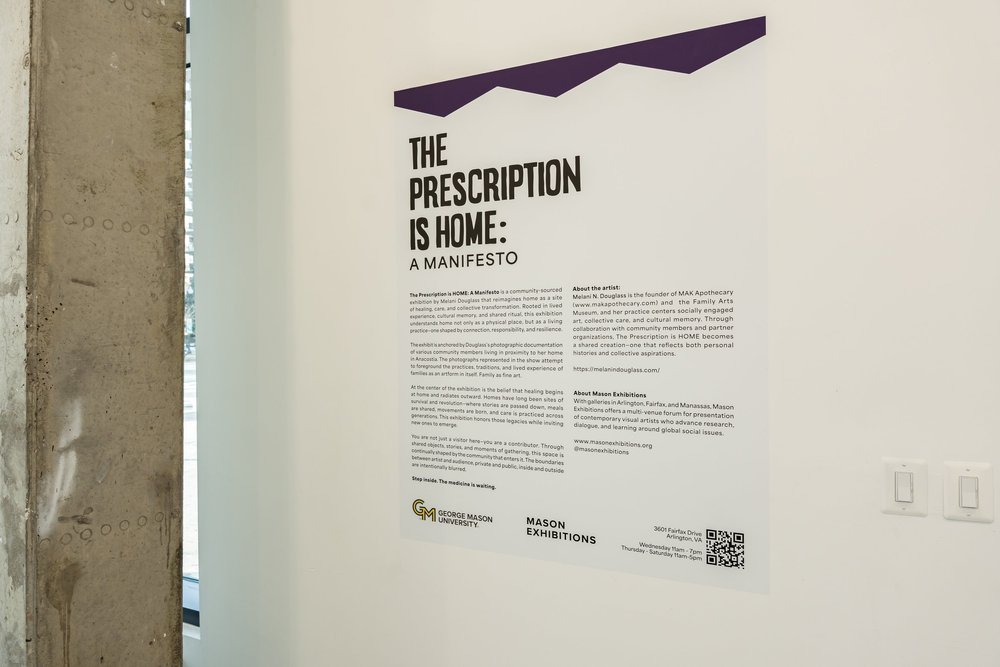
On a spring afternoon in Arlington, the room at Mason Exhibitions does not behave like a neutral gallery. The exhibition, The Prescription is HOME: A Manifesto, is built as an immersive visual arts project with participatory installation and community-centered programming, and its premise is plain enough to feel radical: home is not only where we live, it is where repair begins, where memory is kept in motion, where care becomes architecture. That idea is not decorative here. It is the room’s load-bearing beam.
The urgency of that beam is not abstract. The WHO Regional Office for Africa says nearly 150 million people in Africa are living with mental health conditions, while services remain severely under-resourced, fragmented, and inaccessible in many places. In the U.S., KFF reports that in 2024, 39% of Black adults with any mental illness received mental health services, compared with 58% of White adults. And in KFF’s April 30, 2026, brief on AI and health, about a third of adults said they use AI chatbots for health information or advice, yet 77% said they do not trust AI tools or chatbots for mental health and emotional well-being, even as Black adults were more likely than White adults to trust those tools for that purpose. Those numbers do not tell a full story, but they tell enough to show the hole in the net.
That is why the art matters, and why the art should not be made to do the work of a clinic, a policy, or a social safety net. A new Frontiers study of Art Pharmacy, an arts-based social prescribing program, found changes in WHO-5 wellbeing scores over time among 240 participants. That is not a claim that art cures anything. It is a cleaner, more honest claim: structured arts engagement can be associated with measurable movement in wellbeing, which is enough to make art part of the public health conversation without turning it into a miracle tale.
The strongest art about healing rarely behaves like wellness content. It does not smooth the hard edges. It keeps the fracture visible. In a new profile from the Joan Mitchell Foundation, the Black artist Bob Dilworth asks, “What does it mean to be a Black artist today?” and says his work has “taken on new significance.” He is not speaking in the bright language of self-care. He is speaking from a landscape where history keeps trying to take things away, including rights, memory, and the right to define oneself. His work, the Foundation notes, seeks out memories of time and place and tries to search for the humanity in each of us. That is not escape; that is witness.
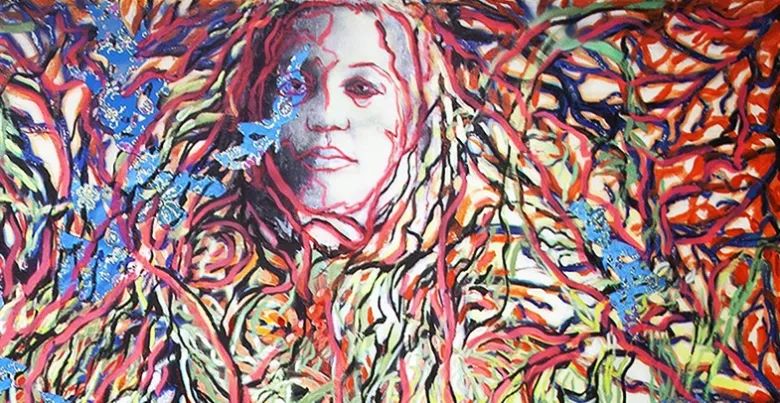
Source: Artist Bob Dilworth, known for his vibrant, joyful paintings, is honored at the 25th Pell Awards – TPR: The Public’s Radio
This is the first thread in the story, and it runs through Black American art that is shaped by grief, burnout, inherited pressure, and the daily strain of being asked to endure with style. Dilworth’s language is direct about the force field around Black life, but the same pressure is visible in quieter places, too, including exhibition spaces that understand care as more than a feeling. In Mason’s The Prescription is HOME, the gallery’s central claim is that home can be a site of healing, cultural preservation, and collective transformation. That matters because it shifts the burden away from the solitary genius myth and toward shared survival. Art becomes less like a trophy and more like a table.
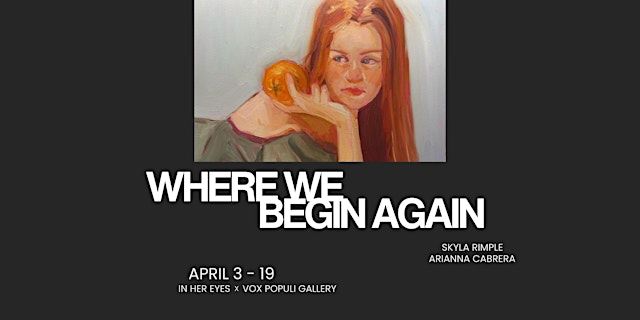
The second thread widens the frame from the Black American artist alone to the Black Atlantic, where African artists and African diaspora artists in the United States are building spaces of communal healing, not just objects for viewing. At the Vox Populi exhibition Where We Begin Again: In Her Eyes x Vox Populi in Philadelphia, the work centers Black women artists in a formative stage of development, then opens outward into the community. The exhibition is explicitly framed around identity, faith, womanhood, storytelling, memory, and shared humanity. That is not just a curatorial mood board. It is an argument that the public room can hold tenderness without becoming vague.
The clearest line in that exhibition belongs to poet Skyla Rimple. Vox describes her practice as one where “Poetry serves as both a personal archive and a communal offering.” That sentence is doing serious work. Archive means that what has happened is not lost. Communal offering means the poem does not stop at the self. It enters circulation. In a feature culture that often reduces healing to interiority, Rimple’s work insists on circulation, on a poem as something held and handed back, a small vessel for memory that can be passed between people who may not otherwise meet.
Read also: Black Women Photographers Shape New Visual Histories in 2026
Source: Things to Do in Elsmere Today | Eventbrite
Tinuade Oyelowo’s Recast… When Things Break pushes the same logic into another register. The Arts + Literature Laboratory in Madison says the work explores the bloodlines of African American identity, specifically the tenacity of the immigrant experience and the grit of the American South. Oyelowo, a Nigerian American multidisciplinary artist based in Brooklyn, is described as working at the meeting point of those histories, “seeking a definition of healing from generational trauma.” The language is careful and exact, because the work is not pretending that rupture can be erased. It is asking what might be built from the broken thing without lying about the break.
Her own words are even more revealing. Oyelowo says the work looks at the persistent anxiety of being in the right place as a Black person, then moves forward “without discarding the weight of what came before,” reimagining those anxieties “as a site of potential and transformation.” That is the artist’s answer to the false binary that haunts so much wellness talk. Healing is not amnesia. Healing is not cheerful concealment. Healing is the disciplined act of carrying what happened, then refusing to let it be the whole of what happens next.
This second thread matters for another reason, especially for an audience that stretches from Black communities in the United States to Africans across the continent. Many of these works are not built as private sanctuaries. They are built as gathering forms. Mason’s exhibition uses participatory installation and community-centered programming. Vox’s exhibition is a public platform for emerging artists. Oyelowo’s show is organized through community curation. Even the language of the sites keeps returning to collectivity, as though the artists already understand that healing, in real life, rarely arrives as a solo event. It arrives as a group text, a salon, a church basement, a kitchen table, a studio visit, a poem read aloud, a gallery that remembers it is still part of a city.
Source: 10 Visionary Contemporary Artists to Celebrate Black History Month | Contemporary Art | Sotheby’s
The third thread is the one with the sharpest modern edge. If art is infrastructure, then the digital present is trying, awkwardly, to build alongside it. KFF reports that 32% of adults say they use AI chatbots for health information or advice, but trust remains shaky, especially around mental health and emotional well-being, where 77% say they do not trust AI tools or chatbots. Still, Black adults are more likely than White adults to say they trust AI tools for mental health and emotional well-being, even as Black and Hispanic adults are also more likely to have used AI for mental health advice. That tension is the story, not a footnote. People are already using the machine for the most human questions, often because access is hard, time is short, and professional care is uneven.
This is where the piece should resist easy moral panic. The issue is not that digital tools have replaced care. They have not. The issue is that too many people are being pushed to improvise care in whatever form is available, and that can mean a chatbot at midnight, a gallery on a Saturday, a poem on a phone, or a community program that turns art into a scheduled practice rather than a luxury. The better question is not whether AI or art “works” in some absolute sense. The better question is what kind of human system is leaving so many people to assemble their own scaffolding.
That is why the most honest conclusion is not that art saves us, full stop. It is that art can help hold the line where public systems have failed to do so. It can preserve memory when official histories flatten it. It can create a place where grief does not have to dress up as productivity. It can make room for the black-and-blue weather of being alive in a world that is still unevenly built. And sometimes, in the right room, that is enough to matter. Not because it ends pain, but because it helps a person, or a people, keep going with their shape intact.

Anand Subramanian is a freelance photographer and content writer based out of Tamil Nadu, India. Having a background in Engineering always made him curious about life on the other side of the spectrum. He leapt forward towards the Photography life and never looked back. Specializing in Documentary and Portrait photography gave him an up-close and personal view into the complexities of human beings and those experiences helped him branch out from visual to words. Today he is mentoring passionate photographers and writing about the different dimensions of the art world.