Source: Olympics.com
It should have ended on the pitch.
Instead, the story of the Africa Cup of Nations (AFCON) 2025 final has stretched far beyond ninety minutes, extra time, and even the trophy lift. What was already one of the most controversial finals in recent memory has now become more consequential, a decision that may reform how African football handles governance, discipline, and justice.
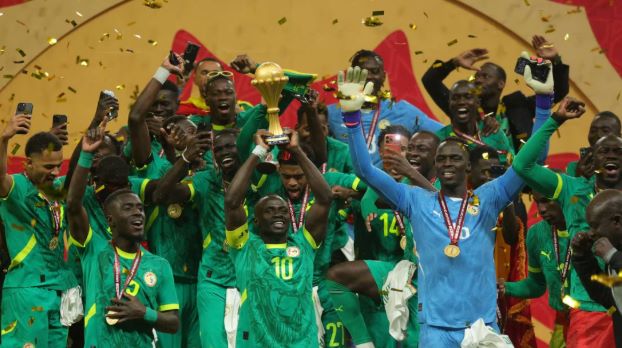
Two months after the Senegal national football team celebrated a hard-fought 1–0 victory over Morocco, the Confederation of African Football (CAF) has delivered a stunning reversal. Morocco, not Senegal, is now officially the champion of AFCON 2025.
And the continent is still trying to make sense of it.
Long before the ruling, the final itself had begun to unravel in unusual ways. What should have been a showcase of African football excellence became a chaotic spectacle instead. From the now-infamous towel incident involving Senegal’s goalkeepers to repeated sideline interference, the match was riddled with distractions that disrupted its rhythm. What may have seemed trivial, ball boys and officials interfering with basic equipment, quickly became symbolic of deeper issues around match control and professionalism.
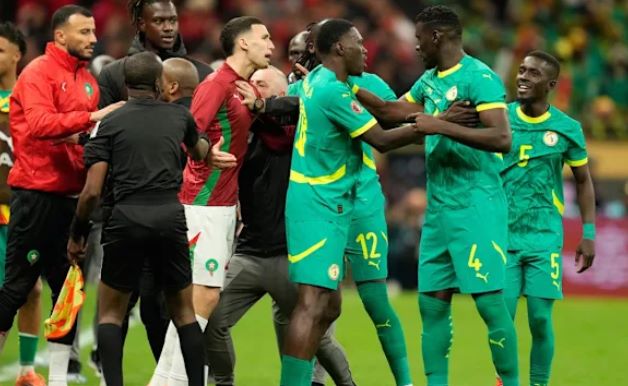
The tension escalated further when Senegal temporarily walked off the pitch in protest of a contentious refereeing decision. Though they eventually returned and went on to win with a decisive goal from Pape Gueye, the damage had already been done to the match and to the tournament’s credibility.
At the time, it felt like the controversy would fade with the final whistle. It didn’t.
On March 17, 2026, the CAF Appeal Board delivered a verdict that shocked players, fans, and analysts alike: Senegal had forfeited the final.
Citing Articles 82 and 84 of AFCON regulations, CAF ruled that Senegal’s temporary walk-off constituted a breach serious enough to override the result on the pitch. The consequence was severe; Senegal’s 1–0 victory was nullified and replaced with a 3–0 default win in favour of Morocco.
In effect, Morocco was crowned champions, not on the field, but in the boardroom.
This ruling has set a precedent rarely seen in global football. While disciplinary measures for misconduct are common, overturning a completed final result remains almost unheard of at this level. Reactions have been immediate and deeply polarized.
For many, the decision undermines one of football’s most sacred principles: that matches are decided on the pitch. Critics argue that once a game is completed under the referee’s authority, its outcome should remain final.
Voices across African football have echoed this concern. George Weah questioned the legitimacy of overturning a referee-sanctioned result, while Roger Milla described the decision as unprecedented and damaging. Former Egyptian international “Mido” went even further, calling it one of the biggest scandals in football history.
On the other side, Moroccan supporters and officials have defended the ruling as a necessary enforcement of discipline, arguing that rules must apply regardless of context.
The story is far from over. The Senegalese Football Federation has rejected the ruling and taken its case to the Court of Arbitration for Sport (CAS), football’s highest legal authority. They have also reportedly refused to return the trophy, setting the stage for a prolonged legal and symbolic battle. At stake is the integrity of competition and the authority of governing bodies.
Should CAS overturn CAF’s decision, it could expose cracks in the continent’s football governance. If it upholds the ruling, it may permanently alter how disciplinary breaches are interpreted in high-stakes matches.
Read also: AFCON 2025: Senegal’s Triumph Reflects Six Decades Of Continental Football Evolution
Source: Yahoo sports
What This Means for African Football
Beyond the immediate controversy, the implications are far-reaching.
First, trust is at risk. Players, coaches, and fans must believe that results are determined fairly and transparently. When outcomes can be reversed long after the final whistle, that confidence is shaken.
Second, governance standards are under scrutiny. African football has made significant strides globally, highlighted by Morocco’s historic run at the FIFA World Cup 2022, but administrative consistency must keep pace with on-field progress.
Third, future tournaments may be affected. Teams could become more cautious, more reactive, or even more confrontational, knowing that disciplinary interpretations can have retroactive consequences.
Finally, the decision raises broader questions about CAF’s credibility and its reform efforts. Is this a sign of stronger rule enforcement, or evidence of systemic inconsistency?
The AFCON 2025 final will not be remembered solely for football.
It will be remembered as the tournament where a match result did not end at full time. Where a walk-off became grounds for forfeiture. A champion was decided weeks later in a ruling that continues to ripple across the continent.
African football now stands at a critical juncture. The passion, talent, and global relevance of the game are undeniable. But moments like this demand something equally important: governance that is transparent, consistent, and trusted. Because while own goals on the pitch can cost matches, decisions off it can shape the future of the game itself.
And right now, African football must decide what that future looks like.

Okechukwu Nzeribe works with the Onitsha Chamber of Commerce, in Anambra State, Nigeria, and loves unveiling the richness of African cultures. okechukwu.onicima@gmail.com