
Source: iStock
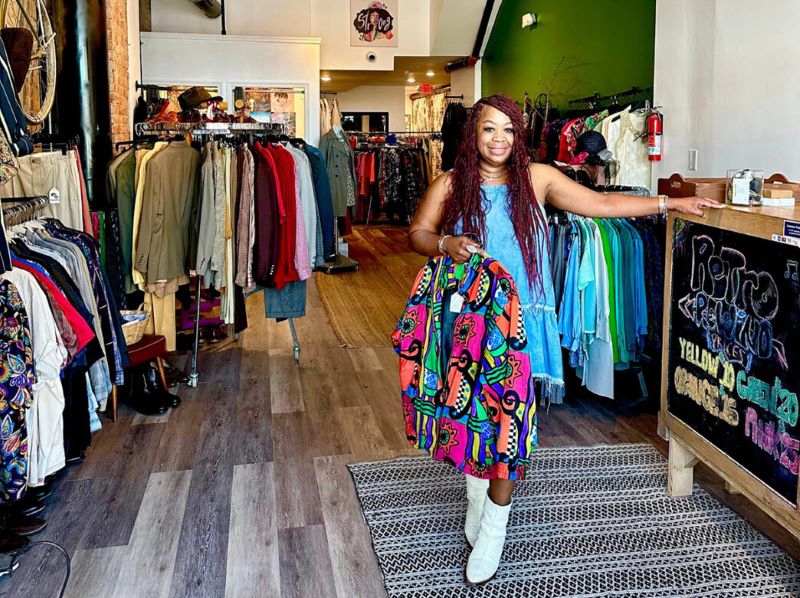
Step into a co-working space near Germantown Avenue on any Tuesday morning and you will see the reality of Philadelphia commerce in motion. A Black woman founder sits at a corner desk. She is balancing her monthly ledger, answering customer support emails on her phone, and keeping an eye on the foot traffic outside her window.
The city around her is gearing up for the massive 2026 semiquincentennial celebrations. Local politicians are promising a historic influx of global visitors, the business community is theoretically positioned for unprecedented growth, but this founder knows a cold truth: capturing a piece of that upcoming economic windfall requires concrete capital today. She needs money to scale her operations right now, and not another well-meaning networking seminar next month.
Finding that money is an exhausting second job. The search demands hours of tedious research. Founders must decode vague eligibility criteria, hunt down obscure tax documents, and write essays for committees that rarely look at them.
For Black women and African entrepreneurs building businesses in the United States and across the diaspora, the stakes of this pursuit are uncomfortably high.
This dynamic is not isolated to Philadelphia. It mirrors the experiences of Black women building enterprises in Atlanta, Chicago, and major technology hubs across Africa, such as Lagos and Nairobi. The shared denominator is a resilient entrepreneurial spirit forced to operate in environments that demand maximum economic output with minimal financial input. The diaspora economy relies heavily on cross-border trade, cultural exports, and dual-market operations. When a founder in Philadelphia cannot secure a line of credit, a supply chain in West Africa stalls.
Despite being one of the fastest-growing demographics of business creators in the global economy, Black women consistently capture a fraction of a percent of venture capital funding. The significant gap between entrepreneurial ambition and actual capitalization is not due to a lack of talent. It certainly does not come from a lack of market viability. It is the direct result of a fractured system. Funding absolutely exists. However, it is often hidden within disparate government websites, private foundation portals, and closed professional networks. You need insider knowledge just to know where to look.
A viable Founder’s Dashboard for 2026 must do two things plainly. It must map the verified funding opportunities currently available. And it must critically reveal the structural gaps that keep these founders undercapitalized. We have to move past opaque public relations promises. It is time to assemble a clear picture of where the money actually is, while honestly acknowledging where the ecosystem continues to fall short.
Dashboard:
Below is a verified snapshot of the capital landscape available to founders as of March 2026.
- The City of Philadelphia is currently offering the Neighborhood Economic Development Grant. This program offers proposed compensation between $50,000 and $500,000. It specifically targets nonprofit organizations and community development corporations to fund commercial spaces for businesses providing local goods and services. The application deadline is March 19, 2026.
- The Enterprise Center serves as a vital financial node in the city. They manage the TEC Seed Fund. This fund provides essential capital infusions ranging from $20,000 to $250,000 to low- to moderate-income small businesses operating in the Mid-Atlantic region. The specific deadline for the next round is not listed on their public portal.
- The Goldman Sachs One Million Black Women initiative is recruiting for its Black in Business Fall 2026 cohort. The program provides a $2,000 stipend and a 12-week business education program for sole proprietors earning at least $25,000 annually. The deadline is not listed.
- Platforms regularly aggregate ongoing national opportunities that founders can check weekly. For example, the Amber Grants for Women awards $10,000 monthly to women-owned small businesses across various sectors. The deadline is rolling at the end of every month. You can track this and similar aggregated funds on the Shopify Blog.
The qualitative impact of structured, well-funded programs is undeniable when they actually reach the right founders. Gernissia Cherefere, CEO of Worthy of Greatness and an alumna of the Goldman Sachs One Million Black Women initiative, detailed the outcome of proper institutional support: “Black in Business has transformed the way that I now look at business. I’m in a position to have knowledge that can change not only myself, but generations to come.”
Why It Matters
Mapping these financial resources is a fundamental requirement for Black women founders. Without a centralized view of available capital, entrepreneurs are left in the dark. They are forced to rely on fragmented information and word of mouth. They miss tight application deadlines. They get locked out of the closed-door networks that have historically excluded them. The dashboard above illustrates that money is technically moving through the city and the nation. But it also reveals a highly bureaucratic funding system that is incredibly difficult to navigate.
Systemic barriers ensure that simply finding a relevant grant is only the first hurdle. The application process itself is a grueling marathon. Onerous reporting requirements, extensive historical documentation, and aggressively tight application windows disproportionately impact solo founders. These are local business owners who lack dedicated compliance teams. They do not have specialized accountants on retainer. They certainly cannot afford professional grant writers.
Consider the math of the grant treadmill. A founder might spend twenty hours gathering tax returns, writing essays, and formatting financial projections for a $5,000 grant. If she values her time at even $100 an hour, she just spent $2,000 of her own operational capacity for a mere chance at a payout. For an entrepreneur balancing a retail storefront in West Philadelphia, these administrative burdens often make ostensibly free capital practically inaccessible. The return on investment for her time is simply too low.
This fragmentation severely limits the collective economic power of the diaspora. African and African American founders frequently build businesses that cross borders. A skincare brand in Philadelphia might rely on sustainably sourced shea butter from a Ghanaian cooperative. A local logistics company might use software developed by a team in Nairobi. When a founder cannot access the bridge capital required to finalize these agreements, the economic loss is felt deeply on both sides of the Atlantic. Streamlining access to working capital is not merely a local municipal issue. It is a global economic imperative for Black wealth creation.
Furthermore, the psychological toll of the perpetual grant cycle cannot be overstated. Founders routinely pour days of unpaid labor into complex applications. Months later, they receive a generic rejection email. Sometimes they receive absolute silence. This process extracts valuable energy from the community. It effectively punishes the very innovators the programs claim to support.
One-off microgrants simply cannot solve a macro-level capital deficit. A grant of $5,000 is undeniably helpful for purchasing a specific piece of commercial equipment. It might cover a single month of emergency inventory. However, it will not finance a permanent production facility. It will not secure a multi-year commercial lease. It will not underwrite a massive hiring push. When founders are forced to string together small, restricted grants just to survive, they spend precious operational time chasing dollars instead of optimizing their products.
Sustained capital infusions must follow these initial micro-grants. We must push businesses from the survival phase into genuine scale. The diaspora is rich with scalable ideas that can bridge local U.S. markets and emerging African economies. Those ideas require patient and unrestricted capital to mature. We must urgently shift the conversation from mere survival funding to aggressive investments.
The 2026 Readiness Routine
- Bookmark the official City of Philadelphia Department of Commerce news page. Regularly check curated national aggregators, such as the Shopify small business blog, for newly announced funding opportunities.
- Maintain easily accessible digital copies of your Business Income and Receipts Tax number. Keep your commercial activity license updated. Have two full years of business tax returns and a crisp one-page executive summary in a single folder.
- Connect with anchoring groups like The Enterprise Center for pre-application technical assistance. Use their incubator space and request a professional peer review before major deadlines approach.
- Use live crowdfunding platforms to quickly validate new product ideas. This builds localized community buy-in. Reserve labor-intensive grant applications for larger capital expenditures, real estate acquisition, and systemic business growth.
A consolidated Founder’s Dashboard is a highly useful tool. But we cannot pretend it is a magical cure for systemic underinvestment. Tracking available grants will absolutely help keep the lights on. It will help secure temporary storefronts and purchase seasonal inventory. Yet piecemeal funding cannot replace the desperate need for predictable venture capital, low-interest commercial debt, and sweeping policy changes. Black women founders need financial institutions to underwrite their potential. They need the exact same ease and benefit of the doubt afforded to traditional technology startups.
To permanently bridge this gap, municipal governments, banking institutions, and large philanthropic organizations must evolve. They must move from passive grant-making to active and sustained partnership.

Source: iStock
First, the City of Philadelphia should implement a quarterly consolidated public dashboard. This platform must standardize the initial application process across all local grants. Imagine a common application for city funding. This single-application portal would drastically reduce the administrative tax currently placed on busy founders. They could enter their baseline data once and apply to multiple capital pools simultaneously.
Second, public and private funders must attach dedicated, city-funded technical assistance to every major grant disbursed. This ensures that founders have the operational support they need. They need legal guidance to review commercial leases. They need accounting services to manage the sudden influx of taxable revenue. Providing the money without providing the infrastructure to manage it is a setup for failure.
A dashboard shows us where the resources are hiding today. It maps the current reality. But real, systemic change happens when we stop making founders endlessly hunt for baseline capital. The ultimate goal is to remove the barriers entirely, so these entrepreneurs can finally get back to the urgent, vital work of building the future.

Anand Subramanian is a freelance photographer and content writer based out of Tamil Nadu, India. Having a background in Engineering always made him curious about life on the other side of the spectrum. He leapt forward towards the Photography life and never looked back. Specializing in Documentary and Portrait photography gave him an up-close and personal view into the complexities of human beings and those experiences helped him branch out from visual to words. Today he is mentoring passionate photographers and writing about the different dimensions of the art world.