Source: Center for African Studies-The Ohio State
On March 6, Ghana, formerly known as the Gold Coast, celebrates its Independence Day, marking the end of British colonial rule and the beginning of sovereign self-governance. Each year, this day is a national celebration for Ghanaians and a historic milestone for Africa, as Ghana was the first sub-Saharan African colony to gain independence in the post-World War II era in 1957, setting in motion a wave of liberation movements across the continent.
Sixty-nine years later, the date remains one of the most significant in African history. This freedom was the product of organized resistance, intellectual agitation, and mass political mobilization. Groups such as the Aborigines’ Rights Protection Society laid early foundations for nationalist consciousness.
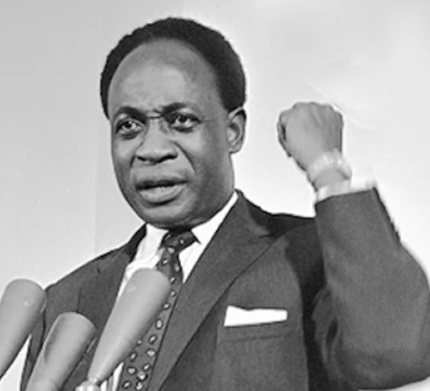
Towering above the independence struggle then was Kwame Nkrumah, the first Prime Minister of the Gold Coast and later the first President of Ghana. A visionary whose leadership transformed a colonial territory into a symbol of African possibility. His words on that historic night captured the magnitude of the achievement: “The independence of Ghana is meaningless unless it is linked up with the total liberation of the African continent.”
Source: CoolAfricanMerch
Nkrumah believed Ghana’s freedom would remain incomplete if the rest of Africa remained under colonial domination. For him, independence had to include economic self-determination, continental unity, and African control over African resources. His belief was rooted in Pan-Africanism, the idea that people of African descent share common historical experiences and political interests, and that unity is essential to the continent’s growth.
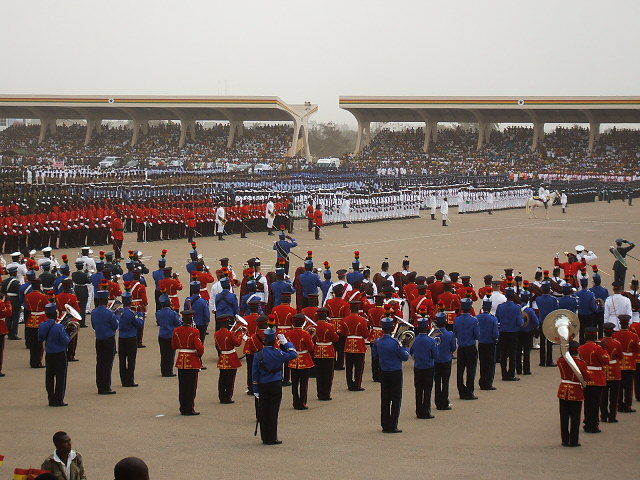
In the years that followed, a wave of independence movements gathered momentum, accelerating the decline of colonial rule across Africa. Accra became a meeting ground for freedom fighters, diplomats, and thinkers who imagined a united, self-governing Africa. The country’s Black Star, drawn from the shipping line founded by Pan-Africanist Marcus Garvey, became a metaphor for African emancipation. It shines prominently on Ghana’s national flag and gives its name to Black Star Square in Accra, the ceremonial heart of national celebrations.
The square, often filled with marching schoolchildren, military displays, and presidential addresses every March 6, remains a powerful visual reminder that independence is both history and an ongoing responsibility.
Source: Wikipedia
Independence in 2026 , Celebration and Reflection
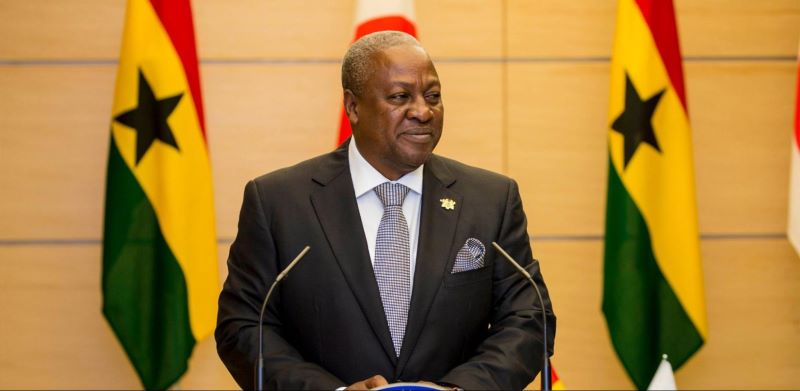
Under President John Dramani Mahama, Ghana has continued to position itself as a key player in continental economic integration, particularly through its prominent role in the African Continental Free Trade Area (AfCFTA). The AfCFTA Secretariat, headquartered in Accra, Ghana, sits at the administrative center of Africa’s most ambitious trade project, an agreement designed to create a single market across the continent.
President Mahama has consistently reaffirmed Ghana’s commitment to the AfCFTA, describing it as the “most ambitious integration project” in the continent’s history, and has acted as a key advocate for its implementation. He says that for the AfCFTA to succeed, it requires massive investment in transport (roads, railways) and digital infrastructure to link national markets. He has advocated for the development of regional trade corridors, such as extending the Abidjan-Lagos corridor to Dakar.
Under his leadership, Ghana has supported initiatives to simplify customs procedures, reduce non-tariff barriers, and improve logistics to foster seamless trade, pushing for a “borderless Africa” to enable the movement of goods and services.
In many ways, this economic vision echoes Nkrumah’s political one: Africa working together, as a collective force. AfCFTA represents an attempt to transform political independence into economic leverage, linking markets, industries, and opportunities across borders.
Yet a mature independence anniversary also invites difficult questions. Political freedom was achieved in 1957, but economic inequality, youth unemployment, governance challenges, and global economic pressures remain part of Ghana’s contemporary reality.
For younger generations, independence is an inheritance, one that demands innovation, accountability, and renewed civic commitment. So what does independence mean at 69?
It means celebrating the courage of those who demanded self-rule. It means honoring symbols like the Black Star as living reminders of responsibility. And it means acknowledging that freedom is not static; it must be deepened, defended, and expanded.
Ghana’s independence was a beginning, not a conclusion. In 1957, it inspired a continent. In 2026, it continues to pose a challenge: how to translate political sovereignty into shared prosperity and enduring hope.
The Black Star still shines, but its meaning depends on what each generation chooses to build beneath it.

Okechukwu Nzeribe works with the Onitsha Chamber of Commerce, in Anambra State, Nigeria, and loves unveiling the richness of African cultures. okechukwu.onicima@gmail.com