Source: iStock
Ten years ago, a determined entrepreneur could muscle a container through the Apapa port in Lagos with enough cash and patience. In 2026, that strategy is a fast track to bankruptcy. The digitization of trade in West Africa, combined with stricter United States export enforcement, has removed the gray areas where many importers used to operate.
If you are reading this, you are likely looking to build a bridge between the world’s largest consumer market and the world’s fastest-growing demographic region. The opportunity is massive, but the floor has moved. This guide is not a list of vague motivational tips. It is a breakdown of the specific regulatory, logistical, and financial realities you will face in 2026.
The Condition in January 2026
Before you spend money on inventory, you need to understand the three major policy shifts that define the current playing field.
First, the African Growth and Opportunity Act (AGOA) is still your best friend, but it is on a short leash. On February 3, 2026, the United States government confirmed a short-term extension of the program through December 31, 2026. This allows eligible sub-Saharan African countries to send over 1800 products to the United States duty-free and an additional 5,000 items under the Generalized System of Preferences. While the extension provides immediate relief, the lack of a ten-year renewal creates uncertainty. Smart exporters are using this twelve-month window to establish their supply chains and prove their value before the next legislative battle begins.
Second, the African Continental Free Trade Area (AfCFTA) has moved from a diplomatic talking point to an operational reality, with 47 of 54 states ratifying the agreement to create the world’s largest free-trade zone. The Secretariat in Accra has spent the last year pushing for industrialization. This matters to you because it changes how you route goods. You can now legally import raw materials into a hub like Ghana, process them, and export the finished goods to the United States under AGOA, or to other African nations under AfCFTA rules.
Third, the United States Bureau of Industry and Security(BIS) changed the rules on January 15, 2026. They updated export controls regarding advanced computing and semiconductor manufacturing items. You might think this does not apply to you if you are shipping used cars or clothing. You would be wrong. The new rules require you to screen your goods and your customers more rigorously to ensure nothing restricted ends up in the wrong hands.
Phase 1: Selecting the Right Product
The most common mistake new traders make is falling in love with a product before checking the Harmonized System (HS) code. Your HS code determines your duty rate and your regulatory burden.
If you are exporting from West Africa to the United States, look for value-added agriculture. Raw cashew nuts are a commodity game with razor-thin margins. Processed cashew snacks, however, command a premium at stores like Whole Foods. Textiles remain a strong option because of AGOA, but you must strictly adhere to the “rules of origin.” The fabric must usually be made in an AGOA beneficiary country or in the United States to qualify for duty-free status.
If you are exporting from the United States to West Africa, the market is hungry for machinery and inputs. The push for local manufacturing in Nigeria and Ghana means that factories need equipment. Solar components, automotive parts, and agricultural technology are high-demand sectors. Avoid luxury consumer goods unless you have a very specific high-net-worth distribution channel, as currency devaluation makes these items prohibitively expensive for the average consumer.

Source: iStock
Phase 2: The United States Regulatory Checklist
Whether you are the buyer or the seller, you have obligations under United States law. Ignorance of these statutes is not a valid defense against a federal fine.
For the Exporter (Sending goods out of the US)
Your first step is obtaining an Employer Identification Number (EIN) from the IRS. You cannot function as a business without it. Once you have that, you must register with the Automated Commercial Environment (ACE). This is the portal where you report your exports to the government.
Let’s say that if your shipment is valued at over $2,500 per Schedule B number, you are legally required to file Electronic Export Information (EEI). This filing tells the Census Bureau and Customs what you are shipping and where it is going.
You must also check your product against the Commerce Control List. As mentioned earlier, the 2026 updates from the Bureau of Industry and Security are strict. If you are shipping electronics or anything with a microchip, verify the Export Control Classification Number (ECCN). Some items require a license even for friendly nations if there is a risk they could be re-exported to an embargoed country.
For the Importer (Bringing goods into the US)
If you are bringing food products from Ghana or Nigeria, you must deal with the FDA. The United States requires that the foreign facility where the food was produced be registered with the FDA. Furthermore, you need a Foreign Supplier Verification Program (FSVP) agent physically located in the United States. This agent takes legal responsibility for the safety of the food. You can read the specific requirements in the CBP “Importing into the United States” Guide.
Source: iStock
Phase 3: Navigating West African Customs
This is where the theoretical plan often meets a hard reality. Customs procedures in Nigeria, Ghana, and Côte d’Ivoire have modernized, but they are unforgiving of errors.
Importing into Nigeria
The days of paper shuffling are ending. Nigeria now relies heavily on its Single Window for Trade.
Your process begins long before the ship leaves the United States. You must obtain a Form M. This is a mandatory electronic document that authorizes the importation. To get a Form M, you need a Proforma Invoice, an insurance certificate, and a product certificate if the item is regulated by the Standards Organization of Nigeria (SON).
Do not let your supplier ship the goods until you have the Form M number. If the cargo arrives in Lagos without it, you will face massive fines and delays. Once the Form M is approved, you will need a Pre-Arrival Assessment Report (PAAR), which calculates the exact duties you owe.
The ports themselves have changed. The Lekki Deep Sea Port has alleviated some of the notorious congestion at Apapa and Tin Can Island. Cargo moves faster in Lekki, but the road network connecting the port to the mainland is still under development. Factor the cost of trucking into your margin.
Importing into Ghana
Ghana operates on the Integrated Customs Management System (ICUMS). Every trader needs a Tax Identification Number (TIN).
The critical document here is the Unique Consignment Reference (UCR). This number tracks your shipment from the moment you place your order to delivery. Ghana is generally faster than Nigeria at clearing goods, especially with the expansion of Tema Port, but the Ghana Standards Authority (GSA) is very strict about inspections. Ensure your labeling meets their specific standards, including English language requirements and metric measurements.
Phase 4: Logistics and Shipping
You have two main ways to move your goods: air or sea.
Air freight is fast but expensive. Use it for samples, high-value electronics, or perishable goods that cannot survive a month at sea. Direct flights from JFK, Washington Dulles, or Atlanta to Lagos and Accra are reliable but cost between $3 and $8 per kilogram depending on volume.
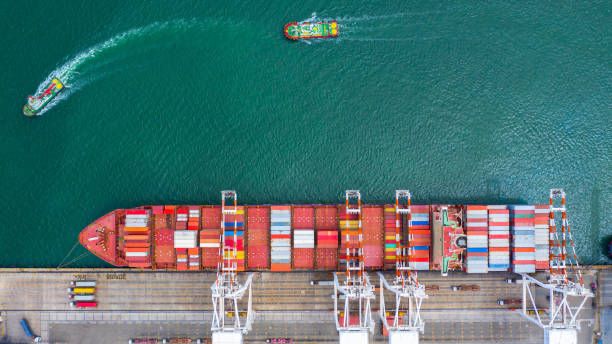
Sea freight is the backbone of trade. A Full Container Load (FCL) is your best option for security. You seal the container at your warehouse, and it stays sealed until it reaches the buyer. If you do not have enough goods to fill a container, you can use Less than Container Load (LCL), where your goods are packed with others. Be warned that LCL takes longer because the consolidator has to wait to fill the box, and there is a higher risk of damage during unpacking.
When you book your freight, you need to agree on Incoterms. These are three-letter codes that define who is liable for the shipment at each stage.
Phase 5: Money and Risk Management
Getting paid is often harder than moving the goods. The foreign exchange (FX) markets in Nigeria and Ghana can be volatile.
In Nigeria, there is often a significant gap between the official Central Bank exchange rate and the parallel market rate. If you are an American exporter, you should insist on payment in US Dollars via a Letter of Credit or a direct wire transfer before shipping. Do not accept payment in Naira unless you have a legal and immediate way to convert it and repatriate it.
For the African importer, sourcing dollars is the biggest hurdle. You may have to source FX from the parallel market, which increases your cost of goods. You must calculate your landed cost using the replacement cost of the dollar, not the rate you see on Google.
Using a Letter of Credit (LC) adds a layer of security. An LC is a promise by the buyer’s bank to pay the seller’s bank upon presentation of the shipping documents. It protects both parties. The seller knows they will get paid, and the buyer knows the goods have actually been shipped.
Phase 6: Growth and Distribution
Once your goods clear customs, the real work begins.
If you are selling in the US, you need a channel strategy. Small ethnic grocery stores are a great starting point for food products, but they are labor-intensive to manage. Online marketplaces offer reach but charge high commissions. If you can secure a distributor, you sacrifice margin for volume, which is often the only way to scale.
If you are selling in West Africa, the market is informal. Your “distributor” might be a wholesaler in a major market, such as Idumota in Lagos or Makola in Accra. These traders move massive volumes and pay cash, but they demand low prices. Building relationships here requires face-to-face interaction. You cannot manage a West African distribution network entirely from a laptop in Houston.
A Final Word on Compliance
There is a temptation to cut corners. You might meet a clearing agent who promises they can get your container out of the port for half the official price. They might ask you to under-invoice your goods to lower the duty. Do not do it.
Customs agencies in 2026 share data. A discrepancy in your export filing in the US can flag your import filing in Nigeria. The penalties for trade fraud include blacklisting, seizure of goods, and jail time. The “fast” way is usually the most expensive way in the long run.
The trade corridor between the United States and West Africa is more open than ever. The AfCFTA Secretariat is working to lower barriers, and the extension of AGOA gives you a tariff advantage. But success in this market belongs to the disciplined. It belongs to the entrepreneur who reads the USDA Exporter Guide before they plant the crop. It belongs to the trader who verifies the BIS license before they book the container.
Build your business on a foundation of compliance, and you will survive the inevitable shocks of international trade.
References
U.S. Customs & Border Protection. (n.d.). Importing into the United States: A guide for commercial importers. https://www.cbp.gov/trade/basic-import-export/importing-united-states
Bureau of Industry and Security. (n.d.). Export controls. U.S. Department of Commerce. https://www.bis.doc.gov/
Nigeria Trade Hub. (n.d.). Nigeria Customs Service resources and trade information. https://www.nigeriatradehub.gov.ng/
Ghana Revenue Authority. (n.d.). Integrated Customs Management System (ICUMS). https://icums.gov.gh/
U.S. International Trade Commission. (n.d.). DataWeb: U.S. trade data and tariffs. https://dataweb.usitc.gov/

Anand Subramanian is a freelance photographer and content writer based out of Tamil Nadu, India. Having a background in Engineering always made him curious about life on the other side of the spectrum. He leapt forward towards the Photography life and never looked back. Specializing in Documentary and Portrait photography gave him an up-close and personal view into the complexities of human beings and those experiences helped him branch out from visual to words. Today he is mentoring passionate photographers and writing about the different dimensions of the art world.