Photo by Shally Imagery
Africa has remained perhaps one of the worst examples of governance structures in classrooms, learning institutions, and public fora when topics of political studies, democracy, and people’s rights are brought up and discussed extensively.
According to a Voice of Africa report quoting Powell and Thyne’s data, “of 492 attempted or successful coups carried out around the world since 1950, Africa has seen 220, the most of any region, with 109 of them successful.” Beyond coup occurrences in the continent, there seems to be a growing detachment between the government and the governed across Africa’s political space.
According to Verity Newspaper, an investigative news outlet in the West African country of Liberia, it notes that the “World Bank’s Country Policy and Institutional Assessment (CPIA) 2024 Report painting a vivid picture of growing frustration among citizens, especially the youth notes that Africa experienced 7,224 protest events, which included 5,911 protests and 1,313 riots, with major unrest concentrated in Ghana, Kenya, Nigeria, and Uganda.
The wave of demonstrations reflects deep-seated dissatisfaction with the quality of public service delivery, economic management, and political accountability.”
For a continent of over 1.5 billion people with an estimated youth population of about 400 million with many between the ages of 15 to 35, the continuous pushback more so among the Gen Z generation, unwilling to accommodate the conditions in which their parents and older generations found acceptable and made excuses for, puts the continent in a precarious situation with an urgent need for governments across the continent to live up to the aspirations, expectations and benefits of governance for its people.
Democracy – Do Africans Really Want It
The Governance and Social Development Resource Centre (GSDRC), a research centre for the University of Birmingham in a report titled – What do Africans Think about Democracy and Development, notes that “the Afrobarometer survey, coordinated by the Institute for Democracy in South Africa, the Centre for Democratic Development and Michigan State University, provides a snapshot of African perceptions of democracy and development.
It analyses the results of over 21,000 interviews conducted in mid- 2001 in twelve African countries that have experienced some democratic and market reform over the past decade. There is broad support for democracy, with more than two-thirds of respondents describing democracy as preferable to non-democratic government.”
So the good news is that the majority of Africans really want democracy as they believe it is beneficial to the progress of Africa. This is made evident with the presence of several African countries enjoying stable democratic structures despite the political upheavals happening across the continent.
In an article by Business Insider Africa titled – Top 10 most stable African Countries with the lowest political and economic risks in 2025, it lists Mauritius, Cape Verde, Liberia, Lesotho, Botswana, Namibia, Seychelles, Senegal, South Africa, and Ghana amongst the countries in the continent enjoying stable governance and economic stability,
Is Democracy Dying?
Perhaps in the context of what democratic principles mean to the ordinary African out there on the street, and this clearly refers to democracy in the shape and form of Western liberal democracy, it is indeed fair to say that democracy as introduced to Africans is in its final death throes.
Though not applicable across the continent as a whole, among several African countries, the signs are beginning to show due to the growing number of African leaders abandoning the very principles that govern its application.
With a growing preponderance to circumvent the elective processes through tenure extension, muzzling of opposition views, and outright clamping down on every form of perceived dissent, African leaders have continued to put a knife through the heart of democracies across the continent ensuring its eventual death.
In Comes the Military
Worsening security crises, corruption, nepotism, and failure of governance structures are common denominators you find in many of the issues raised by the Military at the seizure of power.
While in the past, military takeover was naturally frowned upon by the global community and condemned by the indigenous people, current realities indicate a drastic shift with a growing measure of acceptability from the indigenous people, notwithstanding the condemnations from the global community.
Coup d’etat and the Growing Acceptability in Africa
Time is running out. As the next generation of young Africans analyzes the state of their nation in comparison to their counterparts in more developed societies, there is a growing resentment and impatience that democracy and Africa’s supposed democratic governments are failing to deliver on basic services.
Widespread corruption, nepotism, unemployment, rising insecurity, and the implementation of policies like the Kenya Finance Bill of 2025, which some argue is not designed with the people’s best interests have continued to alienate the governed from the government, making military takeovers acceptable as the lesser evil.
As noted in a report by Conflict Lab titled – Africa’s uncomfortable Choice: Is the Military the Lesser Evil in a failing democracy, it notes that increasingly, the question of whether military regimes are the lesser evil is not rhetorical. It is being answered in reality by growing public support for military governments in several countries. The recent waves of Afrobarometer surveys reveal that although a majority of Africans still express support for democracy, its support is declining, while willingness to consider military intervention is rising especially when civilian leaders are seen to abuse power. Countries with recent coups have seen very sharp declines. In Burkina Faso, support for democracy plummeted from 70.3% in 2021 to 55% in 2023; in Mali, it fell from 62% to only 38.6% over the same period. This downward declining support for democracy is visible not only in countries where a coup has taken place in the past four years. In Cameroon for example, support for democracy slipped from 62% in 2018 to just 50.4% in 2025 – almost a 50/50 split for the first time. The story is not very different even in “democratic strongholds.” In Ghana for example, support for democracy fell from 81% in 2018 to 75.9% in 2023. In Kenya, the drop was from 77.7% in 2023 to 74% in 2025.”
Redefining Democracy to Work for The Next Generation
In a news report by the Nigerian Tribune titled – Democracy in Africa is dying, not failing, Nigeria’s former President, Olusegun Obasanjo 60th birthday colloquium for former Deputy Speaker of the House of Representatives, Emeka Ihedioha, aptly notes that, “If you are talking about democracy failing in Africa, democracy in Africa has failed. And why has it failed? Because in context and in content, it is not African.
It does not have any aspect of our culture, our way of life, what we stand for, what we believe, Ubuntu, I am because we are, it is, I am because I can grab. It’s not that democracy is failing, democracy is dying and if we are going to make democracy not die, we have to look at democracy in the context and in the content of Africa.”
In the context of Africa’s historical structure, norms, and social values, redefining democratic principles to apply to the peculiarities and realities of each African country’s societal structure might better present a suitable workable solution that meets the collective aspirations of respective African nations.
Expectations for The African Youth
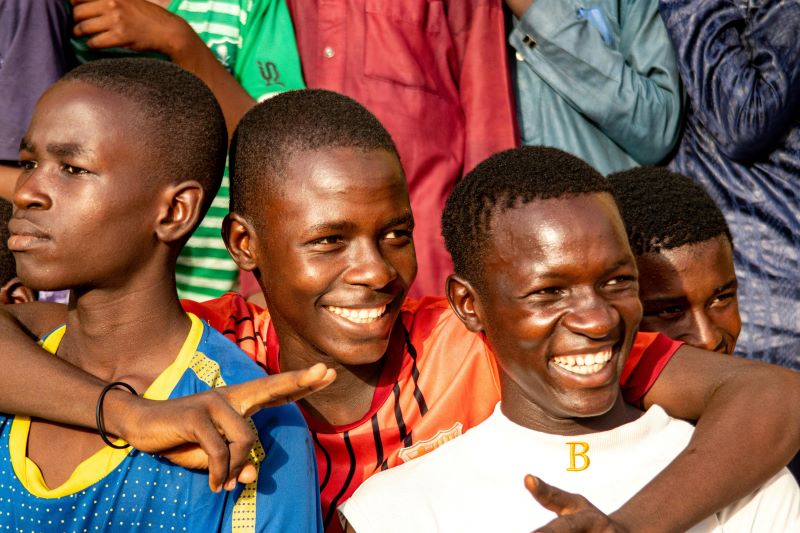
The next decade for Africa belongs to its teeming youth population. With growing technological advancement and an increased spread of knowledge that educates and informs via several digital platforms, Africa’s youth stand at the centre of reshaping and redefining democracy for Africa.
With a growing youth participation in politics as well as the rising number of coups in Africa being perpetrated by young military officers gaining acceptability not only among the younger generation but also among the older ones who have become fed up with the lack of traction in the development of their countries, Africa’s political transformation is set to be reshaped by a determined generation of new political leaders eager to discard the old ways for a better, more secure and prosperous Africa.
To achieve this, young Africans must evolve beyond youth-led movements and groups and metamorphose such bodies into political parties. Over the years, several youth movements, such as the EndSARS movement in Nigeria, the Yén a Marre of Senegal, and Le Balai Citoyen of Burkina Faso, among others, have pushed for reform and change. While such efforts are commendable, greater changes can still be achievable with young Africans organizing themselves into political parties to challenge the old order of things.
Barriers To Participation
Entry into the political space of Africa could be quite challenging. With an old order unwilling to yield ground for fresh and young ideas, African youths are continually battling political alienation or exclusion, other challenges like financial disenfranchisement, lack of political education and exposure, and societal perceptions that border on age, sex, and religion would continue to pose a barrier to more participation of youth in politics and governance.
The expectation is that the next generation of youths will begin to assess the dangers of non-participation and the possibility that active involvement in shaping the democratic journey of their country poses for them. Getting involved in politics and becoming grounded in the course of several years will ensure that Africa will begin to see a shift in the reshaping of its policies and democratic ideals to meet the expectations of the continent and to deliver on the promise of prosperity for its many citizens.

Okechukwu Nzeribe works with the Onitsha Chamber of Commerce, in Anambra State, Nigeria, and loves unveiling the richness of African cultures. okechukwu.onicima@gmail.com