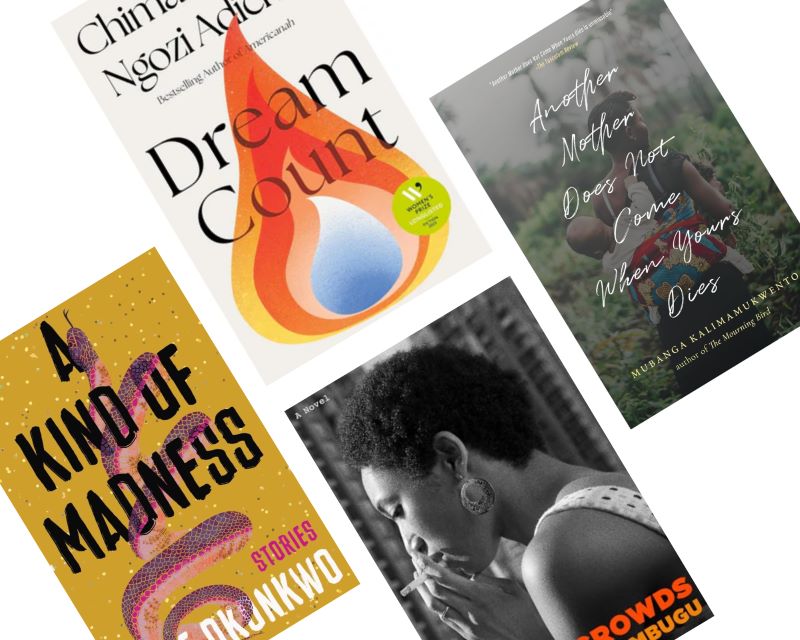
The year 2025 felt different for those of us following the trajectory of African letters. It was a year where the noise of the global publishing industry finally synced up with the quiet, persistent work happening in Lagos, Nairobi, and Johannesburg. For the African diaspora in the United States and readers across the continent, 2025 provided more than just “good stories.” It provided a mirror. We saw the 30th anniversary of the Women’s Prize for Fiction feature three African authors on its longlist. We saw the Caine Prize hit its quarter-century mark with a “Best of Caine” retrospective that reminded us how much the short story has anchored our literary identity.
Perhaps the biggest headline was the return of Chimamanda Ngozi Adichie. After a twelve-year hiatus from the novel, her release of Dream Count shifted the atmosphere of the entire industry. But while the big names drew the crowds, the real story of the 2025 award season was the dominance of boutique presses and African-based publishers. In the past, a writer had to be validated by London or New York first. Now, we see a reverse migration of talent. As the editors at Brittle Paper noted in their 100 Notable African Books of 2025, about a third of the books on the list are debuts, a figure that has held steady in recent years and points to ongoing renewal. You can find their full analysis of these trends at Brittle Paper.
This article breaks down the six most essential books from the 2025 award cycle. These are the books that dominated book club discussions from Harlem to Lekki and earned their spots on the most prestigious shortlists in the world.
1. Dream Count by Chimamanda Ngozi Adichie
When Chimamanda Ngozi Adichie releases a novel, the literary world stops to listen. Published by Narrative Landscape in Nigeria, Knopf in the US, and 4th Estate in the UK, Dream Count arrived on March 4, 2025, to a level of fanfare rarely seen for literary fiction. It quickly found its way onto the Women’s Prize for Fiction longlist and topped nearly every notable list of the year, including those from Afrocritik.
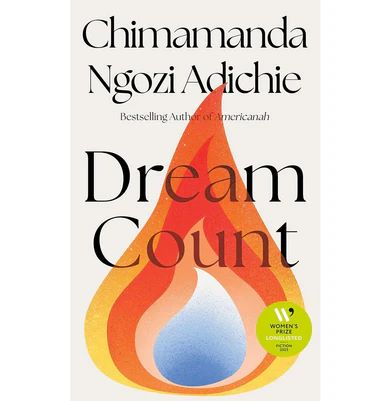
Source: Dream Count – Paperback
The story centers on four women: Chiamaka, Zikora, Omelogor, and Kadiatou. Their lives are distinct but spiritually tethered. Chiamaka is a travel writer who spent the pandemic years tallying her past loves, a “dream count” that serves as the book’s emotional spine. Zikora is a lawyer dealing with the sharp edges of motherhood, while Omelogor is a high-achieving banker in Lagos. Kadiatou, a housekeeper in America, provides a grounded perspective on the immigrant experience that Adichie has explored before but never with this specific kind of pandemic-era weariness.
Why does this book matter so much? It is Adichie’s first novel since Americanah in 2013. In those twelve years, the world changed, and so did her perspective on feminism and the African diaspora. The critical reception was a fascinating mix of reverence and rigorous debate. The New York Times described it as an accumulation of scenes and sensations, cloudlike in their contour. Meanwhile, Kirkus Reviews gave it a starred review, noting that Adichie weaves stories of heartbreak and travail that are timely, touching, and trenchant. Some critics pointed out the novel’s journalistic tone, but for most readers, it was the “tender and wistful” quality mentioned by the Wall Street Journal that hit home.
Adichie is a MacArthur Fellow with a trophy case that includes the Commonwealth Writers’ Prize and the National Book Critics Circle Award. With Dream Count, she proves she is still the definitive voice for a generation of readers navigating the complexities of being African in a globalized world.
2. Another Mother Does Not Come When Yours Dies by Mubanga Kalimamukwento
There is a specific kind of silence that follows the death of a mother, and Zambian author Mubanga Kalimamukwento has found a way to give it a voice. Her 2025 release from Wayfarer Books is a hybrid collection that refuses to be pinned down to a single genre. It moves between poetry, prose, and memoir to explore the depth of maternal loss.
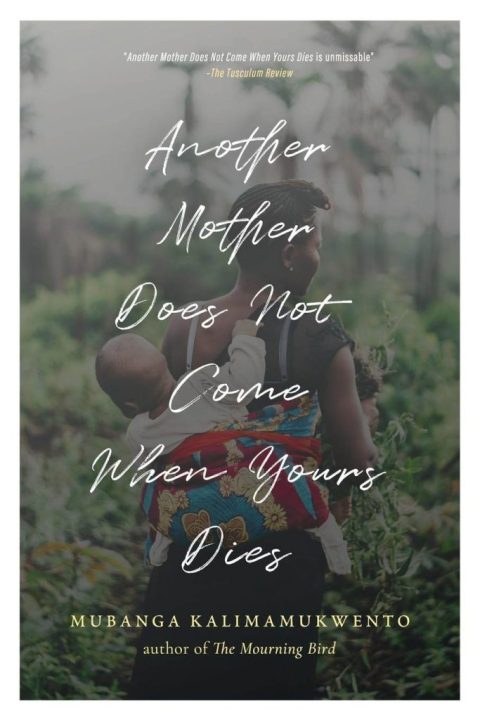
The title comes from the Bemba proverb “tapafwa noko, apesa umbi,” which translates to the sobering truth that another mother does not come when yours dies. Kalimamukwento uses this proverb to anchor a narrative about “premature orphanhood” and the permanent cavity it leaves in a person’s life. Afrocritik described the collection as a kaleidoscope of emotions, praising the author’s ability to chronicle the experience of grief without falling into sentimentality.
This book represents a growing trend in African literature where authors are experimenting with form. We are seeing more hybrid works that blend indigenous oral traditions with contemporary literary structures. Kalimamukwento is an award-winning writer whose previous accolades have already marked her as one of Zambia’s most important literary exports. This collection is a must-read for anyone who has ever had to navigate the “landscape of the left-behind.”
4. Lonely Crowds by Stephanie Wambugu
Stephanie Wambugu’s debut, Lonely Crowds, published by Canongate Books, is one of the most exciting entries from the 2025 season. It follows the relationship between two women, Ruth and Maria, which begins in the structured environment of a Catholic school and eventually spills out into the 1990s art world.
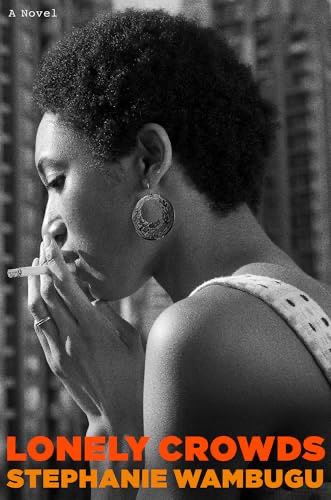
Source: Lonely Crowds by Stephanie Wambugu | Goodreads
Wambugu is interested in the “immigrant imagination” and how class, talent, and longing arrange themselves into a private hierarchy of winners and exiles. This is a recurring theme in the 2025 award selections: the idea that the African experience isn’t just about the movement between continents, but the movement between social classes. The theatrical world of the 90s provides a vibrant, almost chaotic backdrop for a story about ambition and the moral complexities of friendship.
The book was highlighted by Brittle Paper as a standout debut. Wambugu’s writing is sharp and observant, particularly when she is tracing the ways that people use art to mask their insecurities. It is a novel about the “crowds” we inhabit and the loneliness that often persists even when we are surrounded by people. For readers who enjoy stories about the intersection of art, religion, and identity, Lonely Crowds is an excellent choice.
5. A Kind of Madness by Uche Okonkwo
Uche Okonkwo’s short story collection, A Kind of Madness, is a masterclass in the form. It was actually published first in the US by Tin House (April 2024). The Nigerian edition by Narrative Landscape followed in March 2025. In the past, a Nigerian debut author would almost always debut in London. Now, they are getting published locally first, building a home-grown audience before crossing the Atlantic.
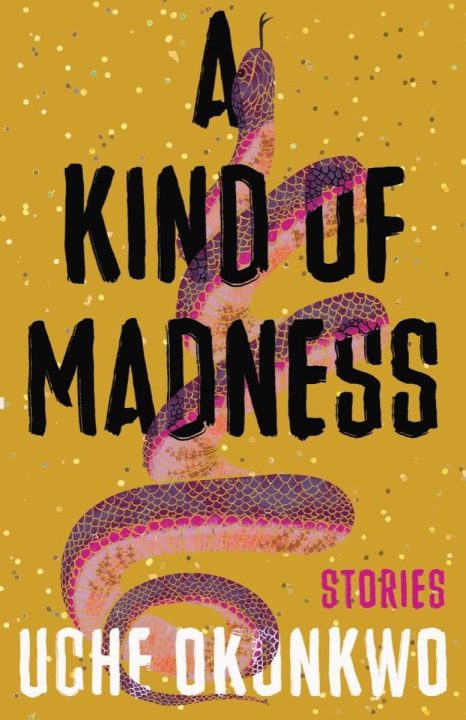
Source: A Kind of Madness: Stories by Uché Okonkwo | Goodreads
The stories in this collection often feature child characters who are forced to witness the “madness” of the adult world. From the literal madness of mental health struggles to the figurative madness of social expectations and religious fervor, Okonkwo captures the tension of modern Nigerian life. The stories are set in both urban and rural spaces, showing the vast diversity of the Nigerian experience. Critical reception has been overwhelmingly positive. Critics have noted that Okonkwo has a rare gift for capturing the internal lives of children without making them sound like “miniature adults.” Her prose is clean and rhythmic, making it one of the most accessible yet profound collections of 2025. You can see more about the Nigerian edition at Narrative Landscape.
The State of African Literature in 2026
If we step back and look at these books as a group, a clear picture emerges of where African literature stands today. The 100 Notable African Books list from Brittle Paper now spans 27 countries. This is no longer a “three-country” literary scene dominated solely by Nigeria, South Africa, and Kenya. We are seeing major contributions from Zambia, Zimbabwe, Senegal, and the African diaspora in Europe and North America.
Another key insight is the role of independent publishers. While the “Big Five” publishers in New York and London still sign major deals, boutique presses like Wayfarer, Narrative Landscape, and Cassava Republic are the ones doing the heavy lifting of talent scouting. They are taking risks on experimental forms and local narratives that might have been rejected by mainstream publishers a decade ago.
One-third of the most notable books in 2025 were debuts. This is a sign of a healthy ecosystem. Literature thrives on new blood, and the 2025 season showed that there is no shortage of new voices ready to challenge our assumptions about what an “African story” should look like.
Why These Books Matter Now
These books are more than just entertainment. They are tools for navigating a world that often tries to simplify the African experience. For the diaspora, they provide a way to stay connected to the evolving cultural conversations on the continent. For readers on the continent, they offer a sense of validation and a platform for self-reflection.
We should remember the words of Chimamanda Ngozi Adichie regarding the “single story.” Stereotypes are not necessarily untrue, but they are incomplete. The books on this list provide the “completion.” They show us the banker, the housekeeper, the bereaved daughter, the artist, and the survivor. They show us that the African story is a million different stories happening at once.
Supporting these authors also means supporting the historians of our own experiences. Chinua Achebe famously said that until the lions have their own historians, the history of the hunt will always glorify the hunter. By reading these books, buying them from independent bookstores, and discussing them in book clubs, we are ensuring that the “lions” are the ones telling the story.
How to Support the Industry
How to Support African Authors
Buying a book is the first step, but there are other ways to ensure this literary boom continues:
- Buy Direct: If you can, order from the publisher’s website. This often ensures the author and the press receive a better margin.
- Request at Libraries: Public libraries track what people ask for. By requesting a book by a Zambian or Nigerian author, you are helping that library decide what to stock in the future.
- Support Independent Bookstores: Use platforms like Bookshop.org which direct a portion of every sale to local bookstores.
- Join Book Clubs: Many of these titles, particularly Dream Count and Crooked Seeds, are designed for discussion.
Where to Buy
- Narrative Landscape (Nigeria): Best for Adichie and Okonkwo.
- Cassava Republic Press: The primary source for Nagarajan’s oral history.
- Amazon and Bookshop.org: Available for all US-based editions.
- Loyalty Books (DC) and Semicolon (Chicago): Excellent Black-owned bookstores that frequently stock these titles.
Book Club Recommendations
If you are looking for themes for your next meeting, consider these:
- Black History Month (February): Focus on the historical memory in Crooked Seeds.
- Women’s History Month (March): A perfect time for Dream Count or Another Mother Does Not Come When Yours Dies.
- Contemporary Conflicts: Use The World Was in Our Hands for a deep dive into non-fiction and social justice.

Anand Subramanian is a freelance photographer and content writer based out of Tamil Nadu, India. Having a background in Engineering always made him curious about life on the other side of the spectrum. He leapt forward towards the Photography life and never looked back. Specializing in Documentary and Portrait photography gave him an up-close and personal view into the complexities of human beings and those experiences helped him branch out from visual to words. Today he is mentoring passionate photographers and writing about the different dimensions of the art world.