
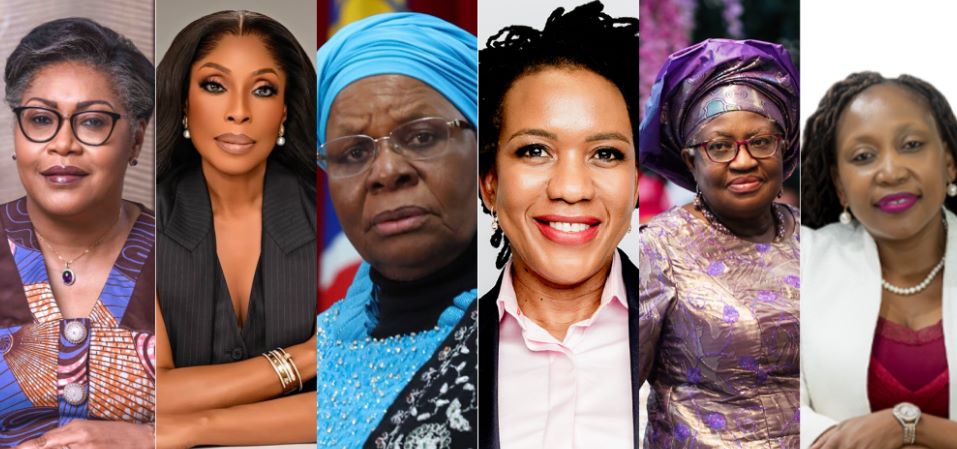
The world loves telling women what we can and can’t do, especially in Africa, where the burden of patriarchy remains. Women can’t be the president of a country. Women can’t lead Fortune 500 companies. Too many cannot.
All that is changing. Women are winning across the globe, even those from Africa. African women have refused to stay down. They are not only rewriting the rules but also leading nations, global trade, finance, and media.
As we bid farewell to 2025, Forbes released its list of the 100 most powerful women in the world. Among European prime ministers, American tech CEOs, and global political heavyweights, six African women made the list.
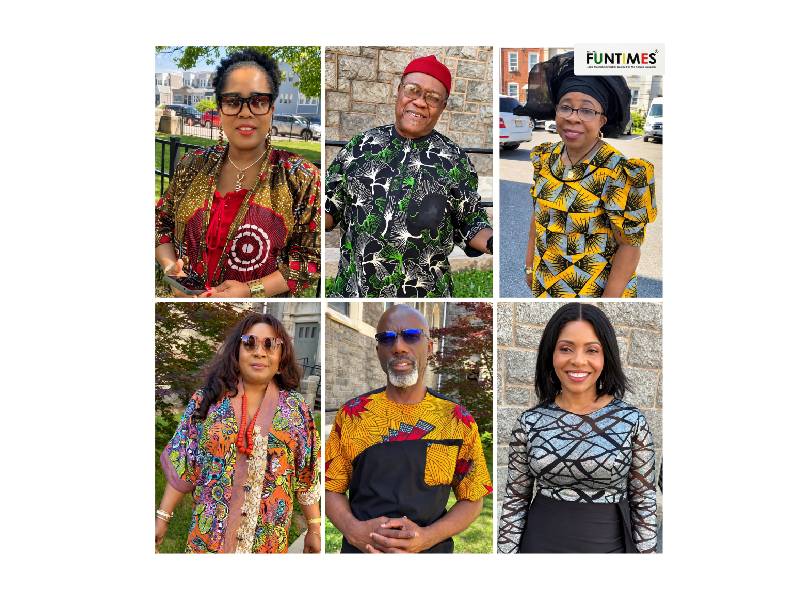
“I congratulate these women of African descent who represent our leadership via contributions in social, environmental and civic justices. They are an inspiration for ALL WOMEN and present reasons for my pride in being a Black woman.” Sandra Lawrence, Associate Publisher, FunTimes Magazine
Photo Credit: Sandra Lawrence, Associate Publisher, FunTimes Magazine
Four main metrics were used to determine the 22nd annual Forbes list of the World’s 100 Most Powerful Women: money, media, impact, and spheres of influence.
This comes at a time when reports indicate that nearly 500,000 women in the United States alone quit their jobs between January and October 2025, and that companies’ commitment to promoting women into leadership roles dropped from 90% to just 54% in four years.
Studies by McKinsey and Lean In show that only 54 percent of companies now prioritise promoting women into leadership roles compared to 90 percent four years ago. The UN has also raised alarms about growing online sexism affecting women in professional spaces.
Below are 6 of the most powerful women globally, according to Forbes.
Mary Vilakazi (South Africa)
Title: CEO of FirstRand Group
Forbes Ranking: #74
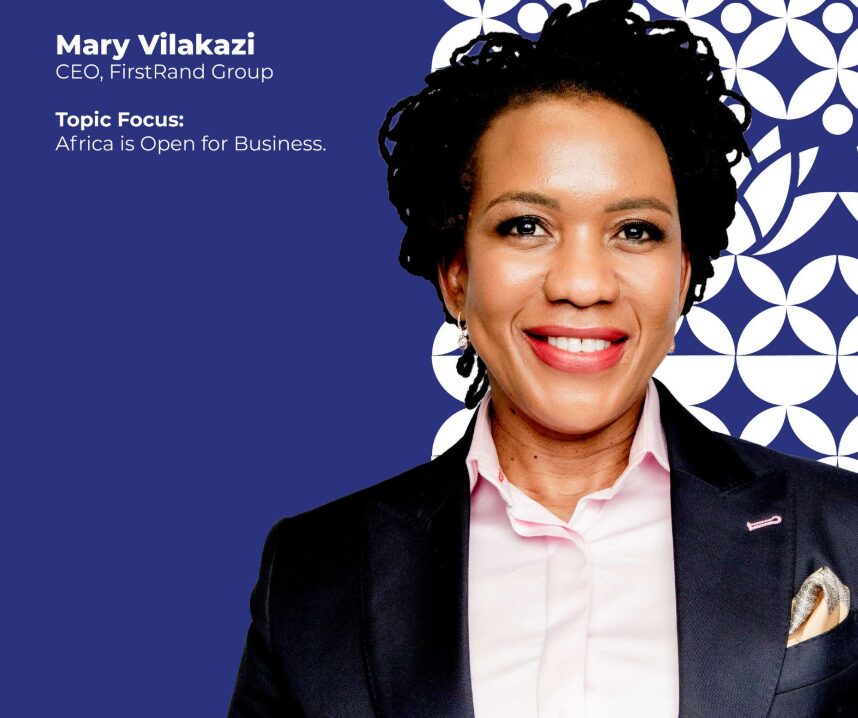
Photo source: Instagram / b20southafrica
Vilakazi is a true trendsetter who excelled in an area that was not her original plan.
“Accounting and banking hadn’t been Vilakazi’s original career plans: She has said she wanted to become a psychologist or lawyer when she was younger,” said Forbes.
Born in August 1977, this South African business leader and chartered accountant started her career at PwC (PricewaterhouseCoopers) and rose so fast to become one of the firm’s youngest partners at the age of 27, specializing in financial services audits.
On April 1, 2024, she made history as the first woman and first Black woman to lead FirstRand Group, South Africa’s largest financial-services firm by market value, in its 185-year existence.
She is also the only woman to lead one of the country’s big five banks. As of June 2025, the group held assets worth R2.5 trillion. Vilakazi is reported to be among the highest-paid in South Africa, going home with a cash package of R11.2 million for the year.
She has served as CFO of the Mineral Services Group and Deputy CEO of MMI Holdings.
Judith Suminwa Tuluka (DRC)
Title: Prime Minister, Democratic Republic of Congo
Forbes Ranking: #78
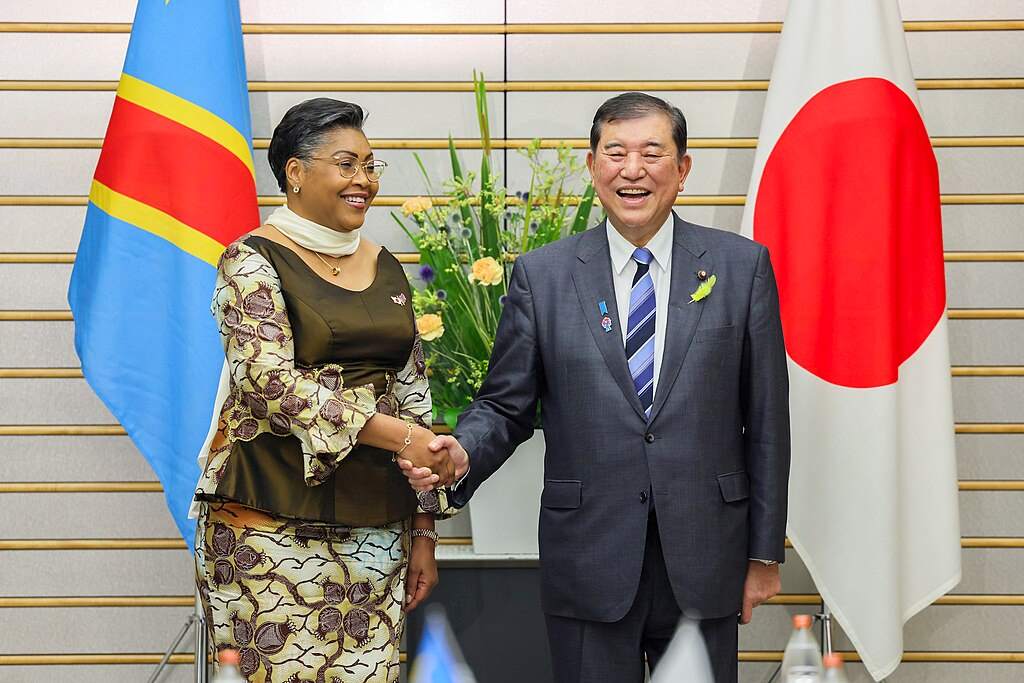
Photo source: Wikimedia Commons
While some countries are still fighting against women running government affairs, Tuluka showed up and made history as the Democratic Republic of Congo’s first-ever female Prime Minister in 2024, marking a significant step towards gender equity.
Managing a country is no mean feat, especially one like DRC, one of Africa’s most complex political landscapes, but Tuluka proved she was more than up to the task.
Born in 1967, the Congolese politician and economist came armed with economic expertise and reformist resolve.
Before her appointment, she served as senior advisor to the minister of budget (2012-2015), deputy coordinator for administrative and operational issues at the Presidential Strategic Watch Council (2020-2023), and planning minister (2023-2024).
Netumbo Nandi-Ndaitwah (Namibia)
Title: President of Namibia
Forbes Ranking: #79
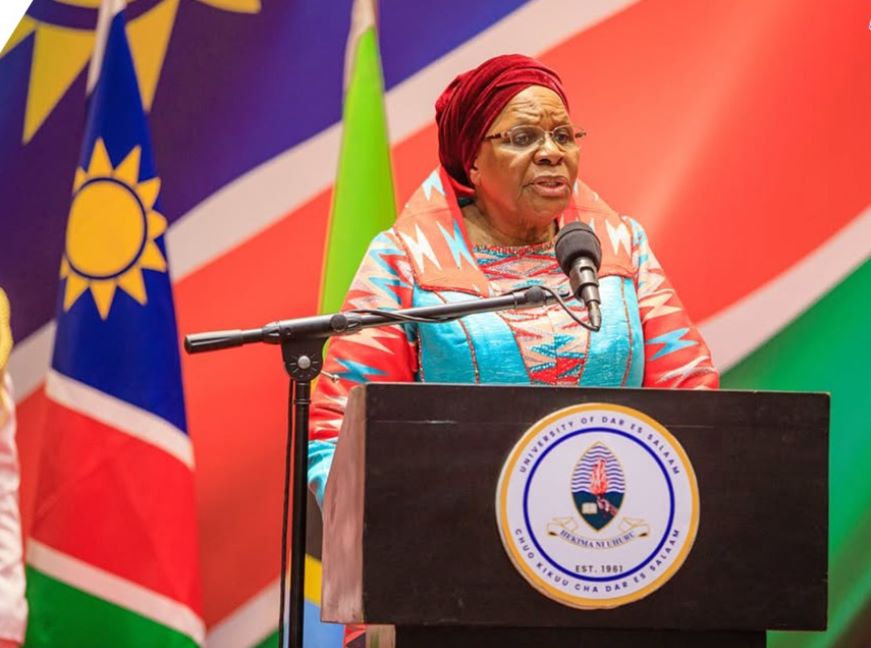
Photo source: Instagram / Comrade Netumbo Nandi Ndaitwah
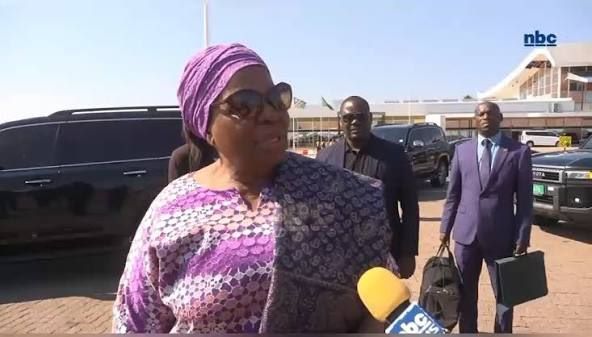
Nandi-Ndaitwah, 72, broke 35 years of male-only presidential leadership in Namibia. On March 21, 2025, she was sworn in as Namibia’s first female president after winning elections in 2024. She is also the second woman ever elected president in Africa.
NNN, as she is popularly known, stands as a powerful symbol of women’s political participation.
From the start, she made it clear that she intended to bring other women with her to the nation’s highest offices, and she did just that. She named the first woman to serve as vice president and another to lead the national assembly. As for her cabinet choices, she gave women 57% of ministerial roles, a record for the nation.
Mpumi Madisa (South Africa)
Title: CEO, Bidvest Group
Forbes Ranking: #89
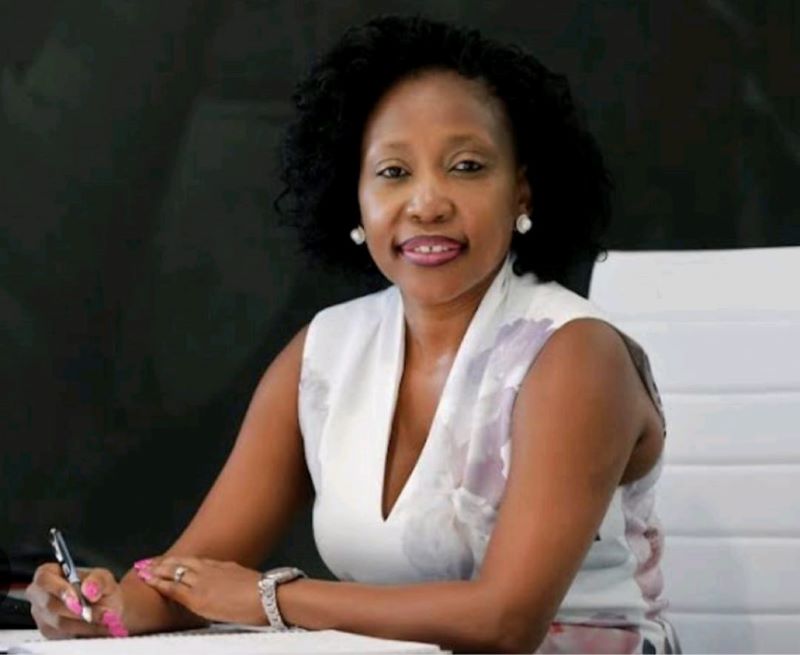
Photo source: Facebook / Bidvest Materials Handling
Madisa, 46, is the perfect example of starting small and working your way up through sheer competence and determination. Her journey at Bidvest started in 2003, and with time, she rose through the ranks, holding several key and strategic leadership roles at subsidiary, divisional, and Group level.
In 2020, she was appointed CEO, becoming the only Black female chief executive of a top-40 company on the Johannesburg Stock Exchange.
Madisa, who has a BSc degree in economics and mathematics and a BCom Honours Degree in economics from Wits University, sits on the boards of 16 of the company’s subsidiary companies.
According to Forbes, Bidvest, a South African services and distribution company, has nearly 130,000 employees and a $5.3 billion market cap.
According to Bidvest Group’s Audited Annual Financial Statements for the year ended 30 June 2025, Madisa walked away with a remuneration package of R58.4 million, which includes an annual salary of R13 million and bonuses.
Ngozi Okonjo-Iweala (Nigeria)
Title: Director-General, World Trade Organization
Forbes Ranking: #92
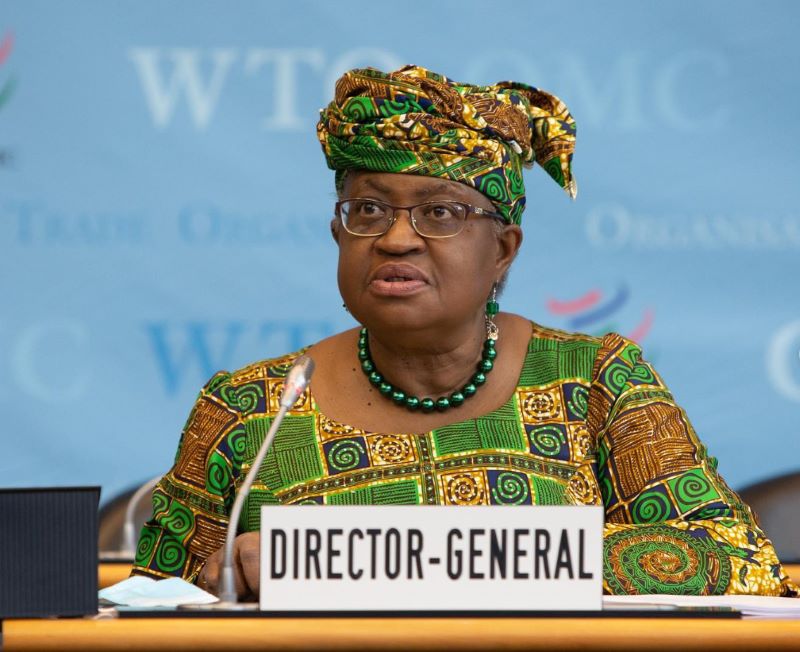
Photo source: Instagram / worldtradeorganization
Okonjo-Iweala, 71, remains Africa’s most influential global economic stateswoman. She made history as the first woman and African to be appointed Director-General of the World Trade Organization on March 1, 2021. And she did it during one of the most challenging periods in global trade history, navigating pandemic recovery. She was reappointed by member states in late 2024, a demonstration of widespread trust in her leadership.
Forbes described her as “an economist and international development professional” with “more than 30 years of experience working in Asia, Africa, Europe, Latin America, and North America.”
She briefly acted as Foreign Minister in 2006, and served two terms as Nigeria’s Finance Minister from 2003 to 2006 and 2011 to 2015.
In 2010, she oversaw the World Bank’s successful fundraising campaign, which resulted in US$49.3 billion in grants and low-interest loans for the world’s poorest countries.
Mo Abudu (Nigeria)
Title: Founder & CEO, EbonyLife Media
Forbes Ranking: #98
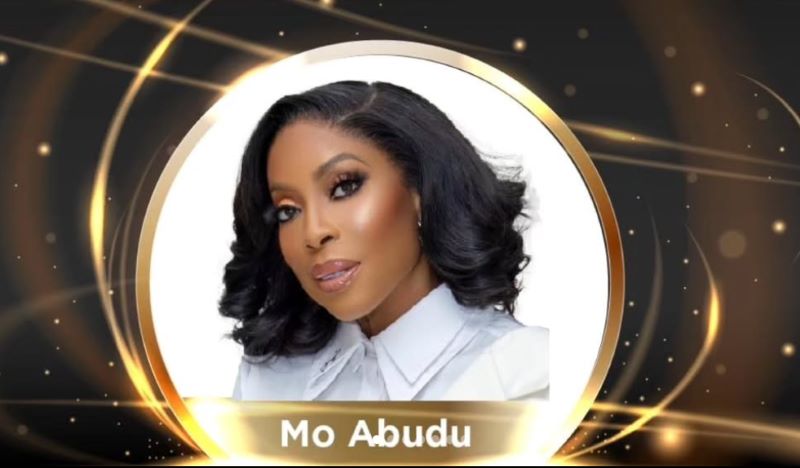
Photo source: Instagram / moabudu
Born in 1964, Mo Abudu has taught us that it’s never too late to start. While some may be thinking of a retirement plan at 50, Mo was launching a media revolution. Founder of EbonyLife Media, she leaped at age 40 to completely change careers, going from an HR professional to a talk-show host.
In 2006, she launched EbonyLife TV, which now broadcasts across more than 49 countries, including the UK and the Caribbean.
The company has sealed major partnership deals with Sony Pictures Television, AMC Networks, and Netflix, the latter marking the first multi-title film and TV agreement between an African media company and the streaming giant.
Forbes described her as “one of the most influential women in global media.”
In November 2025, the company launched a new digital platform, EbonyLife ON Plus, available on Google Play and the Apple App Store.
This Nigerian media entrepreneur and philanthropist has built a global footprint through film, television, and cultural projects.
Other powerful women on the list include European Commission President Ursula von der Leyen at No. 1, European Central Bank President Christine Lagarde at No. 2, Japan’s first female prime minister, Sanae Takaichi, at No. 3, and Mexico’s President Claudia Sheinbaum at No. 5.

_01.jpg)