
The wine carrying ceremony in the Igbo wedding ceremony in Nigeria
Photo: Instagram | elmagodwin
Weddings take place every day around the world, and each has its own unique activities, thanks to different cultures and traditions. When it comes to celebrating the marriage union in Africa, the people tend to go above and beyond to make it a memorable day, infusing their traditions and other rituals.
Anyone who has witnessed a Nigerian or any other African traditional wedding ceremony, whether in person or online, can attest to how beautiful and entertaining they can be. From wine-carrying in the Eastern part of Nigeria to the Henna party among the Swahili, there are interesting marriage customs across Africa, all showing the continent’s rich and diverse heritage.
Some may assume that these African wedding traditions are mere formalities, but they are not. They carry a much deeper meaning that connects the couple to their community and ancestors.
What are some of the common wedding traditions across Africa, and what do they symbolise?
The Wine Carrying Ceremony (Igba Nkwu)
This is the most important aspect of the traditional Igbo wedding. The bride is given a calabash cup filled with palm wine by her father, and she goes in search of her groom, scanning the crowd until she spots him among the guests. When she finds him, she kneels and offers the drink, signaling her consent, respect, and choice before the elders, the ancestors, and the community. Collecting and drinking the wine from her shows his acceptance, thereby solidifying their union. When the groom is done drinking, he puts some money inside the calabash cup and dances with his bride to meet her parents for marriage blessings. This tradition symbolizes love, respect, and the merging of two families. Also, the palm wine, derived from the sap of palm trees, holds deep symbolic meaning, joy, celebration, and hospitality.
“Kidnap” the Bride
This bridal tradition of the Himba people of Namibia is deeply rooted in culture and is quite common. Just before the ceremony, the bride-to-be is “kidnapped” and kept in isolation, marking the beginning of her journey into marriage. During this time, she is taken care of and given new clothes. She wears special clothing, one of which is a leather headdress called Okori. It is a gift passed down from her mother and symbolizes love and family.
She also passes through a unique ritual where they smear her with red sand. After the ceremony, the groom’s family covers her in butterfat ointment, which marks her acceptance into the family.
This practice has been trailed by controversy in recent times, with critics arguing that it contradicts women’s rights and autonomy. Others have, however, defended it, saying it is a preservation of culture and is usually consensual.
The ‘Knocking’ Ceremony
The Knocking Ceremony, or “kokoo ko” in Ghana, is a special wedding tradition that brings families closer together. The groom’s family goes to the home of the bride’s family with gifts like drinks, nuts, and money, which are symbols of respect and goodwill. During the visit, they share their son’s marriage intentions and ask for permission to join the families through marriage.
This ceremony serves as an introduction between families and an opportunity for them to get to know each other. The bride’s family gets a chance to inquire about the character, family background, and intentions of the man asking for their daughter’s hand in marriage. The knocking must be completed, as without it, the Ghana traditional wedding cannot take place.
The knocking ceremony symbolizes respect for the bride’s family, showing the groom’s family acknowledges their authority. It’s a symbol of the groom’s serious intentions toward the bride. It’s also a way to honor the ancestors and maintain a continuity of traditional customs.
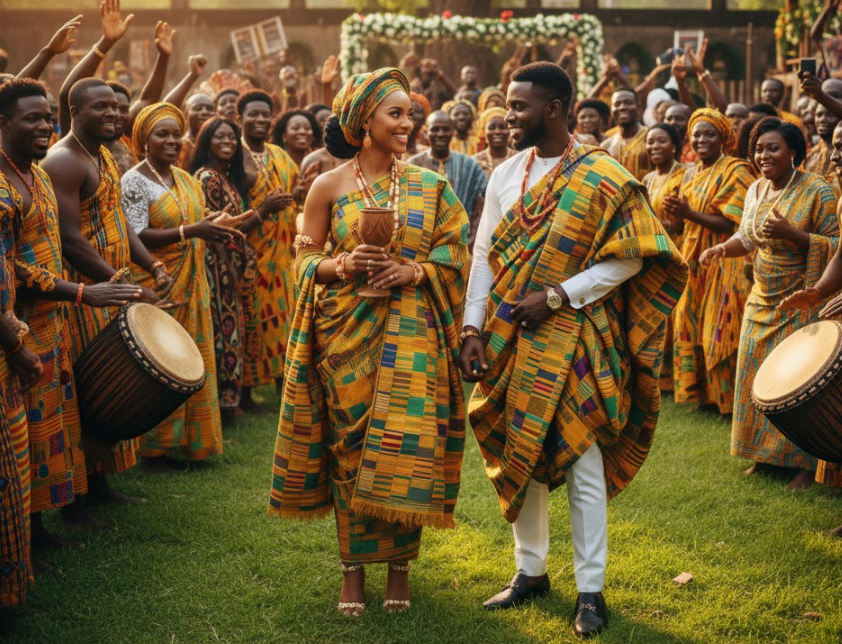
Image: Gemini AI
Read also: Bemba: The Zambian Wedding Tradition with a Focal Point on the Bride’s Culinary Skills
The Dowry/Bride Price
This is widely practised in Africa, and varies across countries with different names. In Kenya, the Agikuyu community calls it “Ruracio”, while in countries like South Africa and Zimbabwe, it is known as Lobola.
The bride price or token is the gifts or an amount of money paid by the groom and his family to the bride’s family. The negotiation process often involves elders, which strengthens communal ties.
In South Africa, the groom’s family presents either money or cows or both to the bride’s family as a gesture of his willingness to marry her. Paying lobola is a symbolic act and a necessary part of upholding culture. It shows the man’s commitment to take care of his wife.
Though one of the most recognizable wedding customs, many have criticized it, arguing that it sends a wrong message: the woman is an object that can be bought. Others have said it exploits the groom while enriching the pockets of the bride’s family.
Henna Ceremony
In parts of Africa where this wedding tradition is observed, bridal henna parties are the traditional equivalent of a bachelorette party in the West.
In various communities around East, West, and Northern Africa, the bride and her female companions have a “henna ceremony/party” on the eve of or several weeks before the wedding ceremony, depending on the culture.
During the event, the bride’s hands and feet are decorated with henna (natural dye made from powdered henna leaves). The designs may include flowers, geometric patterns, and traditional motifs, which are said to symbolize fertility, joy, abundance, and protection. This ceremony is usually accompanied by festive feasts, traditional music, and joyous dancing.
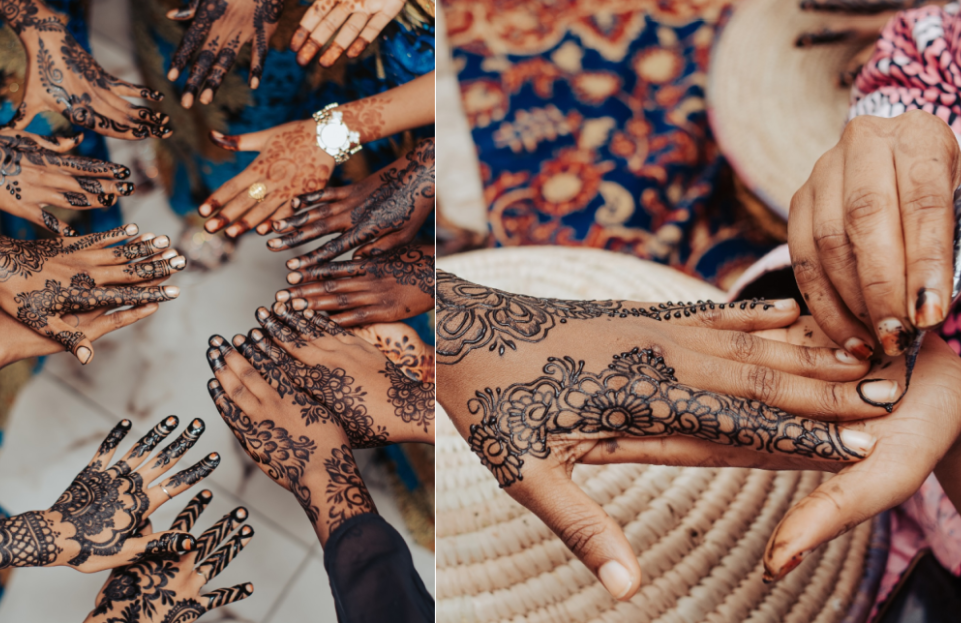
Photo: Instagram | julius_olar
Dancing Camels
Have you ever witnessed a camel dancing? You may want to add attending a traditional Niger wedding ceremony to your bucket list to witness this spectacle. In Niger, where the Sahara Desert covers almost 80 per cent of the country’s land, camels show their dancing skill during the wedding reception. A trained camel is often brought to receptions and will dance along to the beat of a drum, with wedding guests partying alongside.
Though this is a form of entertainment at the wedding, it also carries deep cultural meaning. Historically, the camel is a symbol of wealth in desert cultures.