

Rifle smoke from horseback performers at Tbourida, in Morocco
Mohamed EL IDRISSI, CC BY-SA 4.0, via Wikimedia Commons
Africa has continually thrown up an array of traditional festivals and events, showcasing the rich culture and history of the many nations that exist within the continent. In Northern Africa, where nations like Egypt, Algeria, Tunisia, and Morocco have a rich history of civilization that stretches several centuries from the age of the Pharaohs to the city of Carthage, these civilizations have contributed in one way or another to the cultural history that has become part of the identity of the nations within that space. These festivities and events have not only become part of the people’s heritage but also their identity.
No matter the celebration, whether historic market days, cultural music and dance activities, or events to commemorate special days in the lives of the people who occupy that region, there is always something captivating to look forward to. Let us explore some Northern African traditional festivals and events.
Tunisia
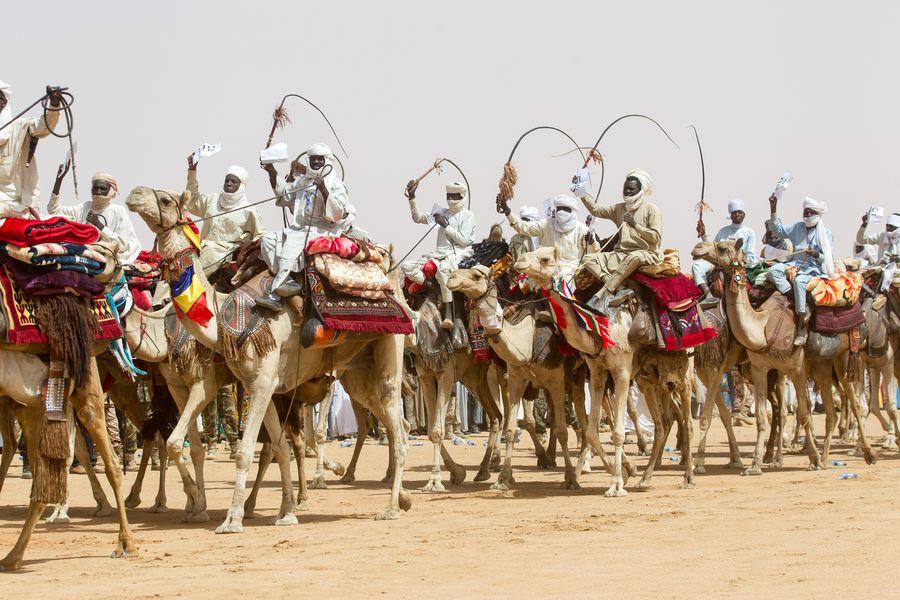
Photo: International Festival of the Sahara, Tunisia
Source: Zaghawa Bour, CC BY-SA 4.0, via Wikimedia Commons
International Festival of the Sahara: Formerly known as the Camel Festival, this event takes place annually in December in the town of Douz. The festival traces its formal history back to 1910, evolving from earlier local camel racing and Bedouin fairs. It showcases Bedouin life, featuring traditional music and dance, food, and most importantly camel and horse racing.
For four days, thousands of Tunisians and visitors from other countries converge at Douz to witness or engage in spectacular activities such as camel racing, horseback riding, and desert hunting. The festivities also include annual poetry contests and musical performances by local and international groups.
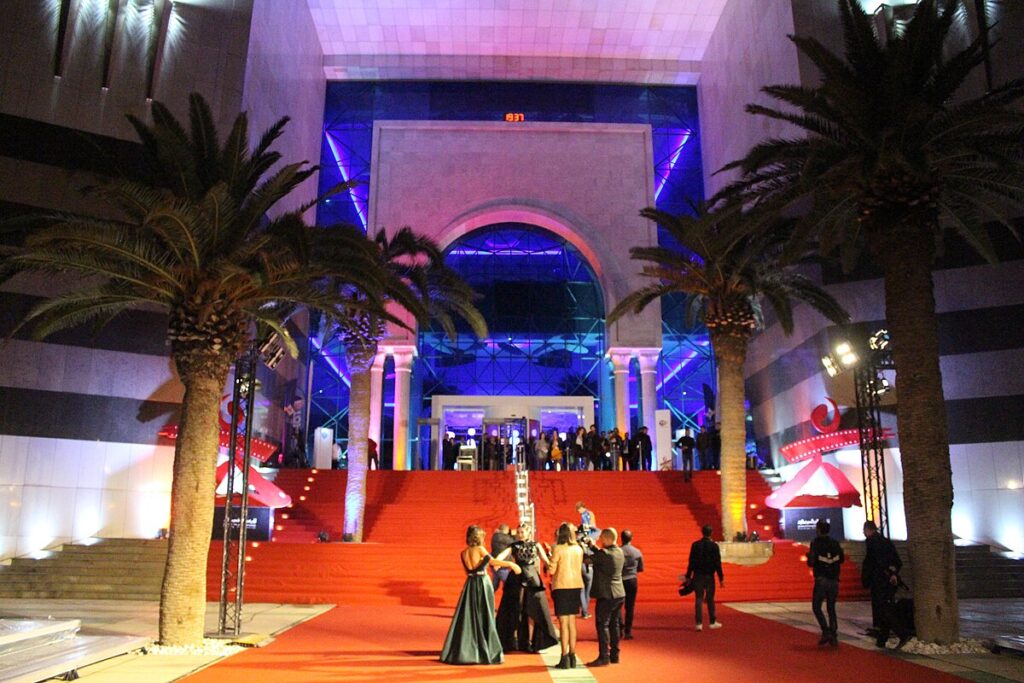
Carthage Film Festival, 2018
Houssem Abida, CC BY-SA 4.0, via Wikimedia Commons
Carthage Film Festival: Hosted by the government of Tunisia, this prestigious event occurs between October and November. The festival gathers filmmakers, producers, movie watchers, critics, and other industry professionals. It serves as a platform for directors from Africa, the Middle East, and the Maghreb to showcase their creativity and engage in conversations on current industry topics.
Awards like the Tanit d’Or (Golden Tanit) are given for feature narratives, documentaries, and short films. Silver and Bronze Tanits are also awarded across various categories, not limited strictly to documentaries.
Morocco
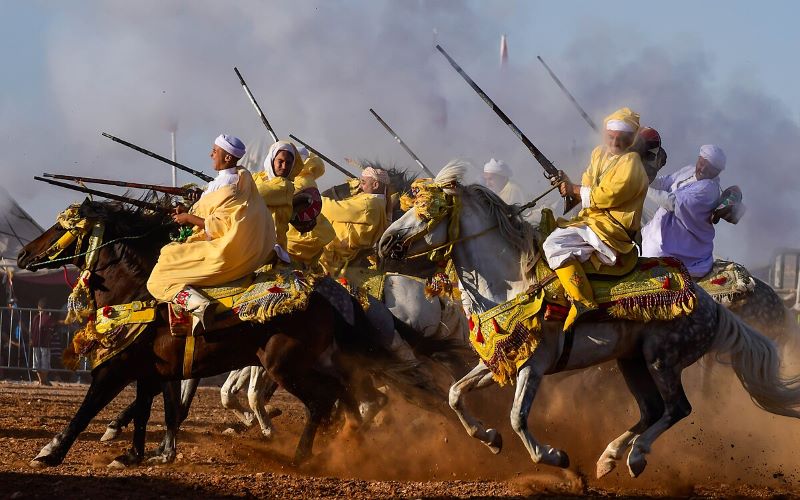
Tbourida Performance
Houssain tork, CC BY-SA 4.0, via Wikimedia Commons
Tbourida: Known widely as Fantasia, this traditional horse-riding show is a spectacular simulation of a cavalry charge practiced in Morocco. Its origins lie in ancestral Arab and Amazigh equestrian military traditions dating back several centuries, evolving through the Middle Ages.
A troupe of riders, numbering between 15 to 25, lines up side by side with a leader in the middle. Under his command, the riders perform a parade that includes a hadda or salute, trotting while performing acrobatic feats. The performance culminates with the talaga, where the riders charge at a gallop and fire rounds from their rifles simultaneously.
Tbourida is listed as one of UNESCO’s intangible cultural heritages and occurs during various cultural and religious holidays in Morocco.
Marrakech International Film Festival: Created in 2001 under the patronage of His Majesty King Mohammed VI, this festival promotes Moroccan cinema and the arts. It gathers top producers, filmmakers, directors, and actors from Morocco and around the world to screen films in categories such as documentaries, experimental films, animations, fiction, and feature films, with a strong focus on Arab and African cinema.
Egypt
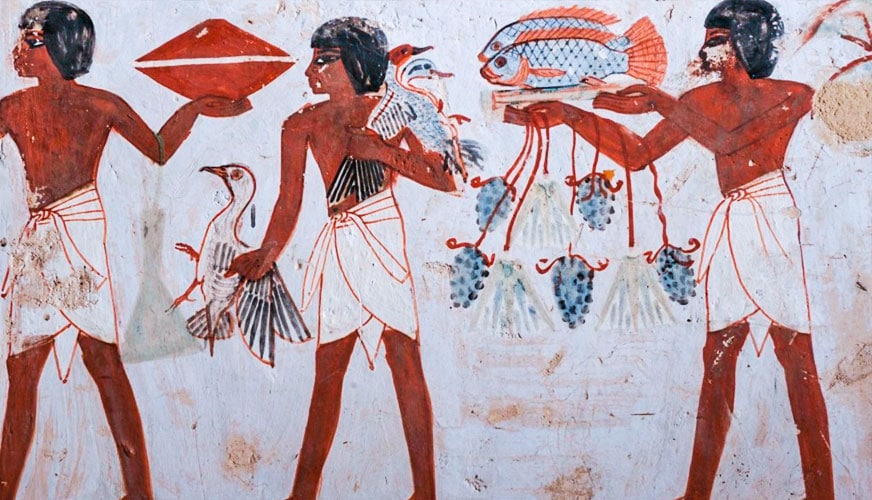
Depiction of Sham El-Nessim in Pharaonic times
Ancient Egyptian, Public domain, via Wikimedia Commons
Sham El-Nessim: Literally meaning “smelling the breeze,” this festival is one of Egypt’s oldest festivities, dating back to around 2700 BCE during Pharaonic times. It celebrates the arrival of spring and the start of the agricultural season.
The festival is marked by social gatherings where families and friends enjoy picnics with traditional foods like salted fish (feseekh), lettuce, and onions. People also partake in games, beach visits, Nile cruises, and zoo visits. The spirit of renewal is celebrated across religious lines by Egyptians of all faiths.
El Gouna Film Festival: Held annually in the Red Sea resort town of El Gouna since 2017, this festival celebrates contemporary cinema and arts rather than ancient rituals. It attracts filmmakers and actors from around the world and enhances cultural exchange while promoting Egyptian and regional film productions.
Algeria
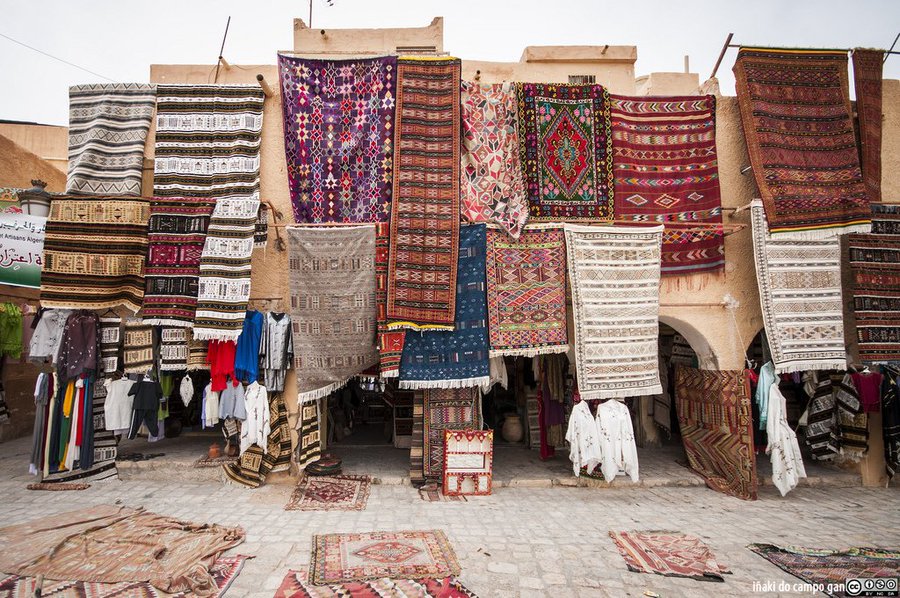
Ghardaïa Carpet Festival.
Image Source: Discover Algeria | X
Ghardaïa Carpet Festival: The city of Ghardaïa, part of the UNESCO World Heritage-listed M’zab Valley since 1982, is renowned for its rich artisan traditions, including exquisite carpet weaving. Each year, the city hosts a festival where carpet weavers, artisans, and tourists come together to display, sell, and compete in carpet weaving, celebrating their unique craftsmanship in vibrant patterns and colors.
Moussem de Taghit (Festival of Dates): In southern Algeria, especially around the Saharan oases, the date palm cultivation season is celebrated with moussems—traditional festivals marking the date harvest. At the end of October, families gather near date palms to partake in harvesting the first fruits accompanied by music, traditional instruments, and cultural activities, celebrating the year’s agricultural bounty.
Northern Africa’s traditional festivals stand as vibrant testimonies to the region’s rich cultural mosaics and histories, offering immersive experiences that both preserve heritage and invite the world to join in celebration.

Okechukwu Nzeribe works with the Onitsha Chamber of Commerce, in Anambra State, Nigeria, and loves unveiling the richness of African cultures. okechukwu.onicima@gmail.com



.jpg)


