
Image sources below
Leadership in Africa has always been the exclusive preserve of men. With many playing a central role in the decision-making processes at all levels of government, women were mostly relegated to administrative positions, where many of their decisions were still subject to the oversight of the men in authority.
But with time and as society continually evolves, Africa is seeing more women participate in politics across all tiers of government. With more women bringing their experience to bear in shaping political discourse and in making key decisions across several African nations, the argument for increased participation of women in politics more so as political decisions play a crucial role in shaping the country’s future becomes more Germane.
As noted by fundsforNGOs, the social enterprise platform offering knowledge and skills to NGOs, companies, and individuals worldwide, “In today’s democracies, women are equal citizens and should participate in equal measure with men in public policy making. Having said the consensus is also that increased participation of women in the democratic process results in better equality in rights and opportunities in both public and private spheres of life for women.
For achieving the Sustainable Development Goals by 2030, women across the globe must have equal participation and leadership in political and public life.” ( https://fundsforindividuals.fundsforngos.org/).
Leading the charge in fostering greater participation of women in politics and in electing women to key positions of government is Namibia.
On 21 March 2025, at its 35th Independence Day celebration, Namibia officially inaugurated a three-woman leadership team: Netumbo Nandi‑Ndaitwah as President, Lucia Witbooi as Vice‑President, and Saara Kuugongelwa-Amadhila as Speaker of the National Assembly.
Namibia’s Top Women Leaders
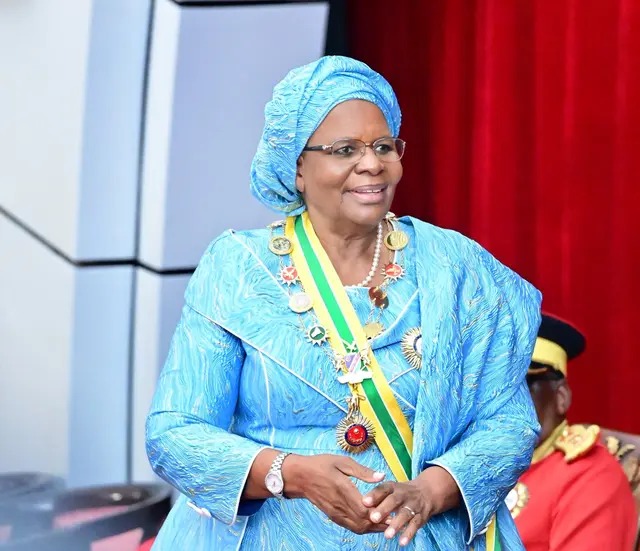
Photo: Mining and Business
Netumbo Nandi-Ndaitwah:
Born October 29, 1952, Netumbo Nandi-Ndaitwah became President of Namibia in March 2025 after winning the 2024 presidential election. Before being elected as President, she had held several key government positions, including Deputy Prime Minister and Vice President.
Nandi-Ndaitwah is a member of the South West Africa People’s Organization (SWAPO), Namibia’s ruling party. She was actively involved in demonstrations against apartheid and the campaign for Namibia’s independence from South Africa.
Having spent some years in exile while still actively involved in SWAPO activities, Nandi-Ndaitwah returned home after Namibia’s independence on March 21, 1990. Under SWAPO as the ruling party, Nandi-Ndaitwah served in the National Assembly, and held other top positions like Deputy Minister of Foreign Affairs, Minister of Women’s Affairs and Child Welfare, Minister of Information and Broadcasting, Minister of Environment and Tourism, Minister of Foreign Affairs, and Minister of International Relations and Cooperation.
As a female leading figure in politics, Nandi-Ndaitwah has been a strong advocate for women’s rights both at home and on the international stage. She pushed for the Combating of Domestic Violence Act in the National Assembly, which became law in 2023. As President, she has continued to remain a vanguard for involvement in politics by ensuring women hold a majority of portfolios in her cabinet.
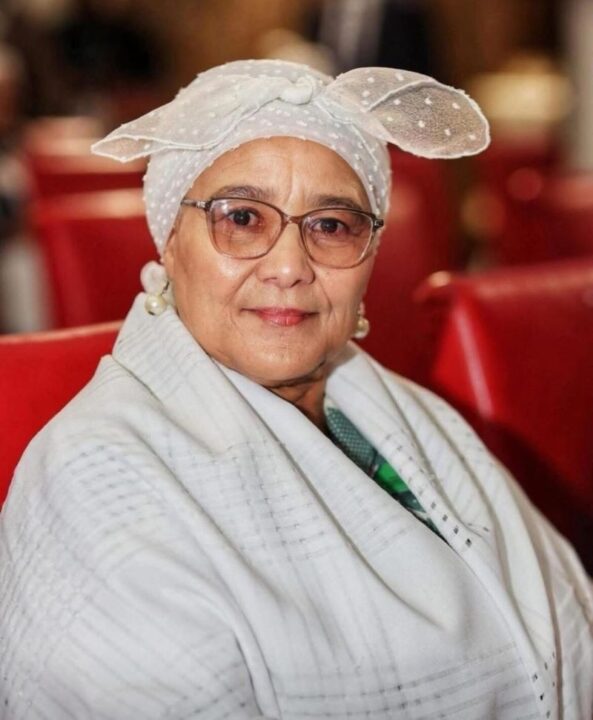
Image: The Benchmark
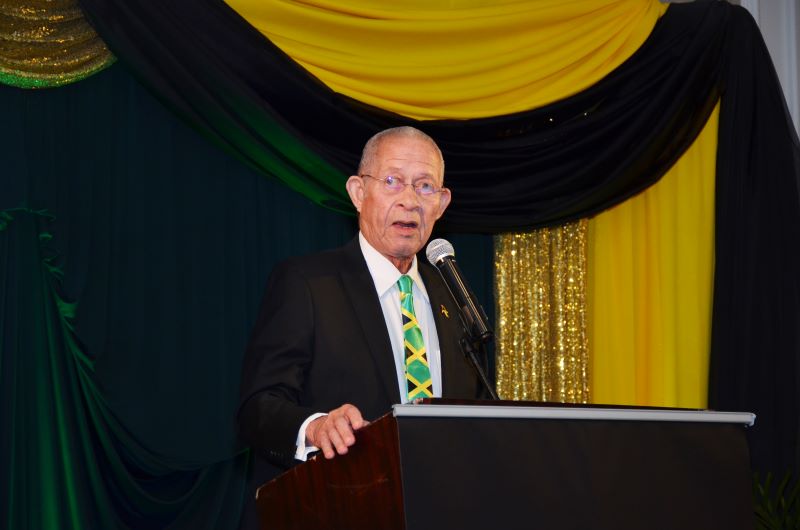
Lucia Witbooi:
Born on March 21, 1961, Lucia Witbooi is the current Vice President of Namibia and has been a member of parliament since 2010, holding positions like Deputy Chairperson on the Standing Committee on Information and Communications Technology, Human Resources, Foreign Affairs, Social and Community Development, Gender and Family Affairs, as well as Defence and Security.
She was also the Deputy Minister of Home Affairs, Immigration, Safety and Security as well as Deputy Minister of Gender Equality and Child Welfare. A seasoned educator, Lucia Witbooi was appointed by President Netumbo Nandi-Ndaitwah. Among her tasks is to ensure that through the office of the Vice President, the marginalized and disabled people of Namibia get the proper attention they need.
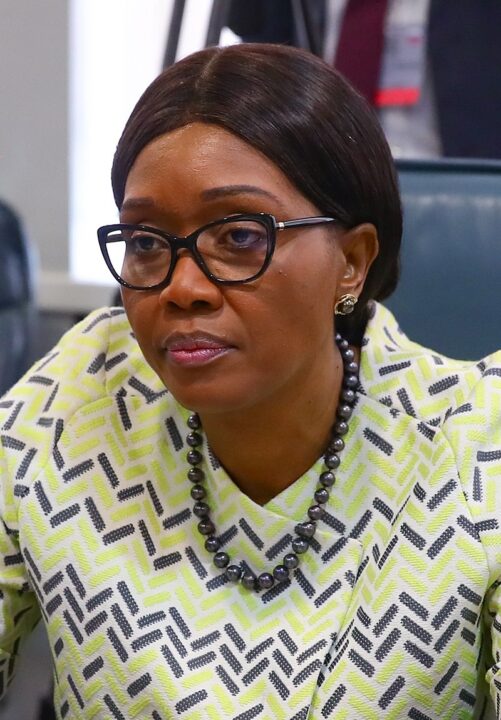
By Council.gov.ru, CC BY 4.0, Wikimedia Commons
Saara Kuugongelwa-Amadhila:
Born October 12, 1967, Saara Kuugongelwa-Amadhila is a member of parliament and the Speaker of the 8th National Assembly. She also held positions as Director General of the National Planning Commission, Minister of Finance, and Prime Minister.
She is also a member of SWAPO and went into exile in 1980 at the age of 15. After attending several schools and graduating with a degree in Economics from Lincoln University of Pennsylvania, she returned home resuming the role of a desk officer in the office of the President.
In 2003, she was appointed Minister of Finance. Highlighting her words during her appointment, the Women’s Leaders Magazine noted that “Much of Rt. Hon. Saara Kuugongelwa-Amadhila’s remarks focused on Namibia’s commitment to promoting gender equity and recognizing women’s rights as human rights, recognizing the multifaceted value women bring to societal wellbeing in terms of poverty reduction, business performance, and environmental protection from unsustainable activities. She emphasized that Namibia has made considerable progress in establishing legislation to promote gender equality in the legislature, the workplace, and the home”. She became Prime Minister in 2015.
Fostering Greater Participation of Women In Politics
Why is it important that Africa sees more women represented in politics especially in key decision-making roles?
The International Institute for Democracy and Electoral Assistance (International IDEA) in a research publication on -The Motivation for Women in Politics: The Contemporary Politics of Women’s Participation and Representation in Africa noted that “In Africa, the desire of women political leaders, activists and thought leaders to be appointed at the highest levels of their countries’ political systems is unquestionable. Their passion to be agents of change who can make a significant contribution in society to dealing with scourges such as rape and gender-based violence, marginalization, tokenism, and several types of injustices against women is also convincing”
Furthermore, women have exhibited the tendency to focus on core issues affecting society, drawing up policies that are focused on addressing these everyday challenges affecting especially the vulnerable in society.
Namibia has taken up the charge in offering more opportunities for women and with time more countries in Africa will provide an equal playing field for more women’s participation in politics.

Okechukwu Nzeribe works with the Onitsha Chamber of Commerce, in Anambra State, Nigeria, and loves unveiling the richness of African cultures. okechukwu.onicima@gmail.com