
Source: Freepik
In 2026, a growing share of Black prosperity is being built outside the main paycheck. It is showing up in coaching calls after work, in mobile money businesses, creator income, bookkeeping, resale, small services, and in AI-assisted freelance work that allows one person to do what used to take a small team. That is not a feel-good trend line. It is a response to a stubborn economic reality.
Reuters reported that the U.S. national unemployment rate was 4.3% in April and that Black unemployment had recently been running higher, at 7.1% in March. The Federal Reserve’s 2022 Survey of Consumer Finances still showed median Black wealth at $44,890, compared with $285,010 for White families.
That gap is why side hustles matter. Not because hustle is inherently noble, but because for many Black Americans and Africans, extra income is one of the few flexible ways to create breathing room, build a small asset, or test ownership in an economy that keeps rewarding people who already own the rails. The trick is that income alone is not prosperity. Prosperity means equity, savings, leverage, or a business that can outlive the week it was started.
For Black Americans, the last few years have made a simple point harder to ignore: employment is not the same as security. Reuters reported on a Black cybersecurity executive who, after a layoff, began building new income streams rather than waiting for the labor market to apologize.
The capital side remains uneven too. According to Reuters, Black-owned firms received only 1.54% of small-business-eligible federal contracting dollars in 2024, and Black women-owned businesses received less than 1% of the $288 billion venture capital firms deployed in 2022. That is why one of the sharpest lines in this story came from Arian Simone of Fearless Fund, who told Reuters, “People have the right to fund marginalized communities if and when racial disparities exist, and that is something that needs to be protected.” The sentence is plain, but the point is bigger than venture capital. If Black people cannot consistently access capital, side income becomes a substitute for institutions that should have been doing more of the lifting in the first place.
In Africa, the hustle is not a side note. It is the labor market.
Across Africa, this conversation lands differently because the informal economy is not a fringe category. The International Labor Organization (ILO) says that nearly 83% of employment in Africa and 85% in Sub-Saharan Africa is informal. The World Bank also says that growth in Sub-Saharan Africa is projected to hold at 4.1% in 2026, but downside risks are mounting, and job creation remains constrained. In simple terms, millions of people are already making their own work because the formal economy is not absorbing them fast enough.
There is still momentum, as Reuters also reported that Safaricom’s M-Pesa has 35 million customers in Kenya and that its Ziidi Trader product accounted for 40% of trades at the Nairobi Securities Exchange after launch. Furthermore, MTN’s financial-services revenue rose to 20% in the first quarter of 2026, and Airtel Africa says digital technologies and AI have helped drive performance. That is beyond telecom growth. It is proof that mobile money, fintech, and digital rails are becoming the business backbone for many African hustles.
The 10 side hustles that actually fit 2026
The strongest hustles this year are those that can start small, use digital tools, and grow without requiring a large cash up front. That includes AI-assisted freelance services, creator work with affiliate income, social selling and reselling, virtual assistance, online tutoring, bookkeeping, no-code automation, digital products, local service microbusinesses, and mobile-money-enabled commerce. In Africa, fintech and mobile money are turning phones into storefronts and payment systems simultaneously.

Source: iStock
- AI-assisted freelance services. Writing, editing, design, research, inbox work, and simple automation are all easier to sell now because AI can cut the grunt work.
- Creator content plus affiliate income. A small audience can still produce meaningful income if the niche is tight and the offer is useful. Reports point out that a creator with fewer than 8,000 TikTok followers earned $4,355 in three months through brand deals, affiliate links, and commissions.
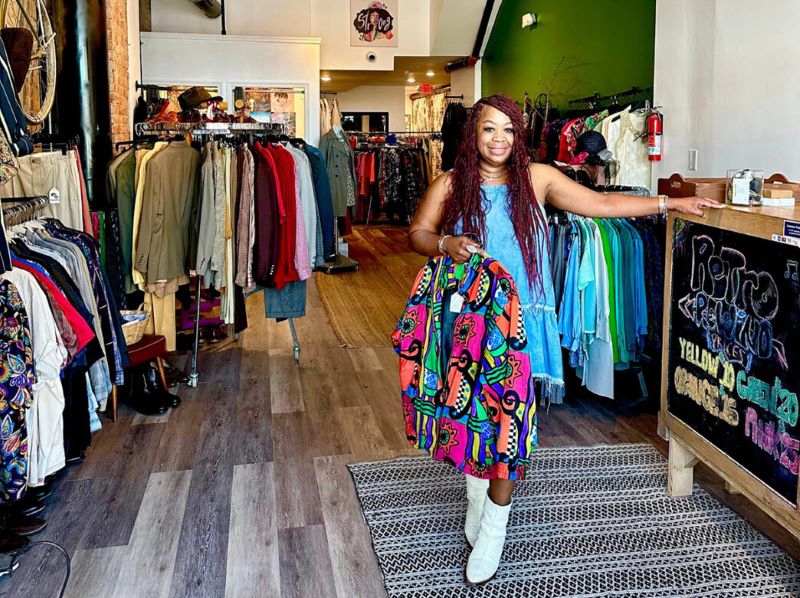
- Social selling and reselling. Thrift, beauty, fashion, sneakers, and niche cultural goods move well on social platforms and messaging apps.
- Virtual assistance. Scheduling, customer follow-up, document cleanup, and inbox management are boring tasks, which is exactly why businesses pay for them.
- Online tutoring and coaching. Knowledge remains one of the few things you can sell without inventory.
- Bookkeeping and invoicing help. Every small operator eventually needs someone to keep the money trail clean.
- No-code automation setup. Small businesses need workflows, forms, chat tools, and simple systems that save time.
- Digital products. Templates, mini-guides, planners, and Notion systems can be made once and sold many times. That is one of the few paths where a side hustle starts to behave like an asset.
- Local service microbusinesses. Cleaning, catering, repairs, laundry pickup, photography, and event support remain powerful because they solve immediate needs.
- Mobile money and fintech-enabled commerce. On the continent especially, phones are becoming business infrastructure. Reuters’ reporting on M-Pesa and Ziidi Trader shows how quickly a wallet can become a market.
The right way to read this list is not as a lottery ticket, but as a set of lanes. Some are skill-based, some are attention-based, and some are ownership-based. The first two can create cash quickly. The third is where prosperity begins to look durable.
Caution is important. Side hustles can also mean burnout, unstable income, tax headaches, and a life that never really comes off the clock. They can turn into a romantic story about grit when what is actually happening is underpaying people for carrying too much. That is why the real question is not whether Black people can hustle. They always have. The question is whether the hustle can become leverage, and whether leverage can become ownership.

Anand Subramanian is a freelance photographer and content writer based out of Tamil Nadu, India. Having a background in Engineering always made him curious about life on the other side of the spectrum. He leapt forward towards the Photography life and never looked back. Specializing in Documentary and Portrait photography gave him an up-close and personal view into the complexities of human beings and those experiences helped him branch out from visual to words. Today he is mentoring passionate photographers and writing about the different dimensions of the art world.