
Photo by Tima Miroshnichenko from Pexels
You may have heard the term STEM, but what does it stand for? It is an acronym for Science, Technology, Engineering, and Mathematics. But before it became a buzzword, it was already alive in our communities. From skincare formulas mixed in kitchens to our parents fixing what couldn’t be replaced, Black communities have always blended science, technology, and innovation into everyday life.
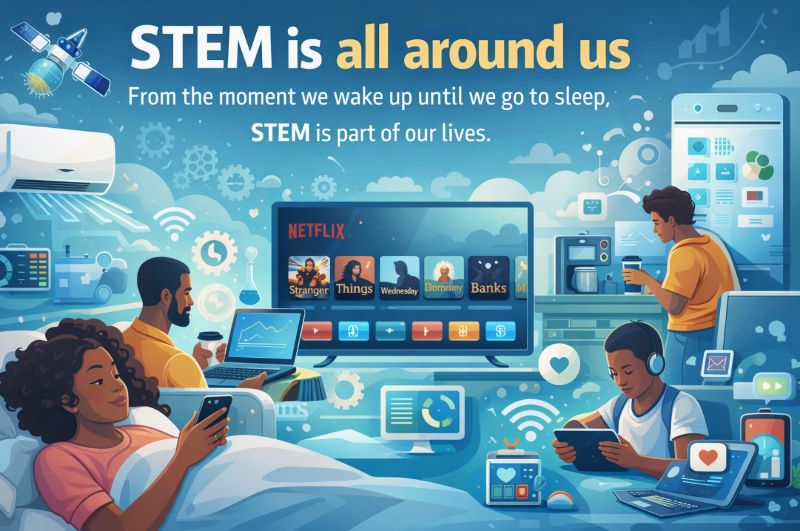
STEM is all around us, from the moment we wake up until we go to sleep. Yet, these often go unseen and unnoticed by the general public. Most of us use STEM activities in our day-to-day lives knowingly or unknowingly. The air conditioner in your room, the device you are reading this article on, the Netflix recommendation on your smart TV, the microwave in your kitchen, everything was made possible via STEM.
According to Katherine Johnson, a pioneering African-American mathematician at NASA, “We will always have STEM with us. Some things will drop out of the public eye and will go away, but there will always be science, engineering, and technology. And there will always, always be mathematics. Everything is physics and math.”
Speaking on its importance, Chidi Onwe, a data analyst, noted: “STEM touches every aspect of life, often in ways we rarely notice. It affects nearly everything we do, which highlights its importance. From the smartphones we use to communicate, to the medical treatments that keep us healthy, to the data guides in transportation facilities. STEM helps solve major human problems by developing cutting-edge solutions for everyday complex problems.”
STEM in everyday Black life
Let’s explore the various facets of STEM in our daily routines.
STEM in our technology and gadgets: From Lagos to London, smartphones, laptops, and the internet shape how Black communities communicate, work, and create. All these are powered by physics, engineering, computer science, and mathematics, allowing us to connect across continents, share stories, build businesses, and access information instantly. Imagine what life would be like without things like the mobile banking and social‑commerce platforms that help Black creators sell and scale.
STEM behind how you commute: From electric cars and trains to traffic lights and GPS navigation, STEM drives modern transportation systems. Buses, trams, subways, and ride-hailing apps rely on mechanical and electrical engineering, data systems, and physics to make daily travel safer, faster, and more efficient.
STEM in healthcare and wellbeing: Science and technology have transformed healthcare access through telemedicine, health apps, diagnostic machines, and digital insurance platforms. Today, you can sit in the comfort of your home and consult doctors online, receive prescriptions, and have medications delivered, reducing barriers to care across many Black communities worldwide.
STEM in food, farming, and sustainability: Advances in agricultural science, like mechanized farming, food preservation, and packaging technologies, all help to improve food security and reduce waste. STEM also supports renewable energy solutions like solar panels and wind turbines, helping communities respond to climate change.
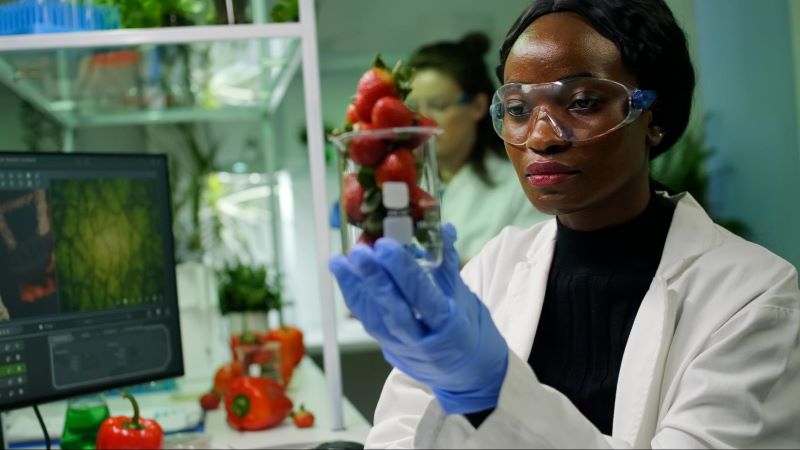
Photo source: Freepik
STEM in education: The education sector is not left out. Today, we have smart classes, multimedia devices, e-libraries, e-books, virtual classrooms, etc., that make learning less stressful. There are also coding clubs that nurture the next generation of Black innovators. You can practically learn anything online.
STEM in our homes and everyday convenience: Just imagine the hours it would take you to wash a truckload of clothes without a washing machine. While science has told us baked or steam-cooked food is better than the ones we fry, technology has provided us with microwave and air fryers that help us make healthier foods. Our homes have become cleaner, and life has been made easier and faster, thanks to STEM.
Let’s not forget that without STEM professionals, we would not have all these things that we are enjoying today.
The importance of STEM cannot be overstated. It is the driving force behind innovation, technology, and scientific discovery, and is therefore vital for building a better future.

Photo source: Freepik
How data analytics, algorithms, and artificial intelligence are quietly shaping the way we make choices
These technologies, which often operate quietly in the background, have a profound impact on our daily lives, providing us with more informed, efficient, and tailored recommendations across a wide range of domains. Take streaming services like Netflix, for example. It analyzes your past preferences to suggest movies that match your interests.
The content you see on your feed across various social media platforms is determined by algorithms. This silent assistance ensures that you see content from friends, groups, or pages that align with your preferences.
Navigation apps use AI algorithms to determine traffic patterns. It can suggest the best routes to take and the estimated time of arrival. This helps users make the best choice on which route to take. More so, with the help of science and technology, we know what the weather is going to be like. That way, we can make an informed decision on the best attire to wear. We can also prepare ahead of time if it’s going to rain or there is going to be a storm.
When you are searching for something online, you would have noticed how you get the most relevant search results. This is a result of search engine algorithms that use AI to predict what you’re looking for and offer suggestions even before you finish typing your search.

How STEM literacy can be promoted
In today’s technology-driven world, having basic knowledge about STEM is no longer a luxury but a fundamental requirement for individuals of all ages. The world keeps changing, and these new technologies are here to stay, so we have to keep pace with them. Here are several ways to promote STEM literacy.
Make changes to the educational system: Students should be taught to think critically in the fields of science, technology, engineering, and mathematics. They should be provided with real-life knowledge and experiences that spark their interest in these fields. Schools can partner with STEM experts in the community, local institutions, and local organizations. This creates unique opportunities that will help increase STEM literacy.
Start early: Children should be introduced to STEM concepts at an early age. This can be achieved through hands-on activities, games, and simple experiments to spark their curiosity and interest. Practical experience helps reinforce STEM concepts.
Family involvement: STEM is for everyone, and no individual should be left out. Parents, guardians, and caregivers have a role to play. They can guide children’s curiosity through experimentation and discovery in STEM activities. One option is to let children play with building toys like blocks or magnet tiles. This exposes them to mathematics and fine motor skills. Children should be encouraged to ask questions and explore the “why” and “how” of things.
“When we study STEM subjects, we develop skills in problem solving, critical thinking, and innovation that enable us to tackle real-world issues like disease, climate change, food security, and economic inequality. By making STEM education accessible to us all, we ensure that diverse perspectives and experiences contribute to creating solutions that benefit all of humanity, improving the quality of life, and creating opportunities for people in communities around the world,” Chidi added.